Wednesday, 13 November 2013

Still the same?

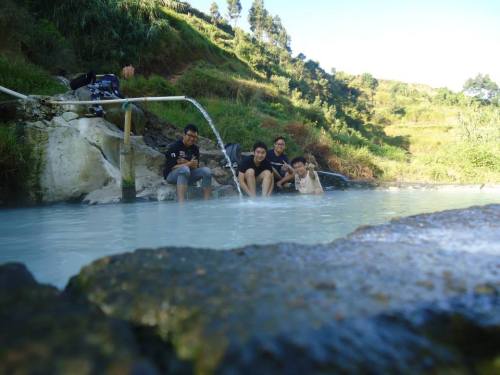
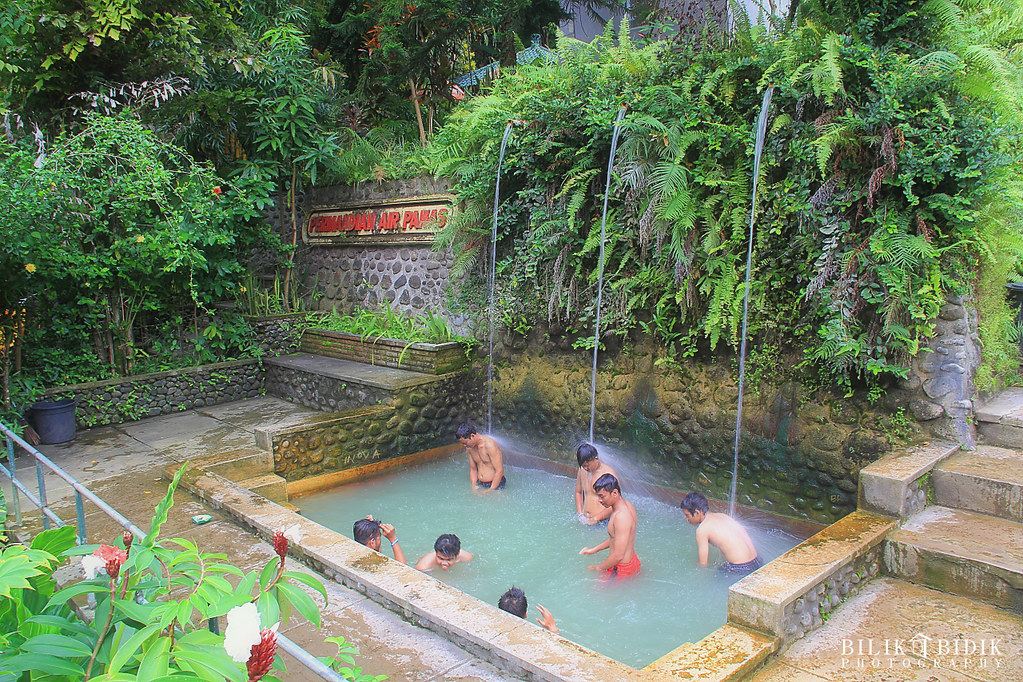
 Poring hot spring, Sabah, Malaysia. Instagrammed by krrsabah:
#poringhotspring #ranau #sabah
Change
A few years have passed since the last listing of popular Southeast Asian hot springs. So maybe a new overview is required.

During the past years, some soaks have gained in popularity as tourism in the region booms and shifts. Others soaks have seen a wane in popularity.

But trends in publicizing soaks and putting them on the net have also changed.

So making a list will result in changes and surprises.

Sharing
I have tried to include more current data than in the past, limiting for instance google searches to the past year. Including instagram helps.

But despite all the changes, as you can see below the hot springs of Poring remains top as was the case in 2 and 4 years back. Ergo, it must be very popular. Or so bad that everybody wants to share it!

1.   Poring           (Sabah, Malaysia) 98 pt (positions in 2011-2009: 1st-1st)
2.   Ardent           (Philippines) 80 pt (3-3)
3.   Maquinit        (Philippines) 78 pt (x-6)
4.   Sari Ater        (Java, Indonesia) 64 pt (x-x)
5.   Thap Ba         (Vietnam) 61 pt (7-x)
6.   Banjar           (Bali, Indonesia) 55 pt (4-5)
7.   Sungai Klah   (Malaysia) 50 pt (6-2)
8.   Pai                (Thailand) 43 pt (-)
9.   Puning           (Philippines) 36 (-)
      Binh Chau      (Vietnam) 36 (10-x)

Other noteworthy changes: Fang (Thailand) has disappeared all together despite a high ranking in previous lists, while Asin (Philippines) has also dropped away (from 5th) and would now be 11th. 
Odd is also that while using the same method Sankampaeng was recently ranked no. 1 in Thailand, the no. 2 in that list now ends higher, which is due to comparative ranking.

Pop
Which brings us to bias. The above of course is not free of bias.
For instance, shorter names are favoured over longer names. 
As previously stated in the previous  polls, language plays a large role as nearly all but Filipino citizens publish in their own language (English) so it´s quite natural to see hot springs from the Philippines doing well. Compare with Thap Ba which sees probably more tourists but less references as most of the tourists are Russians. 
There is a better overview of possible bias from the 2009 listing.

But despite this I do believe it is a fair representation. Of internet popularity.

Note though that it only is a list of popular places. Poring for instance despite it´s mentions is not well reviewed. I looked up all the reviews of the above soaks and note that based on quality, Thap Ba and Sankampaeng are ranked with 4.5* in Tripadvisor, while Poring and Puning have 3,5*. Maquinit, Ardent, Sari Ater, Banjar, Pai and Asin all have 4*.

So it´s more a potential list of hot spring areas to visit. Not necessarily a list of hot springs to visit.

Campagnal hot spring, Leyte island, Philippines. Leyte was in the eye on the super typhoon.
Odd caption to the photo (source)with buildings:
'The rugged and exotic beauty of sitio Campagal hot spring in Brgy Robas remains undefiled'.
Sources of comparison:
instagram, google search (past 12 months), google blog search (past 12 moths), bing, flickr, tripadvisor & youtube

Sunday, 20 October 2013

Publications: Cathedrals of the Flesh


Alexia Brue's 2003 first touch at a fully fledged book takes us by the hand and explores her own introduction to Europe's public bathing culture. Public, intimate (or not) she gives us a good insight into why we (used to?) value collective bathing.

Initially, Alexia sets out on an adventure to literally soak up what the makings are of a perfect setting for a bathhouse which may be located in New York city. Starting off in a Parisian steam bath, she becomes accustomed to and acquainted with the Istanbuli hammam, the Russian banya (both traditional and upmarket) and the Finnish love of everything sauna. The insights into their bathing folklore are complimented by a thoroughly readable journey into each countries culture and an increasingly in-depth revelation into the author herself as she jots down what would make her search for the holy grail perfect.

Interspersed by a personal historical account into Greek and Roman bathing, the journey ends in the soakers heaven of Japan, where she visits the tradional sento as well as what she hoped for: the most paradise-like onsen. 
On a hopeful note we take notice of her talk with one of New York's bathhouse owners. Will she have accomplished the mission she set out on?

It comes as no surprise that the author's journey has evolved and Alexia Brue is now regarded as an expert on wellness issues. Together with a colleague journalist she has been running the Well+Good NYC website ("Your healthiest relationship"), a premier source of info (million hits per month!) on wellness for New Yorkers.

A must read for soakers? This would be a giving a bit too much importance to this book, but all-in-all it's very easy to read, enjoyable and certainly entices readers to jump in and enjoy a thorough public bath. Forget the everyday worries and just immerse oneself. 

The book includes a resource guide which acts as an intro to entice followers of the flesh cathedrals, be they seekers of man-(or better said woman-)made public baths or naturally occurring hot springs.

Readers reviews have sought to tend to award five stars, as I would. Amazon readers give it 4.4 stars, Goodreads comes to 3.72 stars, while Google's books comes to just a shade short of 4 stars.

Hotsprung has her own review in which she emphasizes the insight she gets as well as the sense of adventure Cathedrals of the Flesh evokes.

Soakers worldwide should note that this book does not look into hot springs exclusively, but more into heat, water and bathing. 

And as would be expected there are no Southeast Asian connections ...

Reference:
Brue, A. (2003) Cathedrals of the Flesh - My search for the perfect bath. Bloomsbury, London, United Kingdom.

Sunday, 8 September 2013

Development blends

Norm
What's always intrigued me as how bathing customs differ, how they evolve and how current culture seeks to cope with the differences and the outer world trying to influence local culture. 

However, with the lessening of cultural and social diversions, traditional bathing cultures are increasingly threatened. 

Unfortunately the Southeast Asian bathing culture is a modernist one which with elitist overtones has regarded au-naturel bathing as backward and laughable. However the last laughs I believe are of those fully clad snobs who must feel tremendously uncomfortable. Or not?

But internationally, in the bathing custom discourse it are the anglo-saxon wannabe star cultures which are pushing their agenda however unknown. 
For instance, many a blog entry on Japanese onsen reflect on the backwardsness of naked single-sex bathing. 

Which raises the question why travel to a foreign culture at all, if you disapprove?
Others express fear of the unknown, but find out that it's actually a pleasure and become life-long converts. Southeast Asians, while radically opposed to disrobing, will do everything to blend in, however opposite it is of their own culture (remember in Singapore private nudity is even forbidden). Alas, their voices are often too meek in the current day internet overload. The same goes for us Europeans who have less binds either way.
Back in July I visited two hot springs, one in Aachen (Germany), one in Holland (Thermae 2000). In Holland it was a costume free day, which 99% happily enjoyed, whereas in Germany a beautiful part of the springs was suit-free. Not many have qualms about the lack of dress. But that said, overseas guests are at minimum and when researching internet the English language responses are often filled guilt / shame ridden. 
To me simple nakedness is purposeless (we are bathing after all), but it leads to increased self-esteem, self-confidence and acceptance of nature.

Sheepish
Here are some recent examples of au-naturel bathing experiences by you. First by Irreplaceable, from Malaysia (July 14) enjoying an experience in Korea:
'Yeah, the very first time getting naked in public with two of my girlfriends. If you never have such experience before, this might sound so awkward for you, am I right?
In fact, I had been struggling for so long whether shall I try this nude hot spring. For me, it is just so embarrassing to appear in front of strangers without wearing a single piece of cloth. But after all, I decided to try it. How brave am I right. Bravo. To make you clear, it is a hot spring only for girls. Not mix one okay.
...
Miss that wonderful hot spring soaking moment with my girls. Wish to visit other nude hot springs of another country next time LOLOL. Don't think I am crazy okay I am not. Come on. Don't be shy. You all must try it if you all have a chance. That gonna be a very unforgettable memories I promise. :D 
Peace'.
Peace to you too. Then Big on trips from Singapore in Japan (July 21):
'I started out a bit self-conscious and sheepish about the whole thing. But having the husband in the same bath made me feel more comfortable. It helps that the baths are also sprawling so you can easily stake out your own little nook where no one can see you. After a while, you just get used to seeing everyone’s bits and realise that man or woman, it’s just a different anatomy so no point getting the knickers in a twist about it. Plus if you go as a couple, it is nice to be able to enjoy the onsen together'.

There is the odd exception and some are written with great wit. Take Joann from the USA in Japan (August 12):

'So it was that Diane and I, two fairly well-endowed women, stepped outside, naked as the day we were born, whereupon we made three crucial discoveries: we were the only Gaijin (foreigners) at the spa, the resort was co-ed, and the two of us were missing one small, but essential item. Every Japanese person we encountered, and 99.9 percent of them were of the male persuasion, was holding a small hand towel the size of a wash cloth, over his genitals.
Diane and I were not just naked. We were beyond naked. We were Über-naked.

Had we missed the warning sign in the locker room: “Please remember, don’t shame Buddha, all of the Shinto deities and the memory of hundreds of generations of your ancestors by stepping outside without your little washcloth?” Or perhaps there was no sign because the Japanese are born holding these tiny cloths as they exit the birth canal?

Desperate to cover ourselves, Diane and I crisscrossed our arms over our bodies. With our hands hovering ineffectively over our nether regions, we darted to the nearest hot spring for cover. The dark gray, mineral-laden water conveniently covered our nudity, and thankfully, we were alone.
But not for long.
Apparently, word of the two, too-naked, big-breasted American women, had spread like wildfire throughout the spa. Suddenly, dozens of extraordinarily friendly men, also unclothed, but of course with the obligatory washcloths, joined us in our pool. I did my best to fend off the many overtures from these interlopers who floated dangerously into my personal space, trying to chat us up. The Japanese love nothing more than to practice English, but the last thing I wanted to do was encourage naked fraternizing.
After a few minutes, I noticed that I had begun sweating profusely from the intense heat. After fifteen minutes, I felt nauseous.
I knew that I had to get out of this bubbling caldron, but escaping would have required climbing up a three-foot ladder to exit the pool, thereby providing a front-row view of that to which only gynecologists and lovers should be privy. My mind, which was now melting along with the rest of me, struggled to reason that I was thousands of miles from home, and the chance that I would ever see any of these men again was infinitesimally small. But I couldn’t bear the thought of baring my undercarriage, free of charge, to this rapt group of strangers. Diane agreed, so the two of us waited it out with a steely determination that would have impressed any prisoner of war.
One by one, our fan club left, and finally, we were alone, once again. We quickly made our getaway. Like two boiled lobsters plucked from a pot, steam rose off our crimson bodies, as we climbed out and once again scurried for cover to the nearest pool.
And so it went.
We spent the rest of the afternoon sprinting from one hot spring to another until we came to the last one of the day. Divided into three sections, each about the length and width of a bathtub, Diane and I chose adjacent pools. As we stretched out, we discovered that the water was only a few inches deep, so our entire torsos were completely exposed to the air.
We sat up and struggled to reposition ourselves to find some cover. A moment later, a man in a deep pool next to ours who had witnessed our thrashing, floated over to us, stuck his foot out of the water and pointed at it. It took only a moment to realize that Diane and I were lying in the footbaths—a fitting end, I suppose, to an altogether much too naked and humiliating day'.
In an overview of current day nudism in China (which 'reveals' a few hot springs where nudity may or might have been common practice). From nakedhistorian (August 8):
'Whilst there is very little nudism amongst the dominant Han Chinese, there is more tradition of nudist activity amongst China’s minority groups, especially down south.
...
In western Yunnan, the De’ang tribe bathe in the Imperial Hot Springs whose waters are rich with coal and salt extracts. We’re not entirely sure how they’d feel about foreigners stripping down and hopping in alongside them, but if you ask nicely, the chances are they’d clear a space.
The Mosuo minority believe in the disease curing properties of their local water, so they frequently bathe naked. During the Cultural Revolution, the government built walls across their pools to segregate men and women, but the Mosuo tore them down soon after. The pools were opened to tourists in the 1990s.
A little further north in Sichuan Province, nudism seems to be all the rage. Chongqing Girls Nude Bathing Area;sounds more like the title of a dodgy DVD, but it’s actually an area set aside for women in the Ba’nan District’s tranquil East Spring Village. The pool has been in use since the Ming Dynasty, and its water is said to cure blindness. If you fancy a dip, you’ll be pleased to know that it’s open to tourists. Female ones'.
A Thai in Japan (Nation, August 28): 
'Most of the skiers in Niseko spend their off-piste time in the Onsen. The Green Leaf Onsen stands out as one of the most beautiful natural rock pools in Niseko. The Onsen has separate indoor and outdoor pools for men and women with the water source originating from mineral spring.
But stripping off my clothes, soaking in hot spring with other men and watching huge flakes of snow swirling down, doesn't turn me on. I decide instead to occupy a bar stool and exchange words of wisdom with the bartender though I do agree to take a side-trip to Otaru and Yoichi'.
That's despite visiting onsen is no. 2 of Japan's Top 5 (Lonely Planet, Sept 8).

Blending in. In Uganda I believe (source).

Geo-spirit
Thinkgeoenergy (July 12) has an article by Jon Cheetham who can not understand why Indonesia is not embracing geothermal energy more whole heartedly:
'As my proof, take a look at PT Supreme Energy, who just received approval from the Rajabasa indigenous people to explore for geothermal resources in Lampung. What it took was frank information and compromise from Supreme Energy chief Triharyo Indrawan Susilo, who informed the Rajabasa of the minimal environmental damage to be feared from geothermal exploration, and promised to plant double the amount of trees that have to be cut down. How is that for a truly admirable renewable spirit? That was all it took; now Bp. Triharyo gets to go ahead with his project hoping to make himself and his employees successful, and the Rajabasa have nothing to fear for their environment. Everyone wins. The country wins. This generosity and openness is the attitude that is needed'.
In New Zealand they fail to understand why the Chinese would want to invest in geothermal energy in the already saturated energy market in NZ (Thinkgeoenergy, July 1). But also at stake is New Zealand nationalism:
'Overseas Investments Office, so the news, has just approved the deal, but it immediately receives criticism. ”Power is a critical component of any economy,” says New Zealand First leader Winston Peters. “To give away its ownership and profits to a foreign interest is not capable of being explained away.”'
In Italy opposition is growing towards the proposed Amiata Bagnore 4  geothermal plant. From Smartplanet (August 8): 
'He [Andrea Borgia, a geologist and volcanologist who works in the Italian High Commission for Environmental Impact Assessment] opposes the new plant because, he says, geothermal fields have already dropped Amiata’s water table, increasing the concentration of naturally occurring arsenic. What’s more, Borgia says that Enel is releasing carbon dioxide and other pollutants such as hydrogen sulfide, ammonia and mercury into the air — and that it doesn’t have to. (Of the geothermal fluid extracted at the plant, only a quarter is re-injected into the reservoir, and the rest, containing these pollutants, is released in the form of vapor.)'. 
All-in-all it's a very complex issue and it seems both sides have the truth on their side. However: 
'She [Adele Manzella, a geophysicist and researcher at the National Research Council] believes the controversy stems from the residents’ lack of trust in Enel and local policy: They did not solve air pollution problems in the Amiata area for a long time, creating bad publicity that is fueling suspicions about the drinking water.
Unfortunately, Manzells says, there is no conclusive evidence as to whether the geothermal work is affecting the level of the drinking water, and a study will take years: “It is a matter of debate, and people there do not know what to believe. It is left to the opinions of the people or scientists or other experts having one interest one way or another.”'
Then we already discussed dual use systems, as proposed for in the Philippines (source). Thinkgeoenergy has an article (August 12) on the Icelandic success of dual use. But that's not all: 
'While the Blue Lagoon remains the top tourist spot in Iceland, the power plants – all can be visited – are among the most visited tourist attractions in the country'.
Malaysia hopes to get it's first own geothermal energy as of 2016 (Thinkgeoenergy, August 8): 
'The power plant at Apas Kiri, would be the first renewable and sustainable project of its kind in Malaysia, with power to be sold to the Sabah Electricity Sdn Bhd (SESB) grid. It was originally scheduled for completion in 2015'.
Apex
Ever heard of the Global Spa and Wellness Summit? Well, the upcoming 2013 meeting slated for early October 2013 set for New Delhi hopes to attract hot spring operators and leaders to discuss soaking issues: 
'According to co-organizer Charles Davidson, from Peninsula Hot Springs in Australia, the Forum will include presentations and open discussions on how the best hot springs operators in the world’s most competitive markets build profitable spa, bathing and accommodation businesses; which evidence-based studies in hot springs bathing practices provide proof of the health benefits of hot springs; and the various ways cultures utilize natural hot water for health, wellbeing and community happiness.
Participants will also jointly explore ways the global hot springs industry can work together in marketing, research and development and on philanthropy projects to bring hot springs bathing facilities to communities in third-world countries'.
The press release certainly pushes the right buttons and this initiative is to be applauded. What I have my doubts about, is the insistence on commercialism. Little is done to preserve, protect and allow enjoying hot springs so how hob-nobbing with the rich will enhance this remains a question mark.

More in depth soaking enthusiasts will be looking at:
'On the table for discussion:
  • How do the best hot springs operators build profitable businesses? 
  • What are the key evidence-based studies supporting hot springs bathing practices? How can they be promoted better? 
  • How do global cultures use natural hot water for health, wellbeing, and community happiness? 
  • How can the global hot springs industry better work together in marketing, research and development? 
  • Are there joint philanthropy projects that can bring hot spring facilities to third-world communities? '
Tellingly there is yet to be a sponsor for this part of the programme .... 

Especially in China, hot spring development is taking on a commercial dimension unbeknown to traditional soakers. Take the doughnut hotel (Yahoo, July 20):
'It's a hotel Homer Simpson could love.
China's Sheraton Huzhou Hot Spring Resort's deliciously shaped oval design looks like a giant doughnut. The building, dubbed the "horseshoe hotel," opens next month in the town by the same name, Huzhou'. 
Though it names itself a hot spring hotel it's own web site is conspicuously silent on what it entails.

More high end development pouring in. Banyan Tree Chongqing is receiving it's first guests (Breakingtravelnews, September 6): 
'Nestled within the new Banyan Tree Chongqing Beibei, the first international hot spring resort in Chongqing, the resort embraces the natural healing waters of the North Hot Springs'. 
Dieng plateau, Java, Indonesia. From My Journey keeps Inspiring.

Mostly unhopeful dreams 
  • Brunei
Brunei is eyeing yet again the development of a remaining hot spring. Read what the article (mysarawak, July 30) thinks is the good news: 
'Second Minister of Resource Planning and Environment Datuk Amar Awang Tengah Ali Hasan said lessons could be learnt from the Republic of Czechoslovakia, which managed to turn a valley with a hot spring into a renowned medical tourism attraction.
“Tourism is a money spinning industry, and it can provide employment and economic spinoffs. Czechoslovakians used their creativity and innovation on the valley, which now contributes to their national coffers,” he said at a Sarawak Energy Berhad (SEB) gathering in Hotel Seri Malaysia to present Raya goodies to orphans, the disabled (OKUs), and single mothers over the weekend.
Awang Tengah said Lawas had great attractions in the Merarap hot spring and Mount Murud, the highest mountain in Sarawak'.
'Indigosix outing! Yipeeee ...'
West Bali, Indonesia: Menjangan hot springs. Source: nininathania
  • Laos
Hot springs are increasingly becoming popular says the Vientiane Times (July 19). But is this the start of the end?
'The house's rooms will be built as many visitors like to bathe naked in the spring; however, visitors are required to bring a large towel to cover themselves when they emerge from the water. Bathers say they feel healthy after they finish and walk out of the bathrooms at the hot spring.
Since the bath opened last year, visitors there are mostly Lao people. Mr Phouvanh added about 40 foreign tourists per month have visited the hot spring to relax in the refreshing water. The cost to use the bath is 5,000 kip for a foreigner and 2,000 kip for a Lao person.
The department has received funding from the state to build a bathhouse and a souvenir shop at the site'.
It's bye-bye to this?
'For many local people, the spring is even better than a regular hot shower – while they have electricity installed in their homes, most still head to the springs for the traditional experience.
The local community often prefers to bathe communally in the hot spring before turning in for the night and again before breakfast'.
Then on the 25th of August, the same source mentions finding a new hot spring:
'Zone Administrative Office Head, Mr Somphone Southam, said a group from his office visited the hot spring at Poungloc village earlier last week on an unofficial trip, and discovered the spring was the biggest any of them had seen in the province.
“The spring boiled in the middle of a stream in the centre of the village; it bubbles hot water to a height of about 40cm while the stream covers the entire area,” he said. Mr Somphone said a local official had told him the village was located near an ancient volcano, which explained the hot spring activity'. 
Obviously, authorities want to develop the site ....


Viengthong hot spring, as it is.
  • Malaysia. 
Another nail in the coffin for a yet to be well visited hot spring? Metro online broadcast Malaysia (21 August ) reports: 
'AMONG hot springs in Hulu Selangor, two are already well known — Kerling and the Hulu Tamu hot spring in Ulu Yam. 
However, a third hot spring is begging for some attention. It is located in Jalan Ariff 12, Taman Ariff, Kuala Kubu Baru.
Although the hot spring was discovered almost 10 years ago, it remains a well-kept secret among locals.
...
Last year, the Hulu Selangor District Council (MDHS) beautified the area by covering the dirt road to the area with gravel, building a small concrete pathway, and a few seats. However, there are still no toilets and changing facilities.
MDHS’ aim is to make the Kuala Kubu Baru hot spring an international tourist destination'.
  • Philippines
Asian Correspondent (September 2) visits Manquinit hot springs, Coron islands, the Philippines: 
'... reputedly one of just two saltwater hot springs in the world'. 
Not really good research. A simple google search will lead you to f.i. the Zhaori Saltwater Hot Springs, Taiwan. It's 
'This is one of only three saltwater hot springs in the world along with the springs on Kyushu Island of Japan and Sicily in Italy'. 
But no Manquinit. Or what about Mount Mangunui, New Zealand? Triton Bay, China?

   
Who knows this hot spring in Chaiya, Thailand?
  
Further afield. The Secret of India website lists a couple of Indian hot springs.

Thursday, 18 July 2013

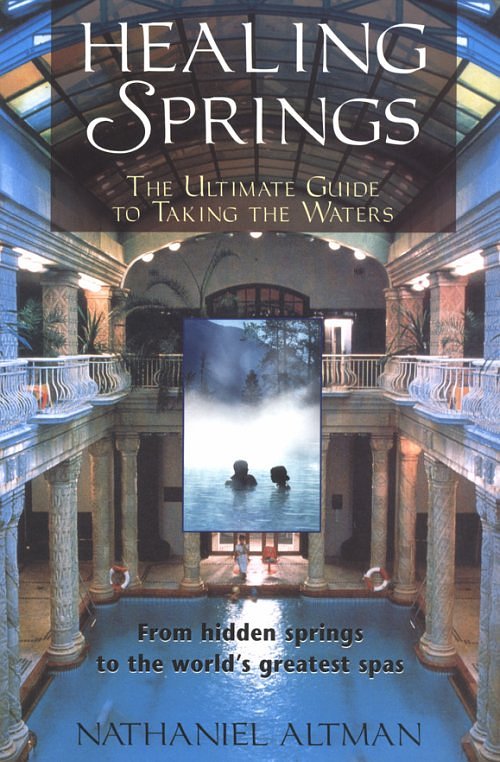
Publications: Healing Springs - The ultimate guide to taking the waters [?]


Non-existent
Soaking literature is far and few between. 

There are indeed many a hot spring guide book, in the US quite a few and in New Zealand as far as I know. Supposedly there will also be quite a few connoisseurs guides in Japanese.

But with instant internet, there's little or no need to publish these guides any more. We can all delve the info required with a swish and pointer or two. All up to date as well as the latest visitor who wishes to diss the place. The photo's are always there, explaining every nook or cranny. And even pre-buying an entrance fee to the fancier resorts becomes apparent. All the pre-visit pleasures.

This does mean that the enthusiast / upcoming soaking expert is depraved of an avenue to exhibit his or her expertise. In print. And who's not being printed does not exist. So goes the old adagium.

But beyond the world of lists and links there is surprisingly little info on what hot springs are and why so. Altman's now slowly dated Healing Springs wishes to link the two worlds and probably back in 2000 that might have worked. But nowadays a book a third filled with alist of potential soaking spots and a small collection of soaking picca's instantly seems out of place. And soakers in Southeast Asia need to note: we are not included! So much for our beloved soaking culture.

Best efforts to no avail? Krabi, Thailand's Klong Thom hot springs by Cholthicha Pornpan

Lost
But in the other two thirds, Altman has gone out of his way to seek to prove beyond doubt that soaking is indeed a healing process. 
Altman's expertise is in alternative healing (he's an hand analyst) and he seeks to combine natural waters with immediate health benefits. Mineral content is linked to disease remedies while diseases are linked to types of hot springs. It transpires that soaking isn't the only healing aspect, one needs to include drinking and inhaling mineral spring content. Emphasis is awarded to the Euro concept of taking the waters where states have enabled soaking industries to expand and medicalise the hot spring experience itself.
And that is where to me the healing aspect is lost.

Healing and hot springs is as much about inspiring and relaxing rather than solely something to heal. Altman does try though. There is a chapter on the ambiance of soaking. But describing this book as the ultimate? Even in 2000 that wouldn't have covered the content.

Though he admires the Euro soaking states, he's right in emphasizing that soaking nowadays is something we might be interested in; but gone are the days in which states could afford soakers to indulge for weeks on end. Better are the Japanese concept with ample bathing facilities which can afford daily experiences. Already this fits much more in with northern Europe's hang towards sauna. Or the old daily English bath.

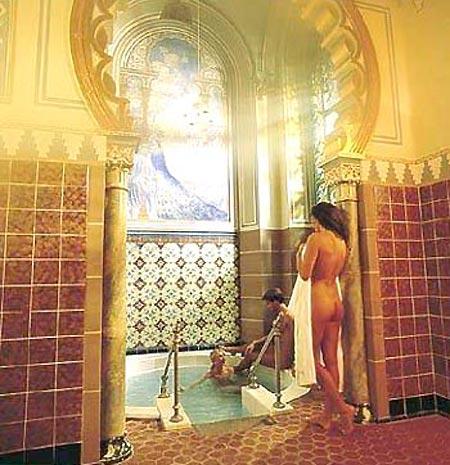
The author raves on about his Bad Wildbad experience, Germany. Unfortunately his own photo's are not available any more. The caption to this photo:
'A swimming fairy tale come true ... The classicist façade of the Graf-Eberhard-Bad (Count Eberhard Pool) looks rather unsophisticated in relation to what it contains. Behind the Florentine sandstone walls you will find oriental bathing splendour that is certainly unique in Europe.
This building, once threatened by decay, was restored with the help of significant financial backing, good planning and artistic effort to its original luxury as a bathing landscape, a dream from 1001 Nights. Today it is a modern temple of health with the refined feeling of the orient.
A grand architectonic effort thus succeeded in creating symbiosis between necessary modern form and an atmosphere of nostalgia. The Moorish Hall, the Princes' Baths and the Great Lords' Bath, where the statue of Venus by the Danish sculptor Bert Thorwaldsen can be seen, and above all the exclusive sauna landscape are part of the wonderful framework for a healthy visit. No resort visitor should miss this attraction: no one leaves without being impressed'.
Other aspects included are a nice historic overview where he notes that hot springs and human interest can be traced back for 600,000 years, but what with the lack of writing skills, use of mineral waters can be traced to Greek and Roman scripts as well as ample evidence in the form of archeological remains.

Altman does add a chapter on the preventive aspects of heated baths (leading to higher states of immunity) which assist in cleansing the body of toxins. We also learn that water pressure leads to increased flows of oxygen-rich blood. There is much more added to the list to the preventive powers of soaks, aspects of negative ions, micro-nutrients. You'll need to read for yourself.

So to sum up is Healing Springs a no buy? Well, I think the book cost me 0.14 cents which is about just above scrap value. The question is the book worth the transport costs? Hmm ...

Healing Springs has 4.8 stars at Amazon (4 reviews), while only 3 stars at good read (2 ratings).

Reference
Altman, N. (2000) Healing Springs - The ultimate guide to taking the waters. Healing Arts Press, Rochester, Vermont, United States of America.

Tuesday, 9 July 2013

Impact

'Water spring bath
Hot water spring at Banjar, Buleleng, Bali'
From the flickr site of I Putu Budi Astawa

To follow
Does anybody recognize that the social side of internet is dumbing down? With the advent of broadband and higher speeds, there's been a shift from text based write ups to mass photo ops.

In this case, do you notice that after all these years there are still only just 8 followers on this blog? that's not much ... The Tumblr site Soaking Spirit on some days welcomes 8 new followers!
I do get it. On Tumblr a follower is just a single click away, whereas if you become a follower on blogger there are a few steps to go through. 
But I simply believe that the intellectual stimulance blog entries offer, simply can't stand up to the instant (in your face) photo visualisation. And yes in some cases one pic can beat many a lengthy blog. But a blog offers more ...

Anyway this leads me to Pininterest. I don't understand Pininterest. I have put up a board of Thai hot springs, but nothing seems to happen. I follow a couple of boards, but again nada: no updates. Doesn't look like anything will happen here ... Can someone explain to me what the existence of Pinterest is meant to be?

And what is happening at Flickr? Are they really trying to drive away their customers? And their visitors?

Hmmm. 

Light headed
The Global Times, China not so long ago warns potential soakers for health concerns (January 20):
'However, even though the hot springs are reputed to have beneficial effects, doctors say the hot springs are not some supernatural elixir and that there are many risks involved in overdoing it, from light-headedness to infertility.

Even for young and healthy people, hot springs have risks that often are not posted.
...
"In Japan, bathing in the hot springs is a very popular and enjoyable thing. But in Japan, the hot springs are a more natural resource. It's underground water with a lot of minerals, such as sulfite," he [Yan Hongbiao, a doctor at the Fuwai Cardiovascular Hospital] said.
In China, there are many fake hot springs and the quality cannot be ensured, he said'.  
Infertility is a remote possibility apparently.

'People soak in the hotspring in Xingtai, north China's Hebei Province, Dec. 13, 2012. 
Local people went to hotspring during snowy days'. 

The ultimate list? Lonely Planet's 1000 ultimate sights of this planet. Under the heading best baths are a few hot springs (Beppu, Dogo (Japan), Hot water beach (New Zealand (been there)), Szechenyi Baths (Hungary) and Blue Lagoon (Iceland)).
These are their ten choices for Best Natural Springs: (1) Rift Valley, Ethiopia; (2) Oymyakon, Siberia, Russia; (3) Deception Island, Antarctica; (4) Waimangu Volcanic Valley, Rotorua, NZ; (5) Grand Prismatic Spring, Yellowstone National Park, USA; (6) Jigokudani Monkey Park, Yamanouchi, Japan; (7) Troll & Jotun Hot Springs, Svalbard, Norway; (8) Pamukkale Terraces, Turkey; (9) Landmannalaugar, Iceland; (10) Blood Pond Hot Spring, Beppu, Japan.
Most hot springs I presume ...

Lonely Planet has another list, this time of Europe's best hot springs (May 17). A couple from Iceland, likewise for Austria, Italy and Hungary. Language barriers mean the need to include the sole Anglo-Saxon soak, aptly named Bath. How they compile this list seems to be besides the point. Who cares, as long as you have a press release every day ...

Nudity is common in northeast Asia hot springs. Equally common are the western (or better said conservative) reactions. Example from Soul to Seoul (11 June) visiting a local Jimbilang (hot spring bath) near Seoraksan National Park:
'People, the scene facing my small tribe when we opened the change room doors will never leave me. I had entered some alternate reality where I was taking part in a Cleopatra-esque era movie Korean style. There were more than ten big (think typical Aussie backyard pool big) rectangle baths spread out before us. There were hot baths, hotter baths and even hotter baths to choose from (temperature readings at the top told you what to expect) along with a walking bath, a mud bath, a cold bath and the outside bath (where, as we discovered, there was no where to hide thanks to the water clarity). Along one side of the enormous cavern were rows and rows of mirrored benches where groups of women sat on small stools facing the mirrors and vigorously scrubbed each other using special gloves and brushes. All totally naked. Despite all the activity - women walking from bath to bath, from bath to scrubbing area and back to bath - there was an unbelievable sense of calm that exuded from all. One might even say it was somewhat liberating and strangely comforting all at once. I would like to report that I soon got used to being this naked but I did not. Oh no, not at all'. 
She didn't relax ...
  
The way ahead? Ciater hot spring , Java, Indonesia. From the instagram page of sayisayyie

Yet again New Zealand leads the way in the wackier (literally) side of soaking. First there is the story of a 9 year old volcano hunter. Or should it be a hot spring hunter and volcano vollower ... (NZ Herald, July 7). 
Then from the same source (July 3) the curious story of a hot spring hoist:
'As the man left the hot pools he was hit over the head.
Some of the couple's belongings were then stolen from their van and their keys were tossed into the hot pools.
After the group left, the pair were able to retrieve their keys and drove to Rotorua Hospital.
The woman was not harmed but the man needed stitches to a cut to his head'.
Poetry from from the region
  • Indonesia
Meanwhile in Bali, Indonesia. Geothermal projects are off the drawing map (Thinkgeoenergy, June 19):
'Pastika [Govenor of the province] said there are still other green sources such as water, solar energy and waves that could be exploited for it. “It may be more expensive but it also has a price,” he said.
The governor said the main reason for his decision is that because mountains, forests, beaches, lakes and estuaries are holy areas'.
Soakers can continue to enjoy Angseri hot spring, Bali, Indonesia. At least for the time-being? From the instagram page of lealbeny
More bad news for Indonesian geothermal powerfans. On Sumatra there is local opposition to a geothermal project, according to thinkgeoenergy (June 6):
'“The villagers, mainly members of the Rajabasa traditional clan residing on the slope of Mount Rajabasa, staged a peaceful rally at Sukaraja dock in Jeti village, Rajabasa, on Wednesday, demanding that PT Supreme Energy cease its exploration.
Beside being detrimental to the environment, the villagers said the geothermal exploration would also damage the social structure of the South Lampung traditional community, especially those living around Mount Rajabasa'.
On Java, near Sumedang, another geothermal project (100+ $US million) is running into problems due to land acquisition (thinkgeoenergy, June 6). Or not?
'“The land acquisition process is hampered due to public concerns about the impact of environmental pollution resulted from the geothermal project,” he [PT Wika Jabar Power Engineering Director Uum Komarudin] said'.
Is a pattern evolving?

 Hot spring near Bogor, Java, Indonesia. From the instagram site of audreytanzil

Indonesia in the meantime is raising feed-in prices for geothermal electricity. The smaller the geothermal plant, the higher the price (Source: thinkgeoenergy, June 12). So maybe they could buy a few wavering villagers ...
  • Malaysia
Banjaran hot springs, Malaysia is very ... umm chic. The yumlist BLOG has a report (June 13). How to describe? Well, the author goes over the edge and picks up on many a detail:
'Earthy hues, natural stone, wood, glass and tropical furnishings transit the outdoor environment to the in. Abundant use of vegetation and running water bring the revitalizing characteristics of nature to the living space, creating both a calming and rejuvenating setting.
The glass windows and doors of the bathroom look over the villa’s most prized feature – an outdoor sunken Jacuzzi with a direct hook-up to the geothermal hot springs. Star filled skies can only be made better with a skinny dip in the bubbling bath allowing the healing properties of the water to do its magic'. 
Note that this all comes with a price ...
  • Philippines
More on the proposed hot spring / geothermal plant on Mindoro island, the Philippines (Southern Luzon Inquirer, June 19):
'The potential is endless!  Power firm Constellation Energy Corp. (CEC) will develop lakeshore areas near its 20-MW geothermal power project into a hot spring and wellness center to showcase the healthy mix of green energy and green tourism in this province'. 
Well, that would be a first for the region. In general there is a disregard for soakers vis-a-vis the techno superiority of geothermal projects. 
Note the Dutch connection ....!
The News of Iceland (July 1) picks up on the Dutch connection (IF Technology) as well (leads to credibility?), as it of course does on the Icelandic comparison.

From the instagram site of buddz_06 Hibok-Hibok hot spring, Camiguin, Philippines:
'The perfect way to cap off the day!. Sarap..emojiemoji Goodnight!'
By the way, Philippines, already one of the global leaders in geothermal energy hopes to up the output by another 75% in the coming 15 years. According to the Manila Standard (July 3).
  • Singapore
'Yikes hot'
Sembawang hot spring, Singapore. From the blog of smallwheelsbigsmile (June 16).
  • Vietnam
Top 5 most famous hot springs of Vietnam by tripatini (June 25):
1. Kim Boi ('Being immersed in a large mineral water deposit of Kim Boi stream is also not unmemorable for every visitor'.)
2.Bang ('Bang Spring is attractive with its fanciful, poetic scenery'.)
3. Kenh Ga
4. Tay Vienh
5. Dam Rong
No mention of Nha Trang?

Bicol hot spring. From the instagram site of carmelajacinto
Related Posts with Thumbnails
Copyright 2009 © Soaking in Southeast Asia. All rights reserved.
No reproduction or republication without written permission.