Showing posts with label Newzealand. Show all posts

Saturday, 13 March 2021

Convenience


biancakyburz
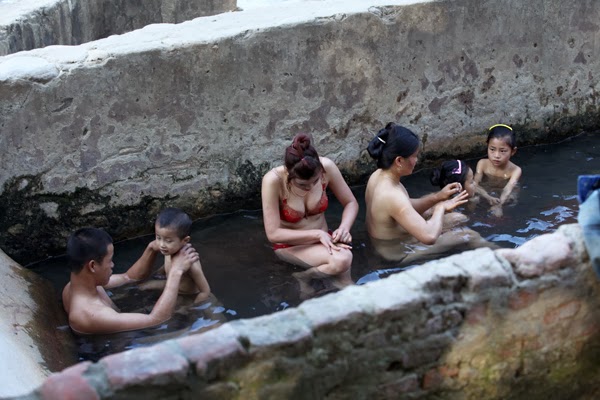
Little known fact, Hsipaw's hot springs are conveniently located next to the local motorcycle wash.
Much is to be said about what will happen once the Corona crisis abates. The same also applies to the world of wellness & travel.

Starting off with Global wellness trends for 2021. A bit late, but nonetheless as much of the world is still locked up, pretty much a prediction for what the hordes (read ourselves) will do / go when cut loose.
Little newsworthy trends, basically same same as always just described differently. If anything it will be still very much elitist. 
No. 9 on the list with some relevance:
'The coronavirus pandemic acted as a near complete brake on travel in 2020 and consumers and suppliers looked to rebooting travel for the better. The next trend? Look for all travel to become wellness travel as manic getaways are replaced by slower, closer and more mindful experiences. The over tourism epidemic will be challenged, tentative travel will become a new buzzword, and people will strive to leave a place better off than they found it'.
As said, when we are all set loose again, slow travel will not survive. The pressure we exert on each other for new experiences, for greener pastures will trump the slower travelling and experiencing trends. The time we missed, the eventuality that something so weird may well happen again will mean that we have lesser time to see (and experience) whatever landmark still on one's bucket list.
I suspect home wellness will become more and more important. Why rely on seeking commercial facilities located further away when you have virtually the same experience at home? And you determine your own times and rules!

The Sydney Morning Herald (Jan. 5) has its own list of wellness trends:
'With the coronavirus pandemic shaping our entire world in 2020, it's no surprise that we'll see its influence extend into 2021 lifestyle and wellness trends.
- Comfort crafting
In terms of mental wellness and self-care, Dayna Isom Johnson, Etsy's trend expert, says "little luxuries" and "wellness-focused rituals" are going to be popular. This includes things as simple as reinvigorated fitness routines and long baths. Another trend that Johnson predicts will "really stick out" is comfort crafting.
"It's really a time to craft, to learn a new skill and it can certainly serve as a form of self-care and grounding," she said.
...
- Friluftsliv, which translates to English as "free air life," is an appreciation of being outdoors and incorporating outdoor activities into your life.
...
- Trampolines
...
- Slow travel'.

No news. 

A more regional look. 
The current (Covid-19 induced) crisis is one in which national tourism agencies seem to be trying to reinvent themselves. 
Here, Couchfish (Feb. 26) discusses how Thailand hopes to move ahead, basically by focussing on the high end of clientèle:
'At least within a Southeast Asian context, much of the focus is on “high value” tourism rather than backpackers. By high value, what tourism boards really mean is “high–spending”. This is a mistake—budget travellers are the biggest spenders of all.
...
I’m not arguing that high end tourism should be consigned to the scrap heap—tourism comes in many flavours, and each has pros and cons. Backpackers though punch above their weight and it is folly by tourism boards to (at best) ignore them or (at worst) tell them to stay away'.

It doesn't seem that the local Southeastern Asian governments are grasping reality. 

faisarj1 near Banda Aceh:
Terakhir ke sini tahun 2009. Not bad!

Soothing
Talking about reality, TravelandLeisure (Dec. 12) presents 

'The worlds most instagrammable hot springs'. 
Europe gathers most hashtags (f.i. Blue Lagoon), closerby NZ gets 2 mentions, Oz 1 and Japan 2. None in Southeast Asia. 
It actually refers to an article put together by Parkdean Resorts which has a more extensive top 25 (again nothing from SeA!) and describes the methodology which compiled data on November 2020. 
No doubt the method has its limitations, as it not really incorporating other languages / scripts. But probably the less biased, though it would have been great to compare to a year before. 
Several mentions should have been non-starters: 
- Mammoth hot springs (US) refers to an area with a fair number of hot springs, 
- Aquadome and Termebucuresti are not really natural, 
- Cascate del Mulino made it to 20, but the same place but referred to as Termi di Saturnia made it to no. 6,
- Jigokudani, gets the numbers of Jigokudani monkey park whereas 
- Sawtooth National Forest actually may have a hot spring but the expansive name includes many, many non-soakers.
So a good effort but needs improvements ...

The NZHerald (Jan. 7) has a national list of (only!) 5 geothermal hotspots.

JapanToday (Dec. 23) has a ranking of Japans most popular hot springs:
'Travel company Jalan surveyed 13,342 users and asked them about their favorite onsen areas, the ones they liked so much that they want to go back, and they all seem to offer much more than just soothing hot waters and Japanese ryokan inns.
...
For the 15th year in a row in Jalan’s annual survey, Hakone, just an hour and a half outside of Tokyo by express train, was voted to be the best onsen resort area in the country. There are a lot of reasons why Hakone is a popular tourist destination, not least among them the startlingly beautiful proximity to Mt Fuji. And with plenty of things to do there–ferry boat rides, a cable car over a volcanic mountain, a scenic railway, shrines temples, and museums, just to name a few, there’re lots of reasons to love Hakone enough to keep coming back over and over again.
That Hakone made the top spot once again isn’t entirely surprising, though it is interesting that the top 10 remains largely unchanged since last year, except for Kurokawa Onsen, which jumped up two spots. Perhaps that’s because travel was limited due to the coronavirus, or perhaps that’s because these places are just too good to pass up. Either way, if you’re looking for an authentic, fun, and memorable onsen resort experience, look no further than one of these top places'.

Locally, 8 best hot springs near Manila (by viatravelers (Dec. 19)), though the definition of 'near' may need some explanation.

Traverse-blog (Mar. 1) on how to experience your first time at a Japanese onsen. Nothing surprising though.

Desperate times? The Mainichi reports (Oct. 30) on the slowing business of onsen hosting:
'NISHIWAGA, Iwate -- The local government of this northeastern Japan town, known for its hot spring resorts, put seven of its 10 municipal spa facilities on sale following falls in visitor numbers, but as of Oct. 29 -- the day before the deadline to register interest -- it had yet to receive a single application.
...
Conditions also apply: for at least five years the buyer must operate the hot spring facility and cannot resell the property in the period.
Nishiwaga's local government started to build municipal hot spring facilities in the mountain town from the 1980s, and it has aimed to develop the town as a spa resort location. But the town has been hit by serious depopulation in recent years, and the number of visitors has continued to decrease'.
NZHerald again (Jan. 25), hopes yet another article on the (n)on-goings at Waiwera Thermal Resort (not so long ago one of NZ's bigger waterparks):
'The iconic Waiwera hot pool complex closed its doors for a $3 million renovation in February 2018 and has never reopened.
Instead, the past two years has seen court battles over rent and trademarks, liquidations, cancelled leases, and a realisation that the damage to the infrastructure of the 50-year-old water park (and its more recent bottling plant) is so bad almost nothing is salvageable.
...
But there's a potentially happy ending to the tale: the present owners in September 2020 made preliminary decisions on a $250m masterplan.
....
They say the whole project could take as long as 10 years'.
Blessed
alx_alex_forever
Friday. Pool day 🐟🐟
Ready for water game 🐰🐰
#alxforever #holiday #holidays #2020 #travelblogger #travelphotography #asia #laos
A new Laotian soaking opportunity (photo above)? A new swish resort in Xieng Khouang. There's not much to find, it's managed /owned by Asa Power company and only has a Facebook page. There's also very few reviews as of now.

FindingHotsprings notes (Jan. 16) Wareerak (Krabi) as its best soaking spot in Siam:
'... you’ll be able to soak in five hot spring fed pools found on the property, of varying temperatures. To determine the healing properties of their springs, Wareerak had the waters tested by the Institute Fresenius in Germany in 2017, and it was found that the waters met the German standard for “Natural Medicinal Water”. Additionally, the waters do not contain any strong sulphur smell. With a PH of 7, the waters are very good for the skin and may be used for drinking as well. A signature of the property is its hot springs waterfall, a true natural wonder'.
A complete guide (Feb. 14) to Sai Ngam hot spring, Pai (Mae Hong Son province - Thailand) by Jonny Melon. Though excessive, by no means complete. And why whine about national park entrance fee?

where_is_jon
This was such a happy day for me. It was one of the last days of swimming for me in Thailand because I was getting my feet tattooed the next day. By the time they healed, I would have left the country. So we decided to drive about an hour or so past all of these small villages and into the heart of the mountains. Protruding from the ground was this huge bubbly rock that was spewing boiling hot water from the Earth. The local people built a system to let some of it travel through to two pools for soaking, while the rest just merged with a nearby cold river. It was surrounded by mountains and beautiful nature. We spent hours here, soaking up every last minute. I truly remember being so happy about this decision. Sometimes you have to go out of the way to see some new things that speak to your heart. Was blessed to swim at these hot springs.
The same Jonny also has a recent (Jan. 16) posting on Ardent (Camiguin, Philippines):
'As I mentioned earlier, these hot springs sit at the foot of Mt. Hibok Hibok volcano which is where the thermal water is derived from. The water temperature is around 40°C that is slightly cooled on the way down to the lower pools.
Ardent Hot Springs are man-made pools surrounded by lush rainforest and the water is transparent with a tinge of blue. For a man-made structure, they’ve done well to make this place a tranquil experience for visitors.
The water cascades from the top of the valley and divided into four separate pools. The two larger pools at the bottom are the most inviting and there is an arched footbridge between them'.
GettingStamped (Feb. 20) introduces everything you need to know concerning Maquinit hot spring.
'Looking for the perfect place to end a fun-filled day in Coron? Consider a visit to the tranquil Maquinit Hot Springs. As the only saltwater spring in the Philippines, Maquinit Hot Springs is fueled by an active, underwater volcano.
However, you don’t have to worry about any dangerous eruption. The hot springs are entirely safe. Not to mention, soaking your aching muscles in the warm waters is the perfect way to unwind after a long day of island hopping and outdoor adventure'.
NikkeiAsia (Jan. 9) on a slice of Japan in north Vietnam:
'Yoko Onsen resort lies nestled deep in lush mountain forests in Vietnam's Quang Ninh Province. It has all the trappings a traditional upscale Japanese resort needs, from luxurious ryokan-style buildings to baths bubbling with mineral-rich hot-spring water.
Since it opened in June, the new leisure complex has become a hot topic among trend-conscious Vietnamese. It may help spread the Japanese onsen culture of bathing nude for relaxation and wellness in the country, where the closest thing to an onsen is a hot-spring pool to take a dip in while wearing a bathing suit.
Yoko Onsen, the first Japanese-style hot spring resort in Vietnam, is a three-hour drive from Hanoi, the capital. It is located off the beaten track and in a beautiful tranquil setting overlooking forests and hills in the karst landscape stretching from Ha Long Bay, a UNESCO World Heritage site.
...
All baths are outdoors. The complex is divided into three zones: separate areas for men and women, and one for both men and women to bathe together in swimsuits.
Besides 25 bathtubs, the complex also has bedrock bathing facilities and saunas. The water is rich in sodium and chloride ions, and the temperature of the spring's source is 42 degrees Celsius. The spring water is diluted with no other water.
Unlike Japanese, Vietnamese do not bathe or soak with strangers completely naked. When this reporter visited Yoko Onsen, young guests were making a lot of noise in the mixed bathing area. A manager at the resort said it will try to help Vietnamese learn how to enjoy onsens in the Japanese style'.
thylaan 
at Yoko onsen:
Sun in my eyes, navy blue skies
These are the reasons I can survive ☺️
#sunset #13degrees
Not often, but a scientific article (pdf, Oct. 9, 2020) on one of the regions hot springs, which for a change does not look at geothermal potential (read how to make money easily), but looks at how the environs of Annah Rais hot spring (Sarawak, Malaysia) can be monetized. !!!
'The Hot Springs has potential to become a tourism destination that can contribute to Malaysian Economy'.
And non-Malaysians were prepared nearly three times as much as locals, suggesting the need for more local education. ?

Monday, 17 July 2017

Insomnia

inhinyeranglaagan at Kili, Abra, Philippines
Below the hot spring is a small steam cave. #hotsprings #experiencethephilippines #explorephmag #SiAbra
Stepping outside the region, the ever popular Peninsula hot springs of Australia have partnered in the research project named:
''Indulgence or therapy? Exploring the characteristics, motivations and experiences of hot springs bathers.'
One of the very few forward looking and consumer driven hot spring institutions on the globe, the link provides an abstract:
'Analysis revealed that “relaxation,” “peace and tranquility,” “indulgence” and “escape” were the most important motivators for bathing. Most respondents reported general health benefits (98%) and better sleep (82%) from bathing, one third experienced fainting/dizziness. One third of respondents also had medical conditions. Significant benefits were reported for back pain, arthritis, stress/anxiety, depression and insomnia. These results suggest that while relaxation is currently the major driver of hot spring visitation, balneotherapy warrants consideration from Australian health practitioners and insurers as a complementary therapy'.
I don't known how much this is reflected by other significances (natural environment, social interaction, prospects of a day vacation), bathing does seem to drive the above. A common feature (whether it's the onsens of Japan, the sauna's of Scandinavia, the hot spring holidays of the Tibetans, the mineral bathing culture of Germany, the Turkish baths or the hot rock baths of Bhutan) communal bathing and thus leaving behind one's social setting are ever increasingly needed in today's complex world. 
We need more. 
We need more variation (if only, the above examples of global bathing cultural reflect there's more than 1 way to bathe). 
And it's our common interest as a society to be as physically and mentally healthy, so why not have society assist in pursuing soaking?

Nowhere
It's regional stuff that's our next focus, starting off with a photo and an experience from Burma. 
 
Day 5 (100517) - Khaung Daing Nature Hot Spring, Lake Inle Myanmar. Now who would have thought there would be a hot spring in the middle of nowhere! After a 25-minute ride into a more rural part of Lake Inle, we arrived at the destination only to ask ourselves what we were doing going into a hot spring when the sweltering midday sun was already all around us. Nevertheless we got into our swimwear and dipped in.
There were 4 pools with unique temperatures: hot, warm, cool, and dead rat -- we didn't find out what temperature dead rat was -- and I was confused how they had different temperatures when it was supposed to be a natural hot spring. Perhaps only the water was from the hot spring, and the temperature was controlled by a heater. The hottest pool was a challenge getting into, but slowly and steadily we all got used to the heat, just like how we did with the Burmese weather. With the backdrop of lush greenery and hilly contours, it was a portrait of serenity.
Think Geoenergy (Apr. 6) has an article on the creation of a geothermal tourism village near Kamojang, West Java, Indonesia.
'“In addition to the drilling activities, we will build a tourist village area around the drilling site,” said President Director of PT PGE, Irfan Zanuddin in celebration activities on Exploration Wells BDN-B / 1 at the location of the PGE at Bukit Daun this week.
What a geothermal tourism village actually entails, seems unclear.
ruthmichellecody exuding a different kind of energy. I doubt that's a common practice, rather more a risque photo shoot.
#Baliblues #happy #naked #travel #getnaked #bestwaytobe #simple #lovelife #travelphotography #mountbatur #hotsprings #bali #indonesia #beautiful #landscape #nudity #thetoplesstour
Vital
Malaysia's peninsular has quite a few of spruced-up hot springs that are so to say neither fish nor flesh: not natural enough, nor worthy of an extended stay. 
With the odd (high-end) exception of Banjaran. 
And with this mind, the future has been foretold. The edgemarkets.com (Jun. 14) reports:
'Anzo Holdings Bhd secured a RM10.17 million [roughly 2 million $US] contract to revitalise Selayang Hot Spring near Selangor's Batu Caves'.
More Malayan hot springs. KLnow (Jul. 12) has a list of 12 soothing hot springs. All with quite a bit of cement in sight.
Hype.my (Jun. 23) has another list with
'... 8 local hot springs you should visit when you need a little “me time”.
Or as the title of the article says to rejuvenate. It manages to extend the list to Borneo so it's just slightly less concrete based.

dianne_ditona at Hapao Rice Terraces and Hot Spring
Eat some makeup and maybe you will look better from the inside. Add more bb cream to cover your bratty attitude. My value will not decrease base on your inability to see my worth. My ponytail is higher than your standards. Climb b*tch 😂 #relaxing #serenity #ignore #longhairdontcare #hotspring #skinnydeeping #jonsnow #knowsnothing
More concrete. Redeveloping Singapore's Sembawang hot spring is not only seen as a positive thing. Channelnewsasia (Apr. 23):
'Come end-2018, trips to this northern part of Singapore might be a tad different The National Parks Board (NParks) announced that the Sembawang Hot Spring area will soon be turned into a one-hectare park. Development of the park will start at the end of this year and is expected to be completed a year later.
...
 
Mr Teo Lye Hock, 67, another member of the brisk walking group, hopes the place remains free of charge after the revamp, calling it a “poor man’s spa”.
Another visitor, 59-year-old Mdm Pan Hiew Lian said in Mandarin: “I’ve already been coming here for more than 20 years. I don’t want it to be redeveloped because I think it brings a sense of nostalgia. Redevelopment might make it better, but it’ll lose its charm.”
...  
However, one historian said modifying the hot spring’s present form could also mean losing a part of Singapore’s heritage. Mr Alex Tan Tiong Hee, the honorary secretary of the Singapore Heritage Society, said the hot spring is one of the few remaining places of interest outside of the city region that serves to highlight Singapore's heritage.
"It’s something that doesn't just cater to the folks living around Yishun or Sembawang, (but it's also a place to show) tourists, our friends, that outside the urban areas we still have landmarks," he said.
Mr Tan added that landmarks such as the hot spring help create, among residents, a sense of belonging to their neighbourhood. Without it, that sense of attachment is reduced'.
denisa.e at Phapao, Takua Pa, Phang Nga province, Thailand:
Ripples towards the right. That's because the water was boiling... #naturalhotspring
What a common hot spring experience in Vietnam is meant to be (vietnamnet,  Mar. 13):
'In the early 21st century, Saigon-Binh Chau Tourist JSC invested in the 33-hectare Binh Chau Hot Springs area. It is ranked four stars and listed as one of 64 locations in 47 countries across the globe which foster sustainable ecotourism by the World Tourism Organization.
Binh Chau Hot Springs has 117 guest rooms and four-star villas. It is an ideal place for guests to enjoy special services such as mud bathing, hot spring water bathing, eggs boiled in hot spring water and crocodile fishing.
Rooms with two or more beds are wise choices for groups of tourists. Meanwhile, classical style villas are suitable for high-end holidaymakers who want to enjoy their trip with their loved ones.
The tourist site also features Suoi Mo (Dreaming Spring) hot pool with temperatures ranging from 50-60 degrees Celsius and hot herbal mud tubs. Hot spring water and mud combined with herbs can help people recover their health and cure skin diseases, fatigue and digestion problems.
Furthermore, Hoa Rung Restaurant capable of receiving 500 guests at a time serves both a-la-carte and set menus replete with Vietnamese, Chinese, Asian and Western dishes. There are VIP rooms for those who want privacy.
Tourists can also take an electric car tour around the site, play tennis or badminton and shop at stores'.
Bearing
Having had the region's precious little web-bits behind us, let's see if there's more to note on the wider area more or less on-topic. 
It's interesting to follow where the (soaking) market is going. Leader New Zealand has seen quite a few new developments of hot spring pools with high degrees of privacy (and exclusivity) at area's not known for natural waters but these have been bored. On the flip side it seems that the busier leisure parks are facing tough times. NZ Herald (Jun. 18):
'One of New Zealand's most popular tourist attractions is cutting back its opening hours for a refurbishment as it battles "high losses", sparking fears from staff about imminent job cuts.
The Waiwera Thermal Resort - which is owned by Russian billionaire Mikhail Khimic - will operate for just three days a week from this week, with the "closed" sign to be outside from Mondays to Thursdays'.
China's answer: more opulence, less riff-raff. theluxuryasia:
Did we talk about take a dip in a such amazing design spa and private hot spring? | Who wants to join 🙌 #DusitDevarana #HotSpring #Canton #Conghua #Guangzhou #China 🍃🌞🍃
.
.
📷 @dusitinternational #DusitHotel #PoolGoals
Secret hot springs, not so secret anymore. Otherwise known as hitou (In Japan), on tofugu (Jun. 15) the secrets of the umm ..., secret onsen are revealed. More or less.
'Hitou are tough to get to and they can be dangerous depending on the location.
...
If you do go, I implore you to do extra research as well. And make sure you're prepared. Transportation can be less than ideal, and cell signal will likely be nonexistent. If you're hiking, bring the right gear (i.e. towels, headlamps, bug spray, snacks, etc). Do your research on surviving bear attacks (seriously, depending on where you go). And, because these onsen are mostly "wild," there may not be a temperature control system. You can get scalded, or even boiled, if you're not careful. Use common sense and be careful! We're not responsible if you die or get injured!
Still want to dip your toe in after all that? Let's put on our hiking boots (then take them off again when we get there) and look at Japan's ten best hitou'.
When I skim through the list, somehow I think some secrets are pretty main-stream others though look like dream, bears an' all.

Another guide on how to enjoy an onsen. News.com.au (Apr. 18):
'After my humiliating nudie run, I finally began to relax. I leant back against a rock and looked up at the night sky. Snow was falling out of the dark onto my frozen hair. My body was deliciously warm.
They say the best way to forget a fear of public speaking is to picture everyone in the audience nude. Possibly the best way to overcome a fear of nude bathing is to remember that everyone else in the onsen IS nude — not just you.
Natural hot water at vulcano galunggung in tasikmalaya (cipanas)! 🌋💥🙌🏻🌊🌠First Tourist at this Place! After hiking to the top of the vulcano and to the crater this hot Bath was wow so good for me! Beautiful landscape! Beautiful People!
#tasikmalaya #Galunggung #nature #hotspring #backpacker #backpackers #travel #traveler #traveling #travelingram #instatravel #instatraveling #summer #happy #travelawesome #feeling #experience #germany #0711 #stuttgart #beautiful #love #travelgram #life #enjoy #instamoment #goodlife #backpacker_pics #iwasplacesiknow IFD @mige.c
Cats
In the past, I have reported on the Idaho (USA) hot spring bicycle route. Little did I know that the US also contains a even
'The Hot Springs Trail From Santa Barbara to Canada'.
I'm not sure why the trail (it's for hiking) heads to Canada (rather than head to the Pacific), but that seems the way. The Whole Food Hiker (otherwise known as Aria Zoner) has some background on this hike (Dec. 2016) which resulted in a publication.
Postholer has more:
'The Hot Springs Trail (HST) is a brand new long trail pioneered by veteran thruhiker Aria Zoner. It stretches 2,390 miles from Santa Barbara, CA to Priest Falls near the Idaho-Canada border. On the way it hits an amazing 80+ hot spring complexes'.
One should note that there are not that many hikers who have made the whole trip ... Or soaked in all springs. The official guidebook can be obtained here.

On the subject of guidebooks, does one know that Sally Jackson has just finished penning her new issue of the Aotearoa encyclopedia of soaks otherwise known as Hot Springs of New Zealand.

arrinko0o at Muang La:
旅の疲れは温泉でほっこり♪
地元の人が通う温泉。のぼせたら隣の川でクールダウン。
いいお湯できてます。

#温泉 #なんとタダ #ちんちんに熱い #泥水… #トゥクトゥクで45分 #ラー郡 #ウドムサイ#hotsprings #ladistrict #oudomxay #laos
Finally, a  bathhouse in Tokyo started organizing lessons on topics such as comedy and gaming in an attempt to appeal to young bathers and bring back the disappearing tradition of public baths in Japan.
For example, one such session in the “Naked School” at the Hinodeyu bath house included nine men sitting around the bath, listening to an expert on the ancient board game Go.
Odd. Well, it's innovative and has got the media's attention (in this case vanguarddaily, May 29).
'At its peak, more than 500 people per day visited Hinodeyu, which is located near Tokyo’s Asakusa district. Today this number is only about 100, he [Manager of the Hinodeyu bathhouse] said. In the late 1960s, Tokyo alone had more than 2,600 traditional bathhouses or “sento” in Japanese, but since then there has been a steady drop...'.
June's topic was stray cats.

morgthecaptain at Pai hot spring, Thailand 
What will I even do when I don't wake up to your face every morning #9days 😭

Tuesday, 11 February 2014

Frozen tears

Nothing else matters #indonesia #instagay #blacklesbians #hotsprings #volcanicsprings #volcano #lesbian #nothingelsematters
Toya Bunkah, Bali, Indonesia, source

Mixed
Last week saw the first in a series of interviews with hot spring enthusiasts, the culmination of quite some research and effort. I intend to publish the next interview in 2 months time, but let's just see what the future will bring.

One aspect brought forward in the interview was the hot spring / wellness use of natural waters. Charles Davidson of Peninsula Hot Springs explained nicely the difference for his company, but my attention was drawn to an article from the New Zealand Herald (Dec. 17), concerning the intentions to build an additional "hot pool" complex in Queenstown on the South Island; roughly $20 million should be involved ...:
'The complex would include about 12 large public hot pools, four smaller private pools, changing facilities, a health spa, reception and retail building, and a cafe/restaurant area. At peak capacity, it could cater for an estimated 300,000 to 350,000 customers a year'.
No mention where the waters come from? Are they natural?

Outside of New Zealand there is little understanding of what makes a hot pool.
With an abundance of hot springs readily available in New Zealand, one would find it strange that tourists flock to a number of businesses offering hot pools (and not natural hot springs). But the problem is that geothermal bathing is more attune to the central part of the North Island, whereas those hot springs of the South Island are mostly very remote and therefore (thankfully) devoid of development. 
But the South Island is a lot cooler (thus the need for warmth?) and attracts a fair share of foreign tourists who need to be able to spend a dollar or two. 
With the idea of replicating natural hot springs in a business concept conveniently located for tourists, some entrepreneurs have been introducing the concept of hot pools. And these seem very much to be taking off.  

The existing hot pools of Queenstown are (if one looks at the amount of instagram photo's, see below) a resounding success.

#Onsenhotpools #Southisland source

Named officially Queenstown onsen hot pools, the use of the private pools are priced at $NZ 80 (65 $US) for 2 adults for one hour. The source of their waters:
'Our pools are filled with a mixture of mountain spring water, rain water, and lake water'.  
Sort of natural.

Other hot pools on the South Island are Omarama hot tubs (private pools, 2 adults, 1,5 hours, $NZ 80) where the water is from
'fresh mountain water'. 
Then there are the Glacier hot springs. 
'The Glacier Hot Pools are fed by the waters of Kā Roimata o Hinehukatere [Franz Josef Glacier!], the frozen tears of Hinehukatere for her lost love'. 
NZ$25 p.p. for public pools, $NZ 85 for 2 adults 45 minutes in a private pool. The Tekapo springs have no private pools and are priced at NZ$20 p.p., water from
'alpine springs'.
So while certainly a good experience (see reviews all over the net), waters are not always naturally occurring; heat itself does wonders but natural hot springs have more direct benefits.
Another surprise is the cost, which lies way above what one would pay in say Europe for a visit to an upmarket wellness concept, especially when private pools are all that are on offer (hardly available in Europe).

Fishy
Continuing on the trend-setting agenda. The other week while watching tv, I came across a mention of seaweed baths. A bit of internet searching and you'll arrive at this apparent Irish tradition. From the Voya seaweed internet site:
'The therapeutic properties of wild seaweed have long been known along the Irish coast. At the beginning of the 20th century there were an estimated 300 seaweed bath houses in Ireland and nine in the small town of Strandhill alone.
Here was the challenge, to revive the Irish tradition of Seaweed Baths in his home town of Strandhill – a challenge which was achieved by Neil and his Family in 1996. The VOYA Seaweed Baths in now one of only a few in the country.
Since reopening, the VOYA Seaweed baths in Strandhill have been enticing customers from all over the world. Attracting 40,000 visitors every year to the beautiful surroundings of Strandhill, they have become one of Sligo's most popular landmarks'.
Treatment consists mostly of a steambath followed by taking a hot bath with seaweed in it. Simple. 

Hope
Think Geoenergy tends to think big business. So it's surprising they notice a news article, originally from NHK (Jan. 24) concerning a small scale geothermal plant in Fukushima, Japan:
'The project plans to utilize water and steam from hot springs to generate power. The water – so the expectation – will be sufficiently hot to be reused for the hot spring bath operations and therefore address the fear of many that geothermal power projects could dry up hot springs.
The managers hope to generate about 2.8 million kWh of electricity, sufficient power to supply around 500 households. They hope to generate about $980,000 per year in electricity sales starting in July 2015.
...
There is the general hope that projects like this will bring visitors back to the region, showing that hot springs can generate clean power and help revive the community.  Overall, the project has attracted some great interest'.
In the meantime, construction has started on a mid-scale thermal power project which would be the first such a large facility in 15 years. Mainichi (Feb. 5) notes further more:
'The development of geothermal power generation often comes in conflict with the interests of local residents, who are worried about a possible reduction in the amount of hot spring water as a result of such construction. Chuo Electric Power Co. overcame such a hurdle by building a geothermal plant not as large as ones developed by major power companies and by sharing profits with Waita-kai [local company owned and operated by residents]'. 
It seems quite straight forward, to consult and get locals to cooperate in whatever geothermal project you have lined up. But with this years New Year news, geothermal trends are spelt out for the coming year (Think Geoenergy, Dec. 27):
'...
4. Public engagement
The industry will now wake up and accept that there needs to be more public engagement for geothermal development and activities in general. Not only PR work, not only pure marketing, but real engagement of stakeholders in communities and regions to educate what geothermal has to offer, but also to accept as criticism'.
So it's quite new, to consult with locals ...
Singing from the same music sheet, a geothermal project at Sorsogon, Philippines wants to meet and discuss opposition to it's proposed geothermal plant there (Think Geoenergy, Dec. 30). Opposition includes:
'... environmental impacts such as land subsidence, dehydration of ricefields and springs that provide the area with tourism and the effects of the geothermal plant’s chemical discharge to the health of host communities'.
Pulang Bato, a hot spring on Negros, Philippines (source).

Recently we discussed the implications of the typhoon on the Philippines geothermal power abilty. Apparently everything has been repaired and all damage has disappeared. One way to cope with the lack of cash in-flow due to the disaapearance of power output has meant that Energy Development Corporation (EDC) has had to teighten it's belt (Think Geoenergy, Dec. 17):
'Hence, the traditional Christmas parties were scrapped and replaced by simple get-together; office supplies have been drastically reduced to the barest minimum; their outreach projects for their host communities have been suspended or scaled down and even snacks during company meetings have been discouraged'.
All to ensure that the shareholders won't have to fork the bill? 

Think Geoenergy (Dec. 18) would also like to fix Indonesia's problems. With geothermal power generartion. In the highly appreciable article they give the floor to Hezy Ram of Ram Energy International. Government investment is distorting the market in Indonesia and thus the investment of private funds. Red tape leads to frustatration and under-the-table payments. And finally the lack of clarity and consistency.
It also touches briefly on the subject of land-ownership. With heavy government involvement, private land-holders are not necesarily paticipating in the projects and are too often sidelined.

So involve locals is the new way ahead? Let's hope.

Tops
The Guardian (Jan. 7) got their New Year ('Forget freezing New Year dips and enjoy a blissfully warm soak instead at one of these natural pools, creeks and beaches') off with a list of the world's free hot springs. Listed are Tavertine (USA), Saturnia (cheating, there's an entrance fee ..., Italy), Reykjadalur (Iceland), Halfway and Lussier (Canada) and Hot Water Beach (New Zealand). There aren't many free hot springs in Southeast Asia, then again most entrance fees are nominal  with some very remote hot springs, which are mostly used by locals still devoid of pricing.

Nominal fee for Pong Duet hot springs, Thailand (source) required, though one can also soak for free in a nearby stream. But as most hot springs in Thailand are located within a national park, entering the park does require a fee ....

Aol Travel (Dec. 9) has a quirkier listing, the 
'Top 9 Places to Enjoy the Snow While Barely Clothed -- or Even Naked'. 
Why only 9? Could they not find 10? Did one turn out totally wrong?
Whatever the reasoning, the only way to enjoy as said are in 9 different hot springs, mostly US based, but also includes the 
'Anywhere, Iceland'
section. 
No Asian mentions, let alone Southeast Asian. The former I understand, but Japanese hot springs, naked and snow seems very normal ...

Or Korea. Korea Times (Dec. 19) lists it's nations best five hot springs.

The best hot spring of China? Xiamen has been awarded the best Hot Spring Tourism Destination in China award (source):
'Xiamen won the title of Best Hot Spring Tourism Destination in China on the first China Hot Spring Summit Forum which was held in Xiamen’s Tong’an District on 22nd December. Xiamen Trithorn Hotspring Resort, a well-known hot spring resort in Xiamen’s Tong’an district, was also awarded the “Best Hot Spring Boutique Hotel”.
Regional updates: obscure
Shocking the locals at #angseri #hotspring #tabanan #bali #indonesia #crazy #russians

There's suspiciously little info from the region itself, with few exceptions.
  • Singapore
Singapore's only urban hot spring, Sembawang, draws yet again another news article (The Republican, Dec. 13). Not really sure why the need for the article, there is no news in it:
'Once attracting 1,000 visitors during its peak on the weekends, the Sembawang Hot Springs has since dwindled into obscurity. However, there are still patrons who continue to visit because they believe the natural hot water that comes out of the spring has healing properties'.
  • Vietnam
From northwest Vietnam I came across this recent photo reportage which records tastefully how locals use their hot spring for bathing. Location is attributed to Tú Lệ commune, Yên Bái Province


Glory
Further afield there is this strange piece of news from Japan (Japancrush, 23 Jan.):
'A well-known onsen village in Kansai is now being sued [for nearly $US 20,000!] by a woman and her mother thanks to a faulty bamboo curtain that meant that for a period of 30 minutes, the women were visible to those in the corridor, in all their naked glory'. 
Is this a sign of the times for Japan, where it seems naked and mixed-sex bathing is on the wane? Are Victorian times ahead of Japan? 
Despite this being an accident and the women having not noticed any lookers they had the following: 
'Following the incident, the women claim they had stomach pains and insomnia, and were diagnosed with anxiety disorder at the hospital. The women’s legal representatives stated that “It equates to considerable mental anguish for a single woman to have her naked body exposed while she bathes”'. 
Reality check.

Globatimes.cn hits another trend, Asian bathing houses. It provides an overview of Shanghai's most popular Japanese, Korean and local-style bathhouses.

More New Years news (Dec. 24) from Taiwan: ideal time to go for a soak. It's a very extensive article with ever

I don't like calling it a trend, but upmarket hot springs are all the rage in China. Near Kunming, Travel Asia reports (Dec. 5) that Dusit will manage a new luxury hot spring resort as of 2016 ...

The Sydney Morning Herald (Dec. 9) has an article on a number of onsen, Japan, doesn't seem to be going anywhere.
Related Posts with Thumbnails
Copyright 2009 © Soaking in Southeast Asia. All rights reserved.
No reproduction or republication without written permission.