Showing posts with label soaking. Show all posts

Wednesday, 13 November 2024

Battle

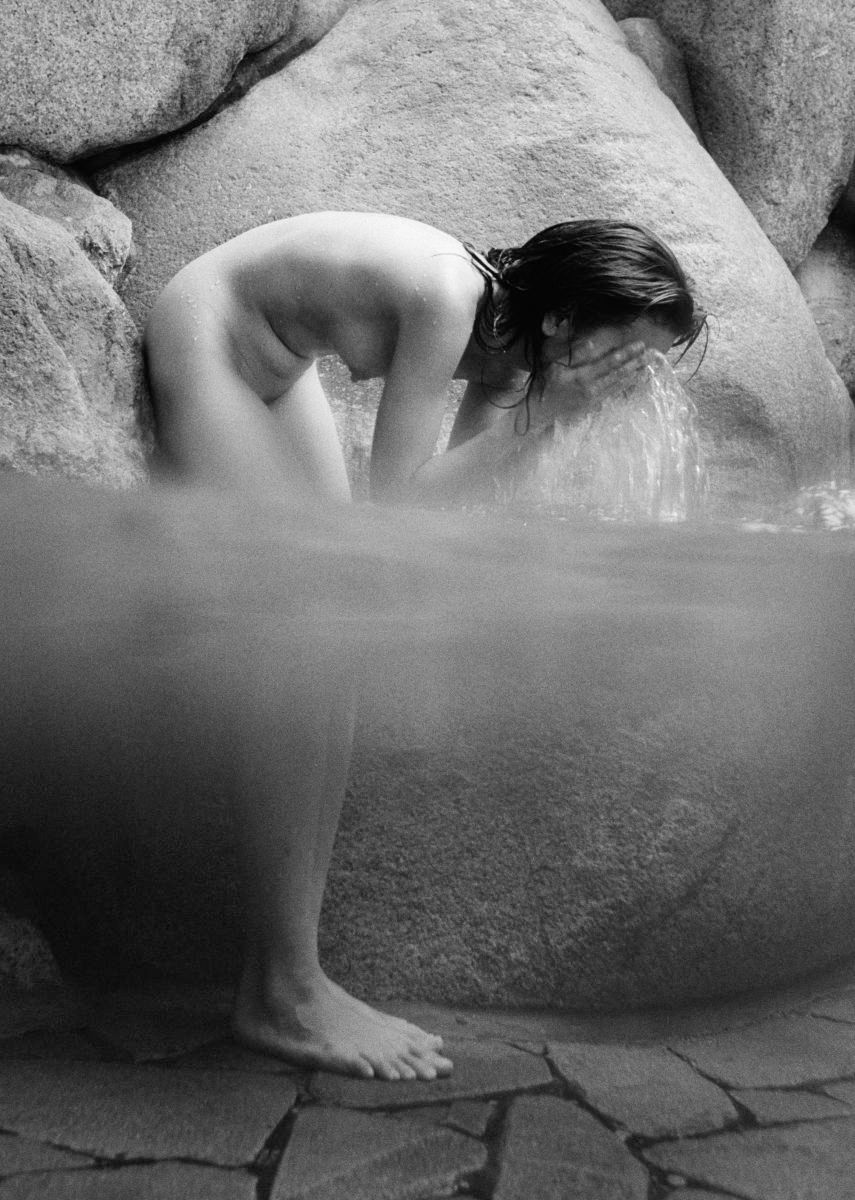
Here, life is beautiful.
✨🧚🙏🏼💕
#pai #hotsprings #thailand #fagabond
It's been quite a while, so you'd expect that this posting would be jammed pack. It's not. 
There seems to be less and less sharing of pure natural hot springs on the internet. Just teases. Or commercial advertisements for the ever-increasing privately run facilities.

But despite this, a couple of snippets. 
A brief overview of teases and advertisements on Southeast Asia's soaking scene. Then launching into the wider area and soaking culture.

Let's start off in Malaysia. 
A visit (Apr. 30) to Poring (Sabah) by the Travelynnfamily. Expectations:
'Some visitors (us included) are slightly surprised when arriving at the bathing tubs, so it helps to set expectations before you arrive. In a battle between nature and function, the latter has won so you shouldn’t expect rock pools or large, pristine bathing areas like in Iceland, for example.
Instead of building into the existing landscape, (very) functional manmade bathtubs have been installed, in blocks of four, surrounded by concrete walkways and steps. It’s fine but wasn’t quite what we expected.
As there isn’t sufficient flow onsite anymore to cater for the volume of visitors, an offsite plant pipes the water into the resort at controlled flows and temperatures. Whilst this is a practical solution to a common problem, it take something away from the experience to know it’s so managed. You can see the original spring at the rear of the bathtub area, but it’s cordoned off and looks quite sorry for itself.
This also means that you will be sharing a bathing area with lots of other people, although we had a block to ourselves on our visit due to lower numbers. The tubs are quite deep, so you aren’t necessarily on display all of the time'.
Then the tease, though Malaysia harbours precious little free accesible soaks. Travel & Leisure Asia (Nov. 8) on Malaysia's best hot spring "retreats":
'While Japan is emblematic of onsens, Malaysia’s network of rejuvenating hot springs promises natural beauty and modern luxury, as these thermal wonders are not just found amidst natural surroundings but also as part of retreats, resorts and even theme parks. Join us as we explore some of the best hot springs in Malaysia'.

Klook (updated Mar. 15) presents Vietnam's best hot springs. The list does itself no favours as two of the photo's are from the US!

Another link doing itself no favours is that of Seafan (Sep. 24). Artist impressions accompany the list, though these are in no way related to the actual conditions. Wishful thinking? The intro:
'On my first trip to Thailand, after a few days exploring Bangkok, I ventured out into lush jungles on some day trips, and eventually I stumbled upon a hidden gem—a hot spring nestled in the mountains. As I stepped into the warm, mineral-rich water, surrounded by towering trees and the sounds of nature, I felt an overwhelming sense of peace wash over me. It was the perfect retreat from the bustling adventure and exactly what I needed to recharge.
Thailand’s hot springs offer that same feeling of tranquility for anyone seeking a break from the energetic pace of travel.
From remote mountain springs to luxurious spa resorts, this guide will take you to incredible spots where you can soak, relax, and let the natural beauty of Thailand wash away your worries. Enjoy!
 
Ur happiness is ur responsibility, so do it when ever u can 💙💙💙 #hotsprings
Wanderon (Oct. 7) has a Top 10 Thai hot springs. 
Surprises? No. 10 Banjaran Hot Springs is actually located deep into Malaysia ... Pity, because the others are neatly presented. The intro:
'Thailand’s got a secret: hot springs. Not just any hot springs, but steamy pools hidden in jungles and mountains. It is one of the best places to visit in Thailand. Imagine stumbling across a natural hot tub while hiking – that’s what we’re talking about.
These aren’t your average puddles. The water’s hot enough to boil an egg. Locals swear by them for fixing everything from sore backs to skin problems. Some people even drink the water, claiming it’s good for your insides'.
World Thermal Springs reports back (March) on a hot springs trip to Thailand, Lao P.D.R. and Cambodia.
An extensive feedback. The hot spring section of the tour starts in Krabi (a hot spring count of 7), heads up the east coast to Khanchanaburi (9 on the way there), then back down to Phuket, via the west coast (7). Restarts in Chiang Mai (7), then over to Chiang Rai, back via Fang (3), Pai (6) and Mae Hong Son (3). Then over to Muang Xai (Laos (1), then rounded off in Xieng Khouan (4). Nothing from Cambodia btw.
I admire that she is able to notch off quite a few hot springs on a daily basis, but the reports are all very matter of fact, not sharing the experience.

VNexpress (Aug. 10) on the cheap soak of Bo Am, followed by an accompanying photo:
'Located in Phu Mau Village, Son La Province, Bo Am Hot Spring (also known as Mo Am) is a natural hot spring with temperatures ranging from 35-40 degrees Celsius. About 150 kilometers from Hanoi, this hot spring is managed by a local cooperative for tourism purposes'.

Klook though does have better photo's with it's updated article (Oct. 2) on hot springs from Malaysia. 
If you actually compare their both articles (above on Thailand) it's evidently that Thai hot springs seem to encompass more nature in or nearby their pools. Just saying.

Sixteen worldwide hot springs as by Travel & Leisure (Sep. 23).
Apparently selected for their "incredible views". Includes Banjar (Bali), the sell:
'Few hot springs boast the tropical serenity of northern Bali's Banjar Hot Springs, a palm-fringed oasis with steamy 100-degree Fahrenheit water and traditional Balinese décor. The turquoise springs have two levels for swimming or bathing, with 13 intricate dragon spouts, and one central pool. The water's sulfuric content promises a restful, therapeutic experience — with lush gardens, towering palm trees, and chirping birds further transporting visitors to their state of Zen'.
Tripadvisor gives it 4 stars, from the reviews, it seems it is all or nothing (expectations?). Absolutely no one comments on the views. Nor can I remember these giving any impression.

Meals
Heading onwards, to the less natural, the wider region and just-touching-on subjects.
Starting off with the former.
ThinkGeoEnergy (Sep. 30) on Malaysia's first geothermal energy congress:
'The Southeast Asia region has earned an excellent reputation in the field of geothermal power generation. As of the end of 2023, the Philippines and Indonesia have a combined installed geothermal power capacity of 4370 MW, or about 27% of the global installed capacity. Taiwan also has operating geothermal power plants in Qingshui and Sihuangziping, and Thailand has had a 300-kW geothermal installation running since the 1980s'.
From the Philippines Primer (updated Jun. 13, original 2020):
'Get your ultimate Japanese pampering at the first-ever onsen spa and largest urban spa property in the country—I’M Onsen Spa.
...
At I’M Onsen Spa, they offer a variety of therapeutic onsen spa, each with unique benefits'.
A recent review:
'It is not onsen. It is just a sauna with a jacuzzi where you have to be naked. I.e. the only common thing with onsen is that you have to be naked. That's it. And those jacuzzi doesn't even work, it is just a pool with hot water. There are no different types of hot and cold baths with different minerals. And they do mention on their site that they have baths, i.e. they lie in customer face'.
From their own website:
'Two Onsen pools with varying water properties. The state-of-the-art technology mimics the chemical composition of natural hot spring waters in Japan. Water types are rotating, featuring seasonal flavors, each with unique health and beauty benefits'.
Soaks further afield. 
Taiwan has a couple of reads.
BBC on a less-crowded (!!!!) than Japan's onsens (Jul. 23)
'Adding to the attraction is how relatively uncrowded some of Taiwan’s best hot springs are, especially when compared to Japan’s most popular onsen. Fewer people and fewer restrictions – what's not to love about this easier, lesser known and offbeat option?
...
"In the West, people go to bars after work to relax and catch up with friends. In Taiwan, we go to hot springs to meet our friends and socialise," Taiwanese marketing professional Jacquelyn Wu told me. The concept of yì bó èr shí is very popular in Taiwan, she elaborated. Literally translated as "one stay two meals", it refers to the phenomenon where people head to a hot springs resort after work, usually on Friday evenings, to enjoy a soak, dinner and a good night's sleep, followed by another soak and lunch, before going home.
For a relatively small island, Taiwan has one of the largest concentrations of geothermal springs anywhere in the world, thanks to its location in an active volcanic zone with constant subterranean heat. It was the Japanese colonisers in Taiwan who popularised the idea of bathing in these natural thermal springs. Just like Finns flock to their saunas, the Taiwanese frequent their hot springs for relaxation and rejuvenation'.
wenhsi1995, not crowded in Taiwan:
♨️
Navitaiwan (as of Oct. 3):
'This guide will cover Taiwanese hot spring etiquette and what they are. I’ll also talk about the most noteworthy geothermal springs to visit throughout the country.
I’ve visited several hot springs in Taiwan throughout my 5 years here. I want to help you determine whether it’s worth adding hydrothermal springs to your itinerary. So I compiled a bunch of information.
SummaryHot springs are geothermal springs that are great for relieving pain.
You’re allowed into Taiwanese hot springs if you have tattoos.
Beitou is the most popular hot springs in Taiwan.
Many hot springs are in hot springs hotels'.
Stark
Experiences shared, East Asia.
Australian website Escape (Oct. 29) and Korea:
'So I hit East Asia’s cool capital of Seoul, where Korean Bathhouses (jjimjilbang) are as popular as they are plentiful. The hottest item on the menu - a darn good naked scrubbing. Weekly or fortnightly beauty-conscious South Koreans will have their bodies ceremoniously scrubbed to achieve their envied glistening glow.
...
The naked bit felt a bit odd for a spa service, but having soaked in onsen in Japan and steamed starkers in saunas throughout Finland, I accepted this as a cultural norm.
...
While I did my best to avoid eye contact with stark naked fellow spa-goers, I felt uneasy about losing my own clothing (and perhaps my dignity). But once stripped bare, I did one last “OMG” breath, and joined the au natural K-set.
...
In hindsight, it wasn’t pleasant but it certainly wasn’t painful and perhaps I’d overreacted to the naked bit, as nobody else cared or stared. The discomfort was also worth it considering my skin’s transformation from rough, dull and dry to soft, smooth and dewy - which is fairly priced at $60 (KRW 55,000) too'.
Then with a US perspective. Live and let's fly (Aug. 24):
'A Jjimjilbang is a traditional Korean bathhouse and a cultural fixture in South Korea. These public bathhouses include gender-segregated Mogyoktang areas with hot and cold tubs, steam rooms, saunas, massage, and body scrubbing areas. They also include common areas with relaxation zones in which you can rest, eat, drink, and in some cases even sleep.
Indeed, my spa at the Grand Hyatt Seoul did not provide the full experience, but the Mogyoktang area was pretty authentic. There were saunas, steam rooms, cold plunge pools, and hot tubs. There was also little communal shower areas where you could dress and scrub your body before jumping in the pool or sauna while sitting on a stool that was only a foot off the ground.
And full nudity.
I find that interesting since it can vary so much from country to country, even within a region. I’m neither prudish nor unaccustomed to naked people. Spending so much time in Germany, where nudity in public baths is not only required but co-ed, I’ve seen bodies of all shapes and sizes and there’s frankly nothing prurient about it.
In Korea, the spa is truly a place where you let it all hang out. Quite a contrast from LA where people come into the sauna in their workout clothes or at least wrapped from neck to knee in towels. It wasn’t just in the sauna or steam room, though, but also in all the pools and even the lounge. And the place was packed!
Then over to the Japanese soaking experience.
An Australian view on bathing near an airport. News.com (Nov. 5):
'I’m at New Chitose Airport in Hokkaido where I’ve spent the night at the Air Terminal Hotel before joining a tour group to explore the culinary highlights of the prefecture. This airport hotel has a view of the tarmac and a reasonable price tag (AUD $176) that includes a buffet breakfast and a visit to the onsen.
...
I stand and move towards the pool’s steps, towel once again clutched in front of me, and the moment comes when I must fold it and put it on my head, as is the custom, and descend into the steaming 42 degree geothermal water.
And, of course, it’s fine.
In the onsen, no one looks or talks to each other and they certainly don’t invade each others’ space. I find a spot in the corner and sink down until the water is covering my shoulders. Then I gaze out the window at the garden and the tiny patch of sky I can see from this angle, and let my mind wander. Everyone is calm, serene, quiet and I feel my worries and the tension of travel float away.
...
It took me a couple of days to get truly comfortable with public nudity but once I’d chilled a bit I was so proud of myself for shaking off my shyness'.
Finally, a slightly different take on soaking in Japan. From artnet (Feb. 29):
'All good things come to an end, but an ending can also be the start of something new. Such appears to be the case with Tokyo’s Onsen Confidential, the hybrid gallery share and hot spring retreat, which is prepping its second and final edition.
...
Onsen Confidential began in 2022, after plans to launch in 2020 were scuttled by the pandemic. It involves Japanese galleries hosting shows from foreign dealers—and everyone repairing to an onsen (a traditional natural hot spring) to chat while bathing together naked.
...
While many dealers are comfortable with gallery exchanges at this point, the idea of having to bathe naked in front of others can be quite daunting for some. (Swimsuits are not allowed at onsen.) But it is this kind of setting that allows them to let their guard down, get to know each other, share their thoughts, and explore new ideas, Rosen [co-director of the Tokyo gallery Misako & Rosen and one of the project’s organizers] said. The event, as he sees it, is meant to “get people together in a space of trust.”
It is “meant to be fun, and it’s meant to place people in a position of vulnerability and trust, while also combining with relaxation,” Rosen said. “If you think about a polar opposite, you may think of an art fair, where it—just by design—fosters a sense of competition.”
Yesterday sento in Kaisei-yu @kaiseiyu
Kaisei-yu is a onsen sento with natural black water hot & cold ☺️ super refreshing and enjoyable sento with the beautiful Fuji-san tiles and the 🐟🐠
.
Kaisei-yu, Kamata
改正湯、蒲田、大田区
.
📍〒144-0051 Tokyo, Ota City, Nishikamata, 5 Chome−10−5
.
Remember that taking pictures in a sento is prohibited 🙏🏻
Taken with a special permission
.
#dokodemosento #銭湯 #sento #onsen #bath #japan #温泉 #bathtime #黒湯 #蒲田 #大田区 #羽田 #haneda #otaku #tokyo

Friday, 6 November 2020

Obsession

Taking a cue from my own blogging, I decided to order in the first edition of Hamam magazine; as suggested in the previous post.

Recap: it's a new initiative, it's print only and it seeks the curious minds:

'A quarterly magazine that features essays, artist projects, photography, and interviews from contributors from all over the world. We think of bathing as a practice of letting go. We will explore many practices, but there’s no denying: we’re bathing obsessed'.

It's slogan: 
'The Magazine of letting go'

It's a hefty magazine (heavy quality paper 100+ pages) and outside the US not available everywhere. Thankfully, a book store in my crazy capital was also in the mail order business and forwarded my order in.

First impressions were that it's certainly neat; very high quality all round. Flicking through though it brought me back to the pre-internet days when a magazine was king. Maybe in the US it's still such, but over here internet is so ubiquitos, magazines are going out of business.

Contentwise there are articles on Victorian Turkish baths in the UK, Mongolian sky burials (stretching the definition of bathing a bit),  there are a couple of takes from the onsen photo reportage by Mark Edward Harris (below; The way of the Japanese bathing) and and there's a long article on the Saunatarian (SWEATERS OF THE WORLD, UNITE!). Other theme's dropped: US banya, Korean bath experience, Totto-na-tta (Japanese tuning), rewilding, James Mortimer, Palau Swimming Association, David Mason poetry and Urban bathing.


But what did I think, other than the presentation? 
Refreshing. 
Overall, I am very interested in what they are seeking to convey. Maybe not too keen on the photographic presentations, but there were a couple of surprises included. The article on sky burial stood out, I knew it still takes place sporadically in Tibet, but the description of actually witnessing the process in Mongolia was beautiful. 

The article by Jack Tsonis (aka the Saunatarian) was quite thought provoking. Jack (from the sauna barren Australia) takes a liking to sauna, such that his travails are noted with 1 city / 1 sauna motto. Not always possible of course, but what he describes as the moral of his story:
'... not to convince everybody to travel my way, or that every Saunatarian needs such zeal. Instead the point of my telling is to inspire others to their own kinds of creative travel, and to record for history what happened when one man said that he was going to sauna every place he visited'.
In fact I've been doing as such already. Being outside, being active, but also encouraging my body to rejuvenate through water immersion has brought me to soaking. And lately sauna-ing.

What also struck me as he describes his visits to 2 Berlin sauna complexes as how these are not in tone with what he associates as taking a sauna:
'The only downside to this whole situation was my deep and abiding unease about the opulence of these facilities,
...
which are completely inaccessible to the majority of the population in financial terms. This observation extends, by and large, to the entire global wellness sector, which preaches a message of well-being but is generally priced at the luxury end of the market. Put another way, wellness is like money: it doesn't trickle down. The dissonance here -between the message of the wellness sector and the practical realities of access- is deafening, and in need of significant critical theorization in coming years. The aim of such theorization would be to expand access to facilities of regeneration in all areas of human habitation'.
I would wholeheartedly agree. 
In western Europe (where I live) the smaller, often inner city commercial saunas are disappearing quickly, as on the one hand larger complexes in attractive settings are offering a full day of sauna fun, a mini holiday as opposed to a weekly routine of a couple of sweats. It means you need a car to visit these places, as too often than not, they're not reachable by other transport methods. Entrance is hefty, so you presume to make it worth by staying the whole day, but then enjoying a meal is making the pricing of your visit even higher. It's also a question of big money versus small-scale family run businesses, the ability of either to invest.

So the first issue was interesting enough, let's see if the can keep up the same qualities, especially content wise.

Thursday, 8 October 2020

Innerpeace

1egendaryl at Red Rock, Philippines:
🍀🍁🍂☘️ 
__
#hotsprings #spring #green #nature #sulfur #mountains #hike #trek #live #love #travel #philippines #stayandwander #rain #landscape #fujifilm #xt20 #bikini #innerpeace #peace
Away from the region, let's see if there are any developments worth reporting.

An issue becoming more prominent this year: shall well explain where this secret hot spring is located? 
It's increasingly more hush-hush, as keeping the secret is seen as a way in ensuring that the ultimate (and inevitable?) destruction of our places of pleasure and peace by the hordes and vandals will be kept at bay.
Anyway, Travel and Leisure with slightly older article (Mar. 22, 2019) concerning geotagging photo's, a practice sharing your location with the wider world on social media:
'Undoubtedly, the advent of social media changed the way we travel. Take one look through your Instagram or Facebook feed and you’ll likely come across at least a post or two that gives you just a touch of jealousy or inspires your wanderlust.
While all that posting certainly has its perks — like getting more people to get out and see the globe — it can also bring unexpected downsides that are becoming more and more critical to understand. Especially the issues brought on by geotagging.
...
“Poachers are now using unsuspecting tourists to hunt their prey,” Sherwin Banda, president of Africa Travel Inc., shared with Travel + Leisure. “While on safari, tourists post photos of animals to social media sites, not realizing that embedded within the post or the photo is a geo-tag containing the GPS location of the photo. This allows poachers to track animals of value.”
Of course, it’s not just animals who are harmed by geotags. Landscapes and natural areas are suffering thanks to too many people trampling the land just to get the same shot as a social media influencer.
The New York Times reported in 2018 that Delta Lake, a remote area in the Grand Tetons, became one such place after influencers discovered its beauty.
“Influencers started posting from the top of the lake. Then it started racing through social media,” Brian Modena, a tourism-board member from Jackson Hole, told The Times. Modena noted that just a few years ago perhaps just one or two hikers would make the nine-mile journey to Delta Lake each day. Now, however, he said as many as 145 people hike it just to get the same exact photo. Because of this, smaller trails are now heavily trafficked, leading to erosion of precious land'.

It's a brave call, but will it heed? Like I said, it's becoming more fashionable, but there's nothing better than social organisation of protection. That's one reason we have governments, though governments often have differing agenda's.

On a more positive note, Think GeoEnergy (Jun. 22) takes time to celebrate. Celebrate World Bathing Day:

'What better thing to do than sitting in a hot pot somewhere in nature or one of the many hot geothermal water fuelled spas around the world? So let's celebrate World Bathing Day.

kitkatchocs at Mainit hot spring:
Ate Joy 🌼 #hotsprings #travel #philippines #mindanao

I belatedly looked up the wellness trends for this year (Global Wellness Institute). Climate Change, Spirituality? No it's:
'Trend 1: Developing the Understanding, Emphasis and Use of the Term ‘Regenerative Economy'.

Trend 2 concerns benefits: 

'... pursuing higher levels of benefit at an individual, corporate, social and environmental level, to be a catalyst of change for “the better”.
Wonder if the trends have changed during the past year? Corporate survival? Inner-health? Positivity?

Heading into the wider region.
The Asian Times looks (Jul. 24) at the situation of Japan's soaks:
'Hot springs, justifiably, are a major tourism resource for Japan. The 27,000 hot springs dotted around the country generated US$11.8 billion in revenue in 2013, representing more than one-fifth of the $50 billion global hot-springs market.
Japanese hot springs were set for a further boom as analyses noted that the rapid growth in global “wellness tourism” would provide the industry with an additional boost in the coming years.
Certainly, as the number of foreign tourist arrivals in Japan jumped from 3.3 million in 1995 to 31.9 million in 2019, the country’s hot springs have also seen a proportional rise in the number of foreign visitors.
That was, of course, before Covid-19 struck. To say that the Japanese tourism market has been derailed is an understatement.
...
Hot springs are expected to face a disproportionate decline as Covid-19 lays waste to the Japanese tourism industry.
Not only are the signature communal baths that define hot-spring resorts completely inadequate in the age of “social distancing,” but cautious tourists are also keen to avoid the process of getting to remote hot-spring towns, densely built up with inns and hotels amidst narrow streets, often reachable only through normally packed trains and buses.
In an era when tourists prefer to avoid crowds, the essentially crowded nature of hot-spring resorts almost seems anachronistic.
However, even beyond the ongoing crisis caused by Covid-19, hot springs face a long-term threat as tourists shift to other destinations. Media analyses have noted that especially among the Japanese youth, travel has become more about taking in new experiences rather than particular sights, consistent with the global trend toward experiential travel.
The focus on new experience places hot springs at a disadvantage, as the communal baths they offer cannot be considered novel for millions of Japanese who habitually soak up in hot tubs at home and communal baths (sento) in their local neighborhoods.
Some hot springs have faced particular difficulties in adjusting to such shifting tastes in travel. Successful hot springs have either adapted to the need to be Instagram-friendly, like Ginzan, or diversified into other tourist-friendly activities, like Hakone. But those unable to add further value for tourists beyond hot springs, like Kinugawa and Higashiyama, have seen formerly popular resorts shuttered, further driving away visitors as their rotting structures become eyesores.
...
With more than 40 resorts filing for bankruptcy due to Covid-19, the epidemic presents unprecedented pressure and opportunity for the hot-spring industry as a whole to reform how it does business and weed out resorts that are unable to change'.

The situation seems a bit similar to Europe's sauna set up.

Not hindered by geographical needs (i.e. no source required) nor communal locked ins, sauna's are increasingly a bit player to other attractions or are an attraction in their own right. 
Possibly in Japan, tying in the onsen with its surroundings and/or enhancing the (natural) surroundings might help. Or establishing niches. Japan is very much a one size fits all social setting, so stepping outside the main fit might be guaranteed success.

It's odd that the soaking culture in Japan fails to empress younger generations. In Taiwan I observe the opposite. Still wild hot springs to be discovered, these attract a much younger internet savvy crowd.

hgw_9 [insta account n.a. anymore ...) at Taigang (泰崗野溪溫泉) hot springs:
#野溪 #溫泉 #臺灣 #Creek #hotsprings #Taiwan
Klook.com (Jul. 5) on a side note invites its readers to head off into nature: 

'It's a well-known fact that Taiwan is full of hot springs! In addition to popular hot spring areas, there are also scenic outdoor spots across the island where you can have a relaxing dip while enjoying some outdoor activities.
From the north to the south of Taiwan, here are 14 hot spring spots where you can enjoy the best of nature while enjoying both hot and cold springs!'

A good and varied overview. 

Back to Japan. Newscision (Jun. 2) also reports on the apparent downward trajectory of onsen business nowadays:

Among the oldest businesses in the world, Japan’s onsens are national treasures where guests come to enjoy the spa facilities centered around natural hot springs. There are more than 3,000 onsen inns in Japan, some of which date back more than a thousand years and have been in the same families for generations. Yet many are now being forced to close their doors.
Decades of economic recession have forced many onsen owners into bankruptcy. Last year one inn closed after having operated continuously since 704, and this year the sudden decline of Chinese tourists due to the COVID-19 has caused still others to shutter. But what if the onsens could stay open by capitalizing on their hot water resources in another way?
More than just an onsen
On June 1, 2020, Baseload Power Japan commissioned its second power plant in Japan, at an onsen in Gifu. “We first got the idea when we were driving around Japan and started noticing signs for closed onsens,” says Baseload Capital COO Pernilla Wihlborg. “we started asking onsen owners if they might be interested in making money by creating power from their hot water and in parallel, we established our local subsidiary. Eventually we came into contact with onsen owner Ms. Midori Mizunami.”
Midori’s spa has been in operation for 14 years, but the ups and downs of the tourism business can be challenging. “For business owners, it is a relief to have income from two different sources,” says Midori. “Now, when the tourist business is down, I will still have money coming in from the power being generated from the Climeon heat power plant.”
At many onsens the water coming out of the spring is so hot that it must be cooled before guests can bathe in it. “That’s one extra benefit we can offer onsen owners,” says Masahiro Ito, Representative Director of Baseload Power Japan K.K. “The power plant can lower their costs by cooling the water at the same time that it creates electricity.”

So another opportunity to be had. And if the scale of operation is such, it need not affect the onsen business; it could even enhance it. 

Other issues from the wider region. Matt Sykes on instagram teams up (Sep. 9) with the Australian venture Great Vic Bathing trail: 
The Australian Wellness Tourism Summit is cultivating seeds of regeneration today through a virtual gathering titled 'Wellness Travel Opportunities in a Changing World'.
♨️
It was a pleasure to join one of the panels with other industry leaders and share the vision for the 900km @greatvicbathingtrail which will link up hot springs, bathing and wellness experience right across our southern coastline. Regeneration is about communities, nature, culture, trade and transformational stories. Success can't be measured through money alone.
🌱
Excited by the opportunities for collaboration that lay ahead. Thank you and well done to @katherinedroga
and the team @wellnesstourismsummit'.
Another interesting venture to report on, Hamam magazine:
'HAMAM in a new quarterly bathing magazine launching in summer 2020. It will feature essays, artist projects, photography, and interviews from contributors from all over the world. We think of bathing as a practice of letting go. We will explore many practices, but there’s no denying: we’re bathing obsessed. We’re launching HAMAM because there isn’t a magazine already out there that cares this much about a good soak. 
Creeps
Heading over to the region proper, starting off with Vietnam.
Nashaplaneta (Feb. 10) heads for one of the hot springs near Sapa (Ban Ho) and reports on the practicalities:
'The fact that this is not the sources of healing hot water from the earth, but just a pool in the private house of one of the locals, who for a nominal fee let anyone wanting to swim here. The owner of the house says the water comes from a natural deep well, and has healing properties, but in fact is no way to test, and given that it is a bit warm, doubt creeps in. Of course, no facilities there.
That is why we do not recommend a special trip here from the city, they are not worth it, but to swim in them in the evening after a long walk before bedtime in Ban Ho you can. Besides, nearby is a river where you can swim in cold water, and then plunge into the warm water'.
kimthu92 at Alba Wellness near Hue, central Vietnam:
Onsen 🧖🏻‍♀️♨️
#vacay #vacayvibes #onsen #hotsprings #japanesestyle
Yoko Onsen Quang Hanh is the name given to a new hot spring resort near Halong Bay. Timtravel (Jun. 10) is just one of those reporting on this happening:
'Located just 10 kilometers from Ha Long and 15 kilometers from Cam Pha’s downtown area, Yoko Onsen is the first Japan-standard onsen resort in Viet Nam so far.
Surrounded by the green of the mountains, Yoko Onsen looks like a small Japanese village, peaceful and quiet. The wooden villas featuring traditional Japanese architecture, Japanese gardens with rare pine core bonsais, stone lanterns, bridges and ornaments… have brought about the feeling of tranquility and serenity. Entering this space is absolutely an escape from the hustle and bustle outside.
The resort has 27 mineral bathtubs, equipped with the continuous filtration system to remove impurities that are harmful to the skin and ensure water quality even when many customers used at the same time, together with the sauna area and the food court.
Research by French experts since the French colonial period showed that Quang Hanh hot spring was one of the most valuable sources of minerals. Quang Hanh mineral water samples were also sent to Tokyo, Japan for analysis and the finding showed that the spring was rich in healthy minerals, with the content of Ion Na+ and Cl-, boric acid and bromine (up to 40ml per litre). These minerals are effective in eliminating toxins, relieving pain, promoting blood circulation, enhancing immunity and supporting the treatment of skin diseases as well as reducing stress.
Quang Hanh High-class Mineral Hot Spring Resort has been invested by SunGroup with a total investment of 3.5 trillion VND. It covers an area of 43.6 ha in Quang Hanh Ward, Cam Pha City. The project is aiming to expand with a luxury hot-spring resort adjacent to Ha Long Bay of 536,4ha and a nature reservation of 150ha'.
It's actually located further along from Halong City, heading northwards. 
There are a lot of recent reviews on google, a bit iffy possibly? It seems a lot has been done in creating the place, but most visitors (and reviewers) are nationals, who have an unrealistic expectation that one would have been transponded to Japan!
Though there are private facilities, the Japanese naked bathing hasn't been an aspect copied. Didn't see any complaints about this.

thanhtungbn1988 at Quang Hahn / Yoko onsen:
Cảm giác tắm suối nước nóng giữa núi rừng..phê phết.
[Translation: The feeling of hot spring bath in the middle of the mountains]
#yokoonsenquanghanh #yokoonsen #quanghanh #quangninh #vietnam #vietnamdeplam
The Broadlife (Sep. 19, 2019) reports on Nha Trang's 4 (yes 4) mud baths.

Lush
A primer by Thailand Magazine (Jun. 29) for Pai's (Mae Hong Son) premier pool; that of Sai Ngam:
'With a water temperature between 30 and 40 degrees, the Sai Ngam Hot Spring is really lovely to stay in. When we were there it started raining very hard, which made the difference between temperature above and underwater even bigger. A crazy experience! The area is lush and feels more like a forest than a jungle. You can relax here and enjoy the ambient sounds like birds, cicadas and other insects'.
From the Vientiane Times (Jun. 4):
'A Singaporean firm joint-venturing with a Lao partner has agreed with the Lao government to conduct a feasibility study on the development of a clean thermal power plant in the southern province of Xekong.
...
Under the MOU, EPIC and KMX will be permitted to conduct a feasibility study on the economic, social, and environmental viability of a 1,000MW clean thermal technology power plant project in Dakcheung district, Xekong province.
The project is estimated to cost US$1.7 billion and expected to be commissioned by 2027, producing reliable year-round electricity for export to neighbouring Thailand, Vietnam, and Cambodia. Domestic distribution is also likely'.
It seems rather odd, Sekong isn't really well-known for its geothermalality, so how is it possible that such a scale of project can take off?

chuckoyvicuna (I'm thinking Negros (?)):
cinnamon buns with hot tea... at the Moringa Farm Hot Springs 🙈 MAAYONG BUNTAG! 
#moringafarm #hotsprings #localboy #natibo #exotic #brown #cinnamon 
#chocolate #native #local #exportquality #highgrade 
#internationalquality #worldclass #filipino #pinoy #philippines
Malaysia then. Freemalaysiatoday (Sep. 29) heads over to Selayang:
'But some people might find it off-putting to think that a few of the bathers might be suffering from skin diseases and other complaints, some of which might be infectious.
Yes, the water is hot, but is it hot enough to kill all the bugs? Is it possible to return from the hot springs with an itch that was not there before?
...
Judging by the crowd, most people do not share these concerns and many come here to enjoy the relaxing natural hot spa treatment at zero cost. There are four pools at temperatures ranging from hot to very hot'.
Worldofbuzz (Dec. 17, 2019) has an overview of 11 Malaysian soaks. Nothing new. Nor any very natural (other than the waters).

Havehalalwilltravel (?) shares a post (Sep. 18) on 
'5 relaxing hot springs in Malaysia". 
Felda, Poring, Banjaran, Sunway and eRYAbySURIA. Note that Felda, Poring and Sunway are not entitled to let you relax (=quite busy).

Natural Hot spring
North Bali
#bali #hotsprings #banjarhotspring #balinature #balidaily
Bargains
Travelvids4you has an entry (May 20) on Pangururan (north Sumatra), a place not yet changed in the last decade or so:
'After a freezing cold shower at the Efrata Waterfall and nowhere to swim I attempted to save my day by driving to Aek Rangat, an area of the Samosir region that is famous for its hot springs. It’s easy to find as you can see from a distance the white-grey rocks that stand out from the lush green landscape.
My mission was hot water and a swim. I got that and since I had a pool to myself, I got to experience it in the nude. Always a special experience.
Use of the hot springs is free as long as you buy something to eat or drink at one of the restaurants. So for a couple of bucks you can enjoy a meal and a soak in the volcanic heated water. A true bargain in my opinion'.
coconuts (Jun. 12) on Bali and Covid-19 closures / openings:
A popular hot spring water park in Bangli regency’s Kintamani district announced plans to reopen next Monday, despite officials saying that tourist attractions across Bali are still prohibited from doing so amid the COVID-19 pandemic. 
...
Under the tagline “New Normal, New Happening,” the resort emphasized how they will be prioritizing cleanliness, health, and safety for visitors by applying a standard health protocol. One promotional video shows the resort staff wearing masks and gloves, and highlights how visitors will be subject to temperature checks, social distancing, and hand-washing within the premises. 
Officials from Bangli regency earlier today said they had been trying to coordinate with Toya Devasya to stop them from reopening the resort, which has been temporarily closed along with other tourist attractions across Bali since late March to curb the spread of the coronavirus.
Their website mentions no closing (or any other additional concern concerning Covid-19).
Understandably there are very few reviews nowadays, though this from Tripadvisor with reference July 2020:
'I was there one hour and probably half the time an announcement about wearing masks placed in Indonesian, followed by a couple sentences in English with such a think indo accent I couldn’t understand completely. There was also a water feature that filled up with water and splashed down like a water slide load slash every minute. Not peaceful.
No signage was in English while this was marketed as a tourist destination. There were 3 Indonesian couples, and that was it. I felt very out of place as a solo traveler
This is extremely grossly over priced'.
More Taiwan, alas the final photo of this posting:

nanum_tattoo at / on Orchid island: 
A special spot that I can skinny dip. Love being in my birthday suit in nature.

Sunday, 3 May 2020

Publications: Stories from a heated earth

It's been a while, but another book to review. 
It's also a bit outdated, now 20 years old. Stories from a Heated Earth is an excercise to take on the globe's soaking opportunities and explain how their culture views them. In taking this task on, it's not only a huge task to align the various cultures, it has also proven to be even more difficult to align the authors, as each chapter has a different author. So though you do get the odd chapter with new cultural insights, there are others which only list the hot springs of nation x or y. Not much of a story.

So other than the above what did I learn? 
Well, despite the huge effort to see the book read, I was made aware that Roman soaking culture was in fact a duplication of Etruscan culture which relied heavily on connecting hot springs in the Tuscan setting. Then how Greek gave even religious significance to hot springs. How cranes were rumoured to spend time in Korean hot springs so as heal wounds to their legs. Or the connection between the original inhabitants of north America and the then existing hot springs. So not all bad.


There is a possibly better review, this from P. and R. DiPippo (University of Massachusetts) that starts as follows:
'Fact or fiction? People in several Korean communities got so fed up with lepers and other diseased folks over-running their villages to bathe in their hot springs that they poisoned the springs with dead dogs and even buried the springs so they could no longer be used.
Fact or fiction? Icelanders complained about the nuisance of hot springs on their farms to convince the tax assessor to set a low value on their properties.
Fact or fiction? The French Revolution nearly lead to the destruction of the geothermal district heating system at Chaudes-Aigues that had been operating smoothly since the 1300s.
All of those are true and represent but a few of the fascinating items to be found in Stories from a Heated Earth - Our Geothermal Heritage. This handsome volume is a collection of articles skillfully assembled into 34 chapters by three editors well-known in the geothermal community: R. Cataldi from Italy, S. F. Hodgson from California, and J. W. Lund from Oregon. There are stories from at least 41 countries, written by 47 individual authors, within its 588 pages'. 
The review itself is 3 pages long and seems this pitch is to justify the outlay maybe? 

But if willing to invest the time and effort there may be some stories within that might pique your interest.

Reference:
Cataldi, R., S. F. Hodgson, J.W. Lund (Eds., 1999) - Stories from a heated earth. Geothermal Resources Council, Davis, U.S.A. & International Geothermal Association, Bonn, Germany.

Saturday, 8 September 2018

Toolkit

anitadonas at Pangururan (Sumatera Utera, Indonesia):
Lo mejor de viajar solo es encontrarte con personas bonitas con las que compartir momentos, vivir experiencias nuevas y llenarte de recuerdos. ¡Maravilloso! Aquí en Sumatra, con Simon y @marieloche, descubrimos estas aguas calientes y nos dimos un buen chapuzón bajo la tormenta, gracias a nuestro querido host @harrysmanik🌫 #couchsurfing
#airpanas #hotspring #pangururan #samosir#sumatra #sumatera #northsumatra#sumaterautara #wonderfulindonesia#indonesia #indtravel #traveltheworld#travelblog #travelgram #travelgirl#itravelalone #wanderlust #passportpassion#backpacker #solotravel #discovering#explore #gopro #goprohero #gopro3#goprooftheday #iamtb
Hot springs in Japan (onsen) get their regular free press due to what's regarded as an outlandish practice. 
Especially it's traditions concerning soaking as well about the soak itself. 
And prominent in these different traditions is the required non-clotheliness. 
An example: traveller.com.au (Aug 23):
'Regular visitors to Japan will know all about onsen.
....
It's not for everyone, that's for sure; especially if you don't like getting your kit off willy-nilly in front of strangers. 
I don't mind at all, which is why I found myself sitting naked in the open-air hot springs of the Kouno-Yu onsen with a bunch of local gentlemen when, on the wooded hillside above us, a lone deer came ambling along. We sat in silence and watched as the animal sauntered across the landscape and eventually disappeared into the trees'.
The author then continues with a description of Spa World (Osaka) and finishes the article off with: 
'Honestly, it's almost the most fun you can have with your clothes off'.
Another Japanese experience (Well+Good, Jul. 18), more personal though. And more interesting:
'I’ll admit that I was a bit hesitant about the onsen because traditionally the bathing is done in the nude. As someone who covers up at least a little bit in the SoulCycle locker room, it felt boundary-pushing to drop my yukata and walk around totally naked. I kept trying to cover myself with my hands, but quickly realized that I… didn’t have enough hands.
Decatrel [Françoise Decatrel, founder of Japanese bathing product brand Amayori] told me it was common for a first-timer from the West to feel this way. “Communal bathing has deep roots in Japanese history and has always been viewed to strengthen community ties and foster bonding. Sometimes Westerners are a bit shocked by this, but the attitude towards nudity at an onsen is very different than what we are used to,” she explains. “It’s fantastic—there is no need to be self-conscious. Other bathers are simply enjoying their baths. No one is comparing bodies. It’s a chance to let go of your perceptions of your body and truly enjoy yourself.”
...
“Bathing in the Japanese manner is life changing and is a tool to a more mindful, calm, happy life,” says Decatrel, who notes that the practice can be incorporated into your daily routine even if you don’t have access to your own personal hillside hot spring. “These ancient Japanese bathing rituals translate to our modern times just as does yoga and meditation,” she says. “They will bring a sense of ease and calmness into your life that you never thought possible.”
Though the article adds little, the words used to describe how I would envision a soaking experience are spot on. The simpleness of bathing (naked) with fellow soakers, within nature, enables creating a shared experience; breaking barriers of class, income, race, gender even.
The South China Morning Post notes (Aug. 6) a similarity, but then in the so-called forest bathing:
'A walk through trees or sitting under a tree have been shown to be relaxing and therapeutic. Forest bathing, or shinrin-yoku as the Japanese call it, lowers blood pressure and boosts the immune system'.
Following through, though slightly off topic, the last few years western US has been losing a number of soaking sites, albeit temporary hopefully. These include  Harbin, Ojai and just recently Terwilliger hot springs. Culprits were forest fires.
Forest fires have taken the surroundings of these hot springs away completely, though mostly leaving the sources themselves intact (hopefully). It means soaking still can take place but very much in a denuded surrounding thereby revealing how important the surroundings are in the complete soaking experience.
What I also noticed is that social media is fast in pointing the finger to social media itself: internet invites too many careless soakers. Even though the cause of these fires is unknown, possibly even an event of nature. 

anastasia_bachykala at a naked Ojai (California, USA):
Healing earth for my digital wounds.
Situations to be loved through.
#california #hotsprings #nature #child#healing #mud #getaway #naturechild#peace #love #freedom #home
Back concerning onsen culture, an interesting article about an onsen on a cruise ship (Daily Telegraph, Sep. 3). Unfortunately the source seems to focus on the novelty of nakedness (yawn), though it emphasises the positive side of communal naked soaking:
'Move indoors and Japanese bathing traditions come into play. Matsuo [Hiroki Matsuo = Japanese bath attendant on board Princess Cruises' Diamond Princess] is only allowed access to the male baths and he remains fully clothed. “Even though the indoor baths are segregated into men and women’s, foreigners are usually anxious when they learn that nudity is compulsory,” he says'.
evabaerin at northern Thailand:
Went for a swim in the not so secret secret hot springs and even boiled an egg in there! 🥚 Did I mention that I LOVE PAI? 💦🌴 #hotsprings #pai
Art in hot spring settings, not an usual topic. Lonely Planet (Jul. 3) on KAI Sengokuhara:
'A new Japanese ryokan is being billed as the first “art-oriented hot spring ryokan”, where guests can celebrate creativity along with tradition.
...
When the new ryokan opens, twelve artists-in-residence will be brought in from around the world to create works that will be displayed in the rooms. It will combine an art gallery and studio along with the hot springs that Japan is known for. There will also be activities that help guests explore their own creative side, including a variety of materials in the common rooms for artists, guests and staff to use for painting, illustrating and more, as well as the studio for guided art experiences'.
At prices beyond 300$US a night, for a random night next April.

merytimtrasmonte from the Philippines:
Some like it hot. #Maquinit #hotspring #coron #palawan
Steamrolling
Heading for our Southeast Asian regions, starting with a couple of splashes from Malaysia. 
The local Daily Express (Aug. 14) on news regarding Southeast Asia's most internet savvy soak: 
'The popular Poring Hot Spring in Ranau will be upgraded and expanded with new facilities to cater to the rising visitors, including tourists.
... 
Following the working visit of Liew [Deputy Chief Minister cum Tourism, Culture and Environment Minister Christina Liew [of Sabah]] to Poring, Dr Jamili [Sabah Parks Director] said it can be concluded that the place could not cater anymore for the rising number of visitors that has reached its maximum level based on the existing capabilities of the facilities. 
Hence, he said there is a need to upgrade and expand the place by adding more features.
Liew said the proposed private chalets which will look like small bungalows aim to cater for high-end tourists who can afford the facilities and services.
She said at present, there is no accommodation facilities in Poring and building the chalets would meet the needs of visitors who wish to stay to enjoy the nature and scenic view.
"My ministry would prepare the working paper and submit it to the State Government," she said'.
More from Malaysia's Sabah state, once again the Daily Express (Jul. 17):
'[Sabah] State Tourism, Culture and Environment Minister Christina Liew said a professional tourism architect will be hired to develop a conceptual plan for Tawau Hills Park (Taman Bukit Tawau) in order to turn it into a first class tourism resort in Tawau.
Christina, who is also Tawau Member of Parliament-cum-Api-Api Assemblywoman, said Taman Bukit Tawau has a wide area with 2,700 hectares with lots of potential such as waterfall, hot spring, the tallest tropical tree and beautiful rivers'.
#VisitSabah #TawauHotsprings spa
The Star of Malaysia (Jul. 5) on the Peninsula: 
'[Johor Bharu] City dwellers can now enjoy a relaxing escape from the hustle and bustle of city life with the opening of KSL Hot Spring Resort at Taman Daya, the first resort in Johor with hot spring water.
"One of the key features at this resort is the natural hot spring water or ‘Onsen water’ that is rich in minerals and calcium,” he [KSL Hotel and Resort assistant general manager Simon Cheng] said.
“University Kebangsaan Malaysia (UKM) helped us locate the best source of the natural hot spring water in Jasin.
“After the water is transported here, it is kept in a water tank and undergoes treatment before we allow it to flow into our pools,” he said'.
Spoilt
Singapore's 
Strait Times (Aug. 11) reports on the development activities of it's main island hot spring of Sembawang:
'The Sembawang Hot Spring, Singapore's only natural hot spring on the mainland, was officially closed for development works on Friday (Aug 10).
The area will be developed into Sembawang Hot Spring Park, and is expected to reopen in October next year, according to a notice posted on the National Parks Board's (NParks) website'.
mzuuzu at Ardent, Camiguin (Philippines):
Устала от этой поездки. Почему-то выдохлась. 6 перелетов, минивэны, лодки, тук-туки, велорикши, мопед за неполные четыре недели.
Снорклинг, дайвинг, обезьяны, черепахи, водопады, сардины, лагуны, каньонинг, снова дайвинг. Очень много ярких впечатлений и эмоций за очень короткое время.
Три дня на разграбление острова, перелёт, новый остров, три дня, переезд. Индонезия-Гонконг-Филиппины.
Осталось два перелёта, два ночных автобуса и самый большой остров Филиппин.
Не знаю, как можно жить в режиме постоянной дороги. Сколько надо сил?
Еще мне никогда не был понятен тревелливинг. Как можно постоянно путешествовать? И как при этом можно никуда постоянно не ломиться? Сидеть в кафе, ходить на рынок..
Как научиться быть марафонцем, а не спринтером?
#mzuuzu_philippines #путешествие#источник #hotsprings #alwaysontherun#филиппины #camiguin #юва #азия#nationalgeographic
Over to Vietnam. Vietnam news (Aug. 10) has a touristy feature on Vân Hồ District (Son La province):
'Chiềng Yên Hot Spring is very different from others of its kind. It is not planned as a professional service area. The hot spring runs from the mountain with an average temperature of 35°- 40° Celsius. It is embanked to create a 50m2 pool for people to have a hot bath. Both men and women in the village will share the same pool here. And it is also for tourists. It is the hot spring that provides local women with white skin, black hair, and attractive figures.
If the tourists spend a day conquering Mt Pha Luông, they are advised to enjoy the hot spring to ease their pain and complete the journey to the mountain'.
the.wolfbaby.lsk at Xã Trạm Tấu Huyện Trạm Tấu Tỉnh, Yên Bái province (Vietnam).

Vietnamnet (Aug. 16) has more serious news.
Much ado about hydropower going wrong. Blame is put on hydropower as a poor choice, though events point towards insufficient public scrutiny (read undemocratic decision taking), leaving locals disenfranchised:

'In 2000, Ban Ho, with its scenery and culture of ethnic minorities, was the ideal destination for travelers who came to Sa Pa [Lào Cai province]. There were nearly 30 homestays in Ban Ho at that time.
However, Muong Hoa Stream and La Ve Waterfall, which were always full of visitors, now have nothing except rocks and gravel.
...Dao Thi Tem felt lucky as her house was near La Ve waterfall, a favorite destination of travelers. She decided to borrow money from relatives to build a house for travelers. However, since the day Nam Toong hydropower plant was put into operation, the waterfall has been dry. “Su Pan 2 hydropower spoiled the hot spring. And now Nam Toong hydropower spoils the waterfall,” Tem said.To many people’s surprise, many of the hydropower plants are illegal'.
andika_anjani at Ciater (Java):
 Swimming time di kolam depan rumah mantan. 🙊
At least setelah janji ngajak temen gw ke sini, akhirnya gw juga bisa renang manis pagi-pagi. Berhubung belum bisa balik ke Aik Kalak Rinjani lagi, mending ke deket rumah aja.
Curug Cipanas Nagrak ini airnya hangat karena bersumber dari Ciater, Subang. Fasilitas warung dan toilet juga udah proper. Kemarin sih lagi dibangun kolam tambahan buat di bagian bawahnya.
Dengan HTM 10.000 rupiah, buat gw okelah ngacir berenang air anget sampe puas. Walau kolamnya memang buatan, tapi suasana alam di sini masih terasa asri. Bentuk kolamnya mirip-mirip Umbul Sidomukti gitu deh.
Saran gw kalo berenang ke sini pakelah kacamata renang, kecuali kuat perih kena air belerang, lalu datanglah pagi-pagi supaya dapet suasana sepinya. Dan jangan baper liat jalur masuk ke area curug soalnya dipenuhi plang sejenis 'Jalan sama aku, jadinya sama dia'. 😂
Jangan lupa jaga kebersihan dan patuhi larangan naik ke tebing atas curugnya, yes!
O iya, banyak yang kepo sama hasil foto-foto di sini sampe pengen buru-buru main ke Curug Nagrak. Nih, salah satunya yang bilang bakal dateng pas libur Lebaran @hafizhshofwan. Awas aja kalo pehape. Tenang, di rumah ada kamar kosong ko. Kamar mandi maksudnya. 🙊
~APL
#andikappuccino #explorewestjava#curugnagrak
Related Posts with Thumbnails
Copyright 2009 © Soaking in Southeast Asia. All rights reserved.
No reproduction or republication without written permission.