Sunday, 2 June 2013

Zeroing on toxic (developments?)

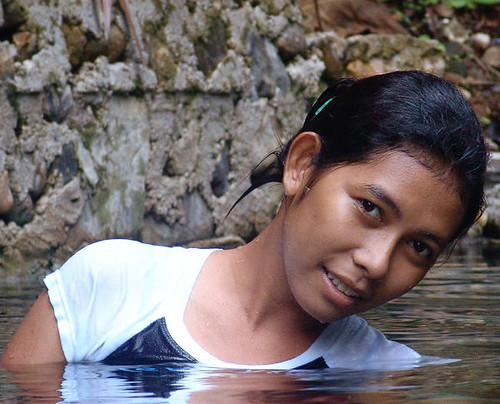
Yeh panes hot spring, Bali, Indonesia. From instagram of cara_elyse:
'Chilling in the hot springs.. Which were kinda lukewarm..'
Toxic rash
Time again I have commented on the lose of natural soaking sites. If it's not (local) government selling out to private interests and thereby locking out local public access (save the privileged few) then there is the often unregulated geothermal power lobby which with many a flowery argument seeks private control over natural process of thermal flows.

Oddly in recent months it's the Philippines which is showing some guidance. 
It had to happen. A good idea gets followed up. What simply stupefies me is that it took so long. The Blue Lagoon Reykjavik, Iceland has earned itself as the national no. 1 tourist attraction. But in essence it's just an overflow of a large geothermal power generation project. What with everybody now plumbing their own geothermal projects and killing off many a local soak, linking the two seems so obvious. 
From thinkgeoenergy.com (22 May 2013): 
'Philippine geothermal developer Constellation Energy Corp. plans the development of lakeshore areas with hot spring and wellness center near its 20 MW geothermal power project in Oriental Mindoro [Montelago]'. 
Let's hope they don't hash the development ...

Then there are those that are questioning the  impact of geothermal power. Sadly despite all the arguments, it's hardly ever highlighted that there could be any negative implications of geothermal power other than a couple of social ones.
The Philippines BusinessMirror (May 21) has an article on opposition to establishing geothermal plant: 
'After two decades, the people of Irosin continue to stand up against advocates of geothermal energy, this time the Department of Energy (DOE) and contractor Summa Kumagai Inc. (SKI), who want to set up a multimillion-dollar geothermal power plant in the town, Dr. Gante [Irosin Coalition Against Geothermal (ICAG) Chairman] said.
...
Gante expressed profound concern over human exposure to hazards entailing geothermal operations.
She said arsenic concentration is high in all geothermal sites, adding the deeper the operation goes down, the higher the concentration.
“Arsenic is converted into other compounds but never destroyed once outside of the soil,” she said. “It contaminates water, including sources of drinking water.”
She said arsenic is highly toxic for the human body. Exposure can cause cancer. It is a Category 1 poison, according to the World Health Organization.
The ICAG chairman said the drilling period is very toxic-laden since at the time, there is not yet reinjection of waste back into the earth.
She said Hiromi Hironaka’s finding in 1993 which reports that residents along the Mantigao and Marbel Rivers had elevated levels of arsenic, hydrogen sulfide and manganese traced from hair samples.
These people experienced headache and stomach upset during the construction of Mount Apo Geothermal Power Plant, she said
...
She dismissed geothermal zero-waste backlog claimed by project proponents, and pointed out that such claim has been refuted by people living close to geothermal plants who are getting sick from toxic emissions.
The ICAG chairman cited skin disease on residents of Barangay Osiao in Bacon district near the BacMan geothermal power plant, saying areas near the Tiwi geothermal plant have signs warning of the hazards of hydrogen-sulfide discharge.
Irosin has a bustling tourism for its hot springs. But geothermal operation may drain local tourism after depleting water in the area, Gante said.
“Our main tourist destinations in Irosin are the hot springs,” she said.
A geothermal plant can also sewer the active tourism in nearby Bulusan, which is retraced by visitors for its choices of cold springs, Gante said' 
Positively, Thinkgeoenergy (May 21) has made a short and correct summary of the article. Though no comment on the issues raised ...

That's the plus side. Now the low side. China is swiftly losing it's wilder soaks and with it goes public access. How about Angsana Tengchong Hot Spring Village in western Yunnan. By Banyan Tree. Spaopportunities (22 May 2013):
'Angsana Hotels and Resorts is set to launch its first hot spring destination retreat 
...  
The resort’s wellness area spans 17,083sq m (183,879sq ft) and is formed of a three-storey indoor Hot Spring Centre and outdoor hot spring area.' 
Basically soaks are available everywhere. Traveldailymedia (16 May) adds:
'Angsana Tengchong Hot Spring Village is the fourth Angsana resort to launch in China, and the second hot spring resort to be announced by Banyan Tree in recent weeks, following the Banyan Tree Chongqing Beibei, which also opens this summer'.
Hot springs and beauty. A recent study suggests that soaking does enhance beauty (we all knew all along): 
'One onsen in particular, named Ryujin (lit. Dragon God), is also known as bijin no yu or “the beautiful women hot spring.” It is hailed as a hot spring for enhancing beauty and the waters are said to smooth and moisturize skin. Despite these claims being repeated for hundreds of years, some may still be skeptical. However, a recent study suggests that the waters of Ryujin Onsen actually have beautifying capabilities'.  
Article originally from NHK News Web (May 24).

Innovation kiwi style: a bike tour of hot springs! 
'Thermal by Bike - Te Ara Ahi offers a 74 km cycling adventure through a thermal wonderland of steaming vents, bubbling mud pools and spectacular geysers'.
News from the region
  • Cambodia
Somebody (Meas Roth) has actually made it to the nations only hot spring of Tei Teuk Pous:
'This is 'Te Teuk Pous' or Hot Spring in Aoral district, Kampong Speu province. It's hard to believe if I don't see by my own eyes the hot water emerging from the ground'.
  • Indonesia
An Indonesian take on our relation with water by Byron Black on the Jakarta Globe (May 7, 2013). 
'Indonesians are basically fastidious people, and even the poor try to wear clean clothing and wash themselves. You can’t imagine the horrid stench of old human sweat and dirt you encounter on a bus in India or in any Arab country; even a crowded Economy-class train or bus here won’t stink like that.
Indonesians are, however, not fundamentally water babies. Travel to Germany or Japan and you’ll be amazed at the devotion to ‘taking the waters’. 
After touching on the habits of both (Japanese love of hot water and Germans love their birthday suits (so should you!))) he concludes: 
'Millions of years ago we emerged from the oceans, to evolve into land creatures. But many of us (including this writer) are still fond of swimming, bathing, splashing and diving'.
Also reminiscing earlier times before modernity hit the region connectlocally on worldnomads has the following story:
'Mount Batur [Bali] smokes silently. Threateningly. It’s the reason we’re here, standing naked in our embarrassment, the natural hot springs are therapeutic, we’re promised.
Okay, how does this work? My friend and I stop and watch for a while.
In one area women dip clothes into hot soapy water, then rinse them in the cold clear lake – an ancient twin tub washer.
Alongside, men and women wash themselves, graduating from the cold lake to ever-hotter pools of steaming, mineral-laden water… and back again.
The women enter the water draped in a sarong. The men are, as men are everywhere, arrogant in their nakedness beneath the water. So it’s ‘kit off’ for men? In we go!
Mount Batur rumbles.
The problem was that we didn’t do enough touching. We should have cupped our ‘bits’ in our hands and kept them out of view while we lowered ourselves into the water.
Instead we’re a couple of big swinging inappropriate white guys!'
  • Malaysia
A hot spring along the East-West highway. Yew Aun:
'A few km ahead was a hot spring and I stopped there as well. What's unique about this hot spring is that the area has natural cold river flowing and hot spring water joining together at one pool. I submerged myself in this pool and the sensation I got was WARMTH, just like 5am after a downpour under your comfortable duvet'.
And inclusive of a warmth (or hot?) photo 

Sungkai felda hot spring, Perak Malaysia. From instagram account of ahmadlatif90
'FELDA Residence hot springs'
  • Philippines
A good photographic blog entry by Iloveeverythingaboutit on a lesser known hot spring on Negros at Palinpinon. Compare notes: 
'It's a very great place to spend time with the families, friends and loved ones. You can enjoy the very peaceful place, the nature, the breathtaking air, the view, relaxation and the hot spring'. 
The evidence: 


Yet again highlighting Puning hot spring. BusinessMirror (June 1) has a long expose:
'Ma. Carmencita Luciano Kim and her group did not waste time after seeing the huge potential of the hot spring and the adventures that go along with it.

In 2008 the Puning Hot Spring and Restaurant officially opened to the public.

There was a struggle between the developers and the Aytas of Inararo and Sapang Bato during the resort’s construction but it ended when the Aytas were assured of livelihood opportunities and the protection of their general welfare.

The hot springs are basically borne out of the eruption of Mount Pinatubo. No one ever thought then at the height of Mount Pinatubo’s wrath that there was opportunity left for Pampanga'.
Now Puning rates as one of the Philippines major hot spring destinations. Owners are quoted as saying that the amount of visitors goes up by 2-30% annually.

Lublob#hOtspring#familybonding#weekend special
 Another Filipino hot spring.
  • Thailand
Other innovation: hot spring yoga! Brought to you by Outdooryoga Chiang Mai. From their Facebook page: 


Apparently no yoga during the actual soaking? See also their homepage.

Not only humans need a soak. From the Bangkok Post (May 29) this article on a black leopard sighting. It quotes the photographer:
'As usual, I'd set up camera traps at a hot spring not far from the ranger station some 50km deep in the interior, accessible only by a dirt road. This natural seep is visited by all the large mammals including tigers, leopards, elephants, gaurs, bantengs, tapirs and sambars as well as many smaller creatures, and provides excellent opportunities for some great animal shots'.
  • Vietnam
The tourist city of Nha Trang has many a waterfall located nearby, some of which have been turned into veritable tourist traps. Yang Bay waterfall is the top-notch tourist trap. Having visited Yang Bay in 2011, I was unable to find the apparent hot spring. From Travelblog.org this on recent developments: 
'Ho Cho hot spring - Yang Bay park: There are two pools for tourists to swim in'.
Vietnam surprise has published it's top 7 most famous hot springs of the nation:
1. Bang Hot Mineral Water Spring in Quang Binh province
2. Kim Boi hot spring in Hoa Binh province
3. Kenh Ga hot spring in Ninh Binh province
4. Tay Vien hot spring in Quang Nam province
5. Binh Chau hot spring in Ba Ria – Vung Tau province
6. Dam Rong hot spring in Lam Dong province
7. Hoi Van hot spring in Binh Dinh province

On the former the jury reads: 
'The most interesting in this spring is that when the sun sets, the air stream from the hot water circuit genealogy fly into space, creating natural picture has nowhere just to make you feel like you are playing with in a certain paradise'.

Sunday, 14 April 2013

Relax

'Swimming in the hot springs on the Rinjani trekking tour ! Lombok - Indonesia'
From webstagram page of gogi29

What's customary? 
A variety of recent articles / blog entries follows, all concerning customs of foreigners vis à vis local customs.

Travelling to foreign countries opens oneself to different experiences. In this piece by CNN (Apr. 10) they discuss the advent of Chinese tourists abroad. Both the expectations of those coming and those offering hospitality are challenged. However when both adapt great experiences may occur.
The same source follows it up with more comments: basically all  tourists which come in hordes irrespective of nationality are hard to handle: 
'Summing up the "just because you've got money doesn't mean I have to respect you" contingent, THEGenuineOLiTWiST wrote: "In general, most mainland Chinese who are 40 or over are suffering from this money= respect syndrome. The younger ones are much better at 'fitting in' with their travel destination's social and cultural norms"'.
So how does one re-act to outlandish social norms? With hot springs? This (young?) lady, from Singapore, while in Japan does go into the onsen. Though she has misgivings:
'Then we unpack and went to the hotspring only me and chenhong went seriously i think between friends it's also a very awkward thing looking at each others boobs and vagina and everyone (locals) were like so open about showing their body.... you know there's those door then you go in is locker room you see in anime?
But in real life the moment you enter the door you see all the naked aunties saggy boobs young kids boobs and many people not blow drying their hair but their vagina hair. FUCKING WEIRD RIGHT.. I took such a long time to undress myself and psycoing myself that this will be my only experience i should just go....'.
From the above citation it can be expected to conclude that this is a the first part of an overall poor experience. It's not, the lady in questions does enjoy the experience. 
It's odd that on the one hand when from Singapore, a society which is possibly one of the most prudish in the world, one has no qualms about at least partaking in the locals' habits however contrite. On the other when abroad, Asians (in general) are very well aware that this is not home ... and adapt ...

This attitude seems to differ from for instance North Americans (Anglo-based), where experiencing traditions not meeting the social norm known, means a no-no to the experience ....
That it is not always the case, illustrates the following experience from i heart rachabees (Mar. 27): 
'When people ask me what was the best thing I did in Japan, I usually mull over the question, my mind wandering to the weekend trip with my friends to Naoshima, the day spent celebrating a small local festival in Himeji, biking the Shimanami Kaido or the big dance festival in Kagoshima. However, when it comes down to a unique, off the beaten path experience, Kita Onsen was possibly the absolute best.
...
I came across Kita Onsen as a photo on tumblr, an atmospheric shot of a woman reclining in steaming waters under the imposing face of a giant tengu demon mask. I was so intrigued that I started researching the mysterious hot springs hotel, discovering it dated back to the 1600s, and, even better, it was relatively affordable for me (at least in comparison to other onsen hotels).
 ...
After they retired for bed, I decided to take advantage of the late hour and go in the mixed onsens without a bathing suit. I crept outside to the big outdoor pool. The wind was absolutely howling and I quickly jumped into the warm water, beautiful and surreal in the dark night. The sky had semi-cleared and there were stars visible and clouds lit white-blue by the half moon were racing across the sky. I swam and swam, as great gusts of wind whirled autumn leaves around me and chilled any inch of me not covered by warm water.
Next I went to the Tengu no Yu, where I sat in the bath and took in my strange surroundings, the enormous masks watching me with their scowls. Then the third floor baths, where I soaked for a bit, listening to the strangled gurgling of the old drains'.
What about differing soaking habits without foreign tourists? An interesting discussion on the Facebook site of the Friends of Cougar (hot spring), Oregon, U.S.A.. Administrator posts this: 
'This weekend at Cougar I interviewed several people and came up with what I think are the reasons many people don't go nude [for which this hot spring is partially known for]: 
The relative importance of each varies with each person.
Common:
1. Vibe. Presence of people in suits relative to people nude.
2. Fear of inferiority. Self conscious about their suit-covered areas.
3. Insensitivity. A disregard for suits causing discomfort for people nude or wanting to be nude.
4. Habit. Long instilled habitual behavior.
Special cases: 
5. Fear of superiority. Fear of being judged too hot and getting too much attention and scrutiny. 
6. Friends. Presence of judgment of friends / family'. 

After much response this evolves to:
'With the help of your suggestions, I've revised my list: 
Common: 
Vibe. Presence of people in suits relative to people nude. 
Body image. Being self conscious about one's suit-covered areas. 
Habit. Long-instilled social programming. 
Insensitivity. A disregard for suits causing social and aesthetic discomfort for people nude or wanting to be nude. 
Special cases: 
Shyness. Fear of getting too much attention and scrutiny. 
Friends. Presence of judgment of friends / family'.
One later response:
'It is so strange that so many clothed people go to cougar. Obviously they are ok with nudity...weird'. 
An interesting discussion on an interesting and thought provoking page. 
  
Other strange tourist habit news. Debat on Sanya, Hainan, China's (only?) nudist beach. China.org (Mar. 25): 
'Many tourists have posted nude photographs while vacationing at Sanya's nudist beach in south China's Hainan Province, giving the Chinese public a vivid imagination of what happens at Sanya, Taiwan newspaper Want Daily reported.
Sanya is a popular tourist destination in China. The so called nudist beach lies on Da Dong Hai (Great East Sea) beach, is only three kilometers from Sanya. It has become increasingly common to see groups of people chatting and playing cards in the nude at the far end of the beach.
There is no sign posted to inform tourists that the area is for nudists, and there have been reports of embarrassing encounters between clothed and nude beach goers.
An internet user called "yilunanfeng" said that the beach used to be frequented by foreigners on vacation, but gradually more and more Chinese tourists took over the nudist beach'.
Solution: 
'"Yilunanfeng" [internet user] advised that the local government should set up a notice to remind people that there is a nude beach here'.
Apparently, some habits are not so outlandish as one would suppose ....

Another example in the customary section. Is Thailand uptight? TTR weekly (Apr. 10) reports that just one third of respondents to a Thai national poll were uncomfortable with perceived relax of dress code during Thai new year celebrations (Songkran): 
'The poll of 1,253 people countrywide reported 36.79% were unhappy and opposed celebrations involving females wearing skimpy or see-through dresses or suggestive dancing'. 
Strange? Just to put this perspective, nearly half of the respondents thought the government should ban the sale of alcohol during Songkran! Priorities or common sense?

More (or less) on the same. One could be surprised (shocked even?) in Malacca, Malaysia:
'"It was a real shock to see someone in the nude like this in conservative Malacca," he said.
Security guard P. Saravanan, 39, said he reprimanded the [French?] woman but she was nonchalant about it.
"She only replied 'I am going naked to save the world. I am a naturist' and she continued walking," he said.
Saravanan said he called the police, who came and took her away'. 
It doesn't mention if she managed to save the world, at the very least it's not worse off. 
One may frown on the police action, but alas, this is very much the same action police would do all over the world: clearly an outlying free-thinking individual, have to stop this in the bud (google naked rambler).
Toya Bungkah, Bali, Indonesia. kailey_styles:
'Just swimming next to a volcano, the usual'.
Apping
Is there a hot springs app? hotspringsfinder.com has an app for the US: a long overview of all (commercial) hot springs and reviews. Chapters of for instance California and Idaho chapters cost $9,99; Oregon is slightly cheaper. The owner (author) Richard:
'Many of my friends tried to dissuade me from publishing a hot springs guide fearing that hordes of iPhone users would descend on their favorite soaking hideaways. Alas, this was the only application that intrigued me enough to actually see methrough allthe hard work. It was the first thing I really wanted on my iPhone, so for better or worse I was hopelessly hooked.
To mitigate the impact, I decided to price the app at $9.99, higher than the usual $0.99 or $1.99, but cheaper than the equivalent paper guide books. I know many iPhone user's won't be happy about this but I felt it was the responsible thing to do, even though it will greatly reduce the project's annual revenue.
Although I don't worry about the commercial springs being overrun, many of the primitive sites are fragile. You can help by becoming a hot spring steward, not just a hot springs consumer. Tread lightly and help pickup after the people who don't understand how precious these magical places are'.
Maybe a future project for this blog?

Geothermal news
Nuclear leaks have forced Marubeni, one of Japan's largest companies, to look at geothermal power. Japan Times (Apr. 4):
'More than 70 percent of respondents in an opinion poll by the Asahi Shimbun in February said Japan should scrap nuclear power, a stance favored by environmentalists who note geothermal energy does the same thing as nuclear with much less risk.
“To import a very complex and difficult technology to boil water in the world’s most seismically active country when there is such vast geothermal potential strikes me as madness,” David Suzuki, a Canadian author, environmentalist and board member of the Japan Renewable Energy Foundation, said in an interview.
...
The projects threaten to revive conflict with hot springs resorts, which are concerned commercial geothermal plants will siphon away the same reserves that they tap. Geothermal developments were largely off-limits before the Great East Japan Earthquake in March 2011 because heat reserves were set aside for the resorts.
“We realize geothermal is one of our energy options,” said Hirokazu Nunoyama, secretary general of the Japan Spa Association. “But there are impacts on the environment. There are cases of hot spring resources running out or thinning, or a drop in water temperatures.”'
The article finishes as follows, not upbeat for the soakers: 
'“Geothermal plants are rapidly increasing in major geothermal countries abroad, and we are the only country that is not moving ahead,” Susumu Tanaka, chairman of the Japan Geothermal Association, said in a statement on the group’s website'.
And though some might view this as positive, the same article on Bloomberg has a less positive headline: 
'Marubeni Targets National Park in Japan for Geothermal'
So whose side are they on?

Meanwhile: 
'Japan’s Ministry of Economy, Trade and Industry (METI) is currently considering 21 geothermal projects as part of its overall renewable energy strategy', 
so reports thinkgeoenergy.

Der Spiegel (Mar. 10) relates about Japan's search for geothermal power generation: 
'Dabei ist das eigentliche Problem ein anderes: Knapp ein Dutzend regionale Stromversorger haben das Land unter sich aufgeteilt. Diese Platzhirsche stemmen sich gegen unerwünschte Neuerungen. "Sie haben kein Interesse an Wettbewerb, und sie arbeiten auch nicht zusammen", sagt Kosuke Kurokawa, Chef des Japan Council for Renewable Energy'. 
I.e. regional power companies are not interested in new potential as this counters their current position / interests.

In Central America companies are eyeing up national parks as well: 
'The President of Costa Rica signs decree that will start a public interest investigation into potential geothermal power development in the National Park of Rincon de la Vieja'.  
Recent
'Various environmental organizations oppose legislation that would open the Rincon de la Vieja National Park in Costa Rica to geothermal development'.
Indonesia is capitalizing on geothermal.
A new geothermal field found near Kolaka, Sulawesi, Indonesia (source). No news as to how one finds a new geothermal field ...
Japanese development aid gets used to develop geothermal power in Indonesia: 
'Japan International Cooperation Agency (JICA) is providing a development loan of $53.4 million to the Tulehu [Ambon] geothermal power project of PLN in Indonesia'. 
A thing of the past:

'Hot-Spring Tulehu, Ambon Island'
From the flickr page of helenanya-simon

Turkey would like to invest in Java, Indonesia's geothermal potential. Invest heavily
'Turkish group Hitay is planning investment of up to $2.5 billion in three projects in Indonesia, at Mount Bromo, Mount Lamongan and Raung, East Java. The estimated potential for all three project is at about 1,100 MW'.
Around the region
  • Malaysia
The aclaimed Travelfish authority has a take on Langkawi island's hot spring Ayer Hangat: 
'Malay-style buildings create a village-like environment on the lush landscaped grounds, with cool and hot water pools. A series of small canals run through the grounds and connect hot spring water collected from two wells with cooler water, offering you temperature variation options. Surprisingly, the hot springs are natural salt water, which seeps up from the shallow tide table. The springs claim to be medicinal, helping improve chronic skin conditions, detoxing and joint pain resulting from injury or gout'.
But are the springs worth a visit / soak?
  • Thailand
Hot spring festivals are catching on (Pattaya Mail, Mar. 22): 
'The province is holding an eight-day festival “Mineral Hot Spring Bathing” from today through March 30 at the health park near Ranong’s municipality office to promote health tourism.
Hot spring bath services, spa treatment, Thai traditional medicines, mineral water and herbal products are available at 30-50 per cent discounts'.
In Thailand an idea has been to renew government legislation of the spa sector (the Nation, Mar. 25): 
'However, the spa scene has been unfortunately partly plagued by a sexual image. If word of mouth by tourists on this issue spreads, the industry will no doubt be hit.
This is one of the troubles for Krod Rojanastien, the new president of the Thai Spa Association. He admits the industry has faced barriers at a time when Thai spas are growing in popularity in the global market.
...
A new law is needed to help shape up and modernise the industry. The industry has been stuck with the Spa Act of 1966, as amended in 2003, to cope with the rapidly-changing industry. It has waited for a decade for the law to be approved by Parliament.
The Spa Act defines a spa like a massage service. This is way out of date.
If the law passes, law enforcement will lead to a big change in the industry. That means spas will be scrutinised in detail as a way to crack down on sex-oriented openings.
Also, those working in the industry will be upgraded professionally with a proof of licence via a training programme designed by the Public Health Ministry. A committee, chaired by the minister, will be set up to check standards regularly to ensure the industry's sustainability'.
Kantang, Trang, Thailand. From webstagram page of harrietwh.
  • Vietnam
An interesting blog entry on Tien Lang hot spring, Hai Phong, Vietnam. The promise: 
'Especially, Tien Lang Hot Spring Tourist Site promises to bring the tourists to a wonderful world with feelings of enjoying, relaxing, and reinforcing health by the staff that are technically philological and major in massaging with a lot of experience'.
More cash
Big companies in hot spring development (Travel Daily, Mar 27): 
'Banyan Tree Hotels & Resorts has signed a new hot spring resort close to the Chinese city of Chongqing.
... 
All rooms feature private hot spring pools. The resort will also feature a large Banyan Tree spa with seven different outdoor and indoor hot spring pools with waters at a constant temperature of 38⁰C, plus nine treatment rooms, a gymnasium and yoga room'.
'Evening hot spring session'
Palawan, Philippines

Sunday, 3 March 2013

To do

Soaking in Southeast Asia is a winter tradition and thus we have now seen the busiest months in many of the region's hot springs. Rereading many of the internet features published recently, there does seem to more features on the previous natural soaks, but now up and coming thermal spa's. Or whatever they may be developed into.

Gone are the hot springs with natural features, common people and soaking bliss. Of course economic development has resulted in free time or cash at hand; thus the need to develop the natural world to make fit for the consumer.
What remains are facilities ill-equipped to deal with the many visitors or exclusive clubs where the willingness to line the pockets of distant shareholders results in an exclusivity. 
I always wonder, how is it possible that this has not occurred on this scale in Japan?

'Quite possibly the best Hot Spring I've found out here in Thailand yet! Multiple pools of varying temps, and a #creek to cool off in, for 100 #Baht entrance, definitely worth a visit!'
Porn Rang hot springs, Ranong, Thailand. From the webstagram site of skoisirius.

Advice wanted
As always those Japanese traditions are being challenged. Possibly innocent, but what to think about this poster on tripadvisor who wants to experience an onsen but is in a quandry
'... being a Westerner, I am a bit shy of being naked in public. If we go to an onsen where the gender are separated, I`m thinking it won`t be that much fun. On the other hand, if we go to a mixed-gender onsen, I`m thinking it will surely be awkward (not for me but I don`t want people to look at my wife)'. 
Talk about thinking backward! Some of the answers: 
'We had very similar concerns, especially because I speak some Japanese but my wife doesn't so she was not comfortable going to a gender segregated onsen where she'd have to cope on her own. In the end I went on my own to a gender segregated bath in central Osaka'. 
Problem solved. Why take the wife at all when travelling? Saves money ...?!
'I don't know what other people think, but I want some time of my own alone apart from my partner sometimes; I don't want to share toilet and pee with her. I also like gentlemen's gatherings at an izakaya/bar without ladies. But then Girlfriend might want to go shopping alone without a grumpy boy. I am always frustrated by the length of time girls spend on make ups and hair do.
Do you always take a shower or bath together with your partner? I don't'.
As the saying goes ..., when in Rome .... Begs the question why travel if you're not willing to adapt / tolerant different customs?

Geothermal power
Japan has it's own in problems in preservation of it's age old soaking rites (see above) and rights. Yomiuri online (26 Feb. 2013) has another article concerning the direction of Japan's power status and the possibility of developing geothermal power. Concentrating on Hokkaido's Daisetsuzan National Park it mentions that whatever happens 
'... the entire process from the initial survey to geothermal power generation could take anywhere from eight to 10 years'. Which will mean that it takes nearly forever ...'.
It also mentions that one reason why geothermal power generation is under development in respect of the potential is that much of the potential lies within National Parks.
'After regulations were relaxed in March last year, however, many plans to build geothermal power plants have appeared nationwide. However, with the exception of Daisetsuzan, many plans have been met with local opposition as development could adversely affect the environment and onsen hot spring sources.
In the case of Daisetsuzan, the Sounkyo Onsen hot spring resort is about four kilometers from the planned construction site.
However, the survey can be carried out as local residents, including the resort's local tourism association, have welcomed the plan. Furthermore, there is also a plan to reuse the hot water discharged from power generation to heat public facilities'. 
The best way forward is a win-win? Now why is that most if not all geothermal power plans neglect local soaking potential?

Geothermal power potential in the Philippines by CNN: A short intro.

Rock bathing?
Well via Hot soaks of the Himal we have been introduced to hot stone baths and in a previous entry here we have discovered what Ganbanyoku is.  
Onsen addict recently adds from Japan: 
'Lying on rocks is a great way to relax after a hard day at the office. The rocks might be flat slabs of heated granite, or thousands of tiny rocks that warm your body, like a thick quilt.  Ganbanyoku, (岩盤浴, is a "bathing" method that is spreading in popularity across Japan, and from Japan to other countries, because it feels so invigorating.  Low, comfortable, constant heat opens your skin pores, and you sweat out the dirt and impurities from your body while dozing or spacing out in softly lit rooms. The rocks below you are heated through the floor. Afterwards, a more traditional Japanese onsen, or hot spring, will leave your skin soft and pure'.
After an extensive description of what is on offer at Ryusenji-no-yu he laments that TVs should be banned from hot springs! 

Top
Lonely Planet has a top 10 of Japanese hot springs. Among them the best hidden hot spring; now something tells me that will not last long ...

The doddid.com site has a top 7 of Indonesia's Natural Thermal Baths. All quite surprisingly but nonetheless than Banyuwedang hot spring, probably Bali's least known. Funny that the picture includes Banjar hot spring, notmentioned at all in the top 7 ...

Another top, the top 5 onsens to visit in Japan.

Then there is the global top 10 by Reuters Business Travel. Only one Asian entry, but altogether a surprising 10. Focus on more natural hot springs but also noted is Peninsula hot spring, Australia.

Blogged:
  • Malaysia 
A hot spring seeing a surge in visitors is that of Panchor Dayak. Through my lens has a blog entry:
'... the spring has been there for a long time since the 1800, known only to the local villagers. It has only been recently acknowledged by the government and the official opening ceremony was done by the local Deputy Tourism Minister on the 8th September 2012. Since then there have built some basic amenities for the visitors and the place looks better and more organized'. 
And less natural. Highly critical:
'Water quality by my observation is not all that awesome.. I’d have to say that I would not use it to gargle or wash my mouth yet alone taste it. It flows slowly to the back of the compound and left to disperse by itself. 
... 
There is also no bathing place at the compound for rinsing your body after wards, don’t know if it’s intentional just to simplify operations or not; however there are toilets and changing rooms provided'.
A photo:


A press entry stemming from the Borneo Post (27 Jan.) concerning the same hot spring. What do we learn?
'... he [Deputy Tourism Minister Datuk Dr James Dawos] has met two persons whose helath improved after frequenting the hot spring.
...
At one point, there were people who came all the way from Lawas for a cure at Panchor Hot Spring.
“This is why the Tourism Ministry has upgraded the hot spring for all to stay healthy and happy.”
Panchor Hot Spring is a community-based tourism project developed by the ministry at a cost of RM450,000 and completed in May last year.
...
The ministry is looking at introducing a women’s section for more privacy.
...
On Panchor Hot Spring, he suggested that locals come up with a plan to develop a hotel and resort around the area to draw visitors.
“Some tourists want to come to the hot spring, but there is no hotel around. So it will be nice to have a resort next to the hot spring.”'
Perceptions of what is understood with development ...

Borneo Post (Jan. 2) has another hot spring related article, this time it has a feature on a new hotel near poring hot springs, Sabah. Named Hot Spring Garden it's more directed to the everyday tourist rather than upmarket clientèle. And the hot springs?
'He [the proprietor] assured guests could always enjoy the hot springs nearby from 5pm to 9pm, sparing them the hassle of competing for the hot tubs and swimming pools with othre day-trippers or those staying at the resorts within the area'.
'Annah Rais Hot Spring - Another view from a distance'.
From the blog of My Beautiful Malaysia
  • Myanmar
Despite having the same rulers as the last 30-40 years, jetting into Myanmar has now become hot; see it before disappears?  Inle Lake is high of the to be visited list. 
Kaung Daling is the name of a hot spring on the shores of the lake. Michi in a photo booth
'This spa is recommended by Lonely Planet as well so people are interested to go there but when they see that it is in fact a real spa with pools (they give you robes and shampoo…full treatment!) they are probably disappointed. They expect something wilder from Myanmar..we were happy with what we found! We also had a little discount because we were the first customers that day'.
'3 days and around 21 hrs of hiking later ...a well deserved break'
Myanmar opening up to soaking discoveries. From webstagram site of paulinebatista
  • Philippines
Another rave about Puning, this time a photoblog by ambot-ah, nice views of this increasingly popular hot spring.
Not a very extensive blog entry, but not often commented on. Badekbek near Daclan (Luzon) was visited by Rojae
'The smoke and sulfuric scent emitted could be seen and smelled from a distance. The hot water from the spring is believed to have some therapeutic effects'.
Ardent Hot spring, the Philippines. Blogged by Loopie.
  • Thailand
'Hotsprings'
Pai, Mae Hong Son, Thailand
From the flickr site of LewMez.
 
Sometimes development isn't always a solution. From thaivisa forum (1 Jan.):
'My girlfriend and I visited the OnSen Hot Springs Resort, in Sankampaeng [Chiang Mai], on New Year's Eve day. In the past, you could spend the day using their hot springs in a private room. The resort now limits your stay to 50 minutes for the same price as the previous day usage. I couldn't help notice that in addition to the limited time you could spend in a room, it appeared they have dismissed their cleaning staff. If that wasn't bad enough, the resort no longer has hot spring water, lol'. 
Note: 
'OnSen Resort is only about a minute or two drive from the San Kampheng Hot Springs. Up until this year, it was a high end resort'.
The hot springs of Chiang Dao, Chiang Mai, Thailand. From the webstagram site of buhnibear.
  • Vietnam
Half Japanese Aki Avis visits the hot spring of Thanh Tan, Hue. Expectations not met:
'Vietnamese-style hot springs resembles more a water park than a relaxing bath! There were also baths just to soak in, but the bulk of the resort was made up of water slides, a giant wave pool (which was being cleaned and sadly unusable), and play parks. Needless to say I was very happy have had wrong expectations. The mix of decadent relaxation (i.e. the two massages I indulged in) with sheer excitement (one of the slides was so fast that you actually went airborne on it! Not up to Canadian-safety standards if I had to guess...) was unique and refreshing! What a way to spend hump day...'.
Another find, revealed from the phuyennews are Tra O hot springs: 
'Unlike a natural stream, Tra O hot-mineral water has a temperature of about 700C, flowing from two dragon-heads built on an area of about 3m2. This system is designed as a shrine of the mountain-god. On the roof and the small lake under are the architecture of two dragons with sacred and mysterious features, behind is a space with a size large enough for a person to enter deep inside to have a sauna, the way people here do to have a better health, or cure a number of rheumatic diseases, skin diseases 
… According to many local people, the hoses in the hot spring were built in the French invasion time when cultural traces hadn’t been discovered yet. When the road is improved, trees are planted, the hot spring is sundered into hot-water pools…, it will attract many tourists to visit and enjoy euphoria feeling as having a bath in the fresh-hot water'. 
In Asia, it's the more (visitors) the merrier ..., hmmm.

Mud bath competition. The i-resort in Nha Trang is attracting more and more visitors. Tripadvisor posters note that it is more expensive. The compaison: 
'I just went there yesterday. it is a much better experience than thap ba. two big hot pools, several warm and cool pools including 3 natural style pools. overall it feels like a real resort. Make sure you go early. at 7am when it opened there was just us and two others. from 9-11am 300 people had shown up'. Priorities: 'Went today and I must say what a great day out it was first time I have had a mud bath and will go back for more . The food as the resort very good 2 noodle soups and fried rice 4 bottles of tiger total cost of 200,000 and very nice '.
China heading forward
Looking into how you develop a hot spring resort in China? In Mianyang, Sichuan they are developing a resort ...: 
'This luxury hot spring resort is built around the hilltop of Luo Fu Shan, in Sichuan Province. The site is 300Mu or 21Ha, with 70.000 m2 built surface. AIM has designed the master plan, landscape, architecture and interiors.
The project is unique to us as we are in control of almost all aspects of the projects. The masterplan is set up to use the different landscape opportunities on the site. The different functions have different types of buildings that each benefit from their immediate surroundings. This results in an architectural range that is at the same time diverse and unique'. 
Design by AIM Architecture.

More top end developments in China. Opening up is the Chongqing Beibei Banyan Tree
'Nestled in the Jin Yun mountain, Banyan Tree Chongqing Beibei features 107 contemporary Suites and Villas, each showcasing a private dipping pool fed by water from nearby hot springs'. 
It will open up step by step from the end of February 2013 (source).

'Can we get in on this? @kathy_macleod and I hot spring #chilaxing in Mae Hong Son. @jessvsworld @wesleyhsu @veronosaurus @lifecw'
From the flickr site of RealThai
Related Posts with Thumbnails
Copyright 2009 © Soaking in Southeast Asia. All rights reserved.
No reproduction or republication without written permission.