#naturalhotspring #hotsprings #indonesia
I would like to apologise for the lack of expanded updates on this blog, limited time being one factor. But the other is the discontinuation of the google search of blogs which means many firsthand accounts are disappearing forever.
Sign of the times?
We seem more intent to throw our photo's on instagram rather than to be able to write a sentence or two on how an experience was. Certainly looks like the internet era has heralded a dumbing down.
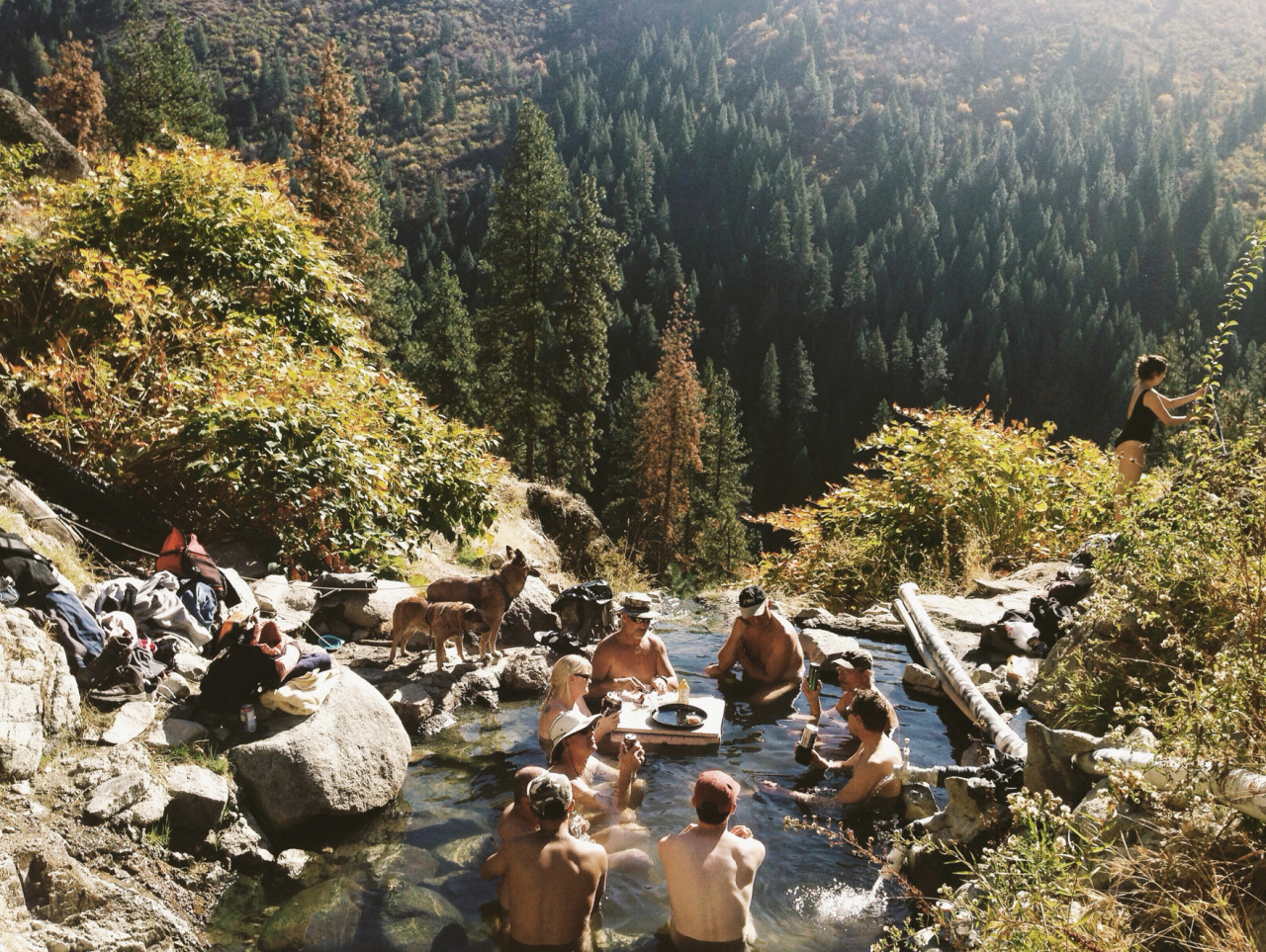
Talking about dumb, debate in the US is very much on hot springs conservation and access to nature. It's mostly a response to misuse of recreative and natural wonder sites. Apparently it is the era of the throw away consumption. No individual responsibility.
For instance take this local report (Telluride News, March 31) on a clean up:
'Hidden just down an embankment off of Colorado Highway 145, the Rico Hot Springs used to be one of the best kept secrets in the area.Now that residents and visitors alike have discovered the warm, soothing, mineral-rich waters of the spot just north of the town of Rico, the hot springs have become more popular. With that popularity have come problems. Recently, the area around the springs has become littered with trash, discarded clothing and other items left behind by soakers....Wearing gloves, they collected whiskey bottles, beer cans, water jugs, undergarments, bathing suits, food containers and innumerable cigarette butts'.
On the opposite side of the spectrum, there is the heavy handedness of the authorities (Idahostatesman, Jun. 21):
'The Bureau of Land Management’s Tate Fischer said he’ll consider proposals to keep the Skinny Dipper hot pools open right up until the time his staff starts tearing them out and reclaiming the trail leading to them.But for now, the hot springs are officially closed. Fischer announced the closure Tuesday after a notice was published in the Federal Register, a government journal that publishes federal decisions.
Let's hope that society comes to it's wits before more damage is done.
Dumbing down
Everybody knows I like to discuss geothermal power generation in relation to soaking: not often a successful combination as the tech-ies developing their power generation see no need for soaking nor for any community involvement whatsoever; the latter sits well with the governmental elite: centralising political power.
Indonesia's Aceh is another region hoping to hop on the geothermal power bandwagon. ThinkGeoEnergy (May 9):
'The ongoing electricity crisis, with not sufficient electricity available is a big concern in the semi-autonomous province of Aceh on the northwest tip of Sumatra Island in Indonesia.The regional executive board council now urges the government to implement a geothermal project to serve as key element in helping it to deal with the crisis'.
Geothermal power generation can also go small scale. ThinkGeoEnergy (May 24):
'MiniGeo is a small, modular geothermal power plant the size of a shipping container. The system is designed to generate renewable electricity for remote communities using the earth’s natural heat. The benefits of the MiniGeo are that it can generate power 24 hours a day, doesn’t require fuel, emits almost no CO2 and needs very little space'.
First pilot programme to be in Indonesia.
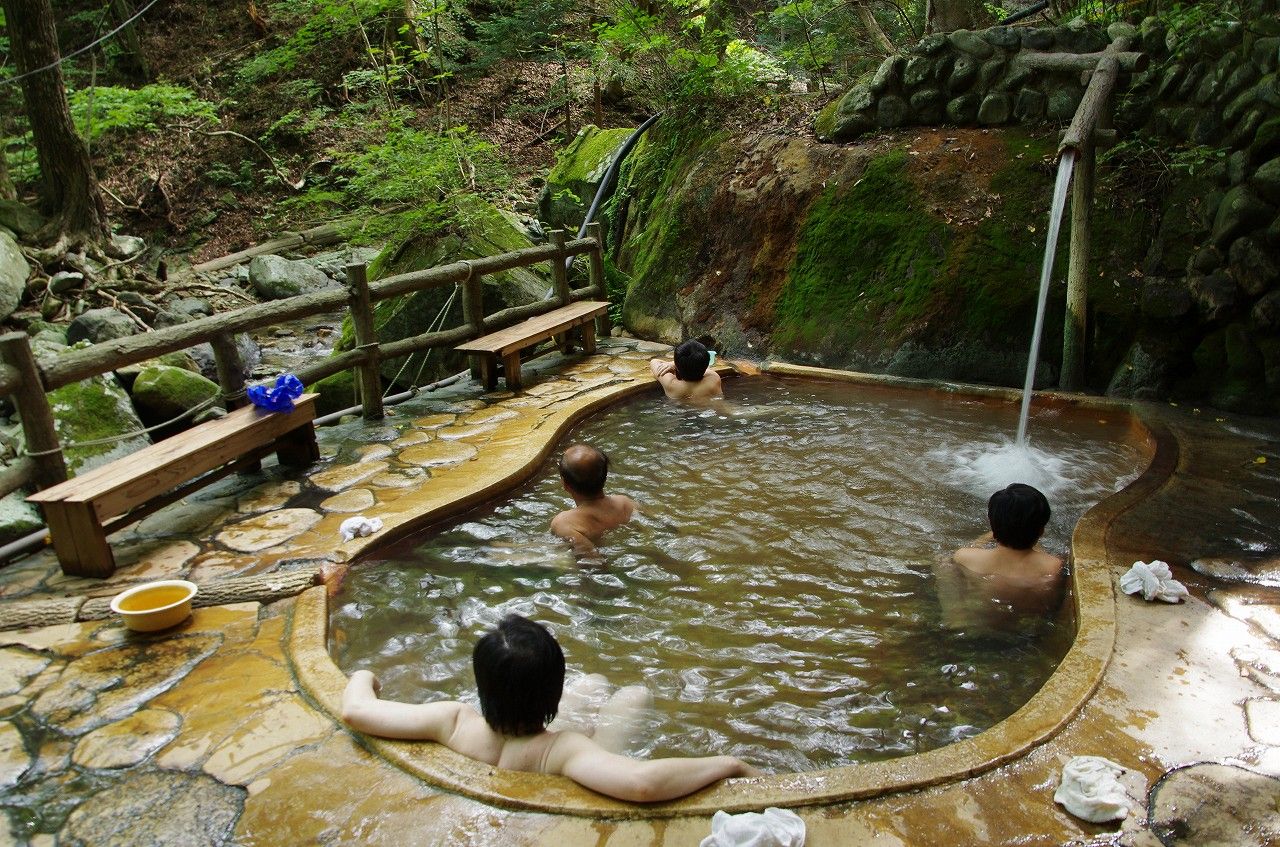
Seeking to convert the soaking faithful in Japan, Japan Times (Jun. 20) notes this new instrument to allay fears for onsen operator:
'Developers of geothermal power projects can now buy an insurance policy that covers the expense for surveys to determine if their projects are the cause of changes in the quality and volume of hot water'.
A day later the same source continues:
'With centuries of tradition on their side, Japan’s hordes of naked bathers remain unmoved by the island nation’s bid to tap a rich reserve of power equivalent to about 20 nuclear reactors....“We strongly oppose geothermal development,” said Toru Terada, the senior managing director of the Japan Spa Association, which represents 1,200 members. “Geothermal plants can lower the temperature of the springs, as well as deplete volume. We can’t support the government’s plan to loosen regulations in order to expand facilities.” Hot springs are big business in Japan. More than 120 million people stay overnight at such resorts annually, while millions go for day trips, according to the association'.
Funny how ThinkGeoEnergy (Jul. 5) refers to the same article, taking the odd snippets here and there but finishes with this addition, supposedly their own words:
'While other countries show that geothermal development for power generation can co-exist with direct use applications, such as spas and baths, there seems to be still a long way in Japan to find common grounds on the utilisation of the great geothermal resources of the country'.
One way to ease opposition is to let communities share in the proceeds. ThinkGeoEnergy (Jun. 21) has announced that
'Local governments in Indonesia have been trying to get access to some of the profits derived from geothermal operations in their communities and it now seems like this is going to happen'.
What is actually meant are lower governments, not communities ....

#daharofamz #hotspring#sibayak#sibolangit #mask with Sulfur#sharangeo 😚
Onsenexit?
More developments but not geothermal.
Xenogears has an article (Jan. 2016) on the Japanese bathhouse:
More developments but not geothermal.
Xenogears has an article (Jan. 2016) on the Japanese bathhouse:
It puts its hopes on foreign tourists to keep the bathhouses afloat.'For the longest time, Japanese public baths were an integral aspect of Japanese society. In 1968, the industry peaked with 17,642 bath houses existing across the nation. However, by spring of 2008 that number dropped to a mere 4,343, and it continues to decrease at a rate of almost one a day. There simply aren’t enough customers to support the industry, not to mention that there are few young people prepared to take over the business, and the facilities themselves are breaking down due to their age. Japanese people who would like to bathe together are now more likely to attend a large-scale bath houses or make a day trip to a natural hot spring (onsen), rather than remain local'.
Maybe it's a cultural thing, natural soaking in places such as Iceland, North America, New Zealand and Italy has seen quite an increase in recent years, with internet providing better info and the increased free time actually resulting in visits to hot springs.
Japan will catch up
soon I believe and the plenty availability of onsens will only reward the renewed interest.
Relief
Then over to the regional focus starting off a snippet on non(?) news. From the Travel Daily Media (May 10):
'Thailand’s Dusit International has unveiled plans to open a new luxury hot spring resort in southeast China’s Fujian province'.
Oh well, catering to rich and (nearly) famous.
Anyway as stated above not much texts to focus on, so it's over to the picture section with the odd reference.
Anyway as stated above not much texts to focus on, so it's over to the picture section with the odd reference.
- Thailand

aonjungnida Khanchanaburi's Rock Valley Hot Spring & Fish Spa
ทริปเพื่อนรัก 2016#happytrip#withlove#friends#kanjanaburitrip #thailand #travel #thailandtravels #summer #onsen #onsenthailand #aday


- Singapore
Singapore's Sembawang generates quite some news. Let's start with Channelnews Asia (Apr. 18):
'The potential redevelopment of Sembawang Hot Spring into a national park has drawn mixed reactions from Members of Parliament (MPs) and regular visitors - but calls for the 108-year-old locale to resist commercialisation and retain its rusticity have been unanimous'.
But this seems to have been lost on some:
'Dr Chang Tou Chuang, a tourism geographer and associate professor at the National University of Singapore, also weighed in with suggestions on how to draw crowds to the Sembawang Hot Spring.“The area is undeveloped and hence can only support a small crowd of visitors. It needs a larger critical mass of attractions in order to attract more people, including tourists,” he said, proposing a “nature-themed attraction that perhaps complements the spring with other water-related amenities and facilities”.
A neglected part of history:
'At the height of the spring’s popularity in the early 2000s, it would register hundreds of visitors daily, claimed 72-year-old retiree Mr Chen. Speaking in Mandarin, he said he has been bathing in the spring since he was a child living in a nearby kampung.Mr Chen then related how the public were spooked and eventually left disinterested by the spring after an incident in 2002, when an elderly man lost six toes to gangrene after dipping his feet in the water - which was measured at a steaming 131°C in the late 1990s'.
Hot on this article's heels comes the Strait Times (Apr. 23):
'The question of what to do with the Sembawang Hot Spring at Gambas Avenue has been mulled over for decades.Senior Minister of State for Defence Ong Ye Kung said on Saturday (April 23) that the land where the hot spring is on will be returned to the State.The area may be turned into a park, as Mr Ong said he hopes a public agency such as the National Parks Board can take over, and maintain it'.
Then an onsen has opened for business in Singapore. Asiaone (May 28):
'Have you always yearned to soak your weary body into the hot spring baths at Japan's relaxing 'onsens'? Well, you're in luck because Singapore's first spa offering authentic Japanese-style public baths has opened its doors. Located at Kallang Wave Mall, Yunomori Onsen & Spa features 11 pools with six variations of baths'.
Things you should know:
'no. 2. You don't have to be fully naked
Thankfully for us, the founders of Yunomori Onsen & Spa understand that we Singaporeans are pretty conservative and are a shy lot. Therefore, the spa offers disposable undergarments for both men and women. Yes, we can hear your sigh of relief'.
No mention about whether or not the waters
are natural. Doesn't seem so.
2. You don't have to be fully naked
Thankfully for us, the founders of Yunomori Onsen & Spa understand that we Singaporeans are pretty conservative and are a shy lot. Therefore, the spa offers disposable undergarments for both men and women. Yes, we can hear your sigh of relief.
- See more at: http://women.asiaone.com/women/beauty/5-things-you-should-know-about-singapores-very-first-japanese-onsen#sthash.822XVy4A.dpuf
- Philippines

flipfloppintraveler at Mateo Hot & Cold Spring, San Benon, Irosin, Sorsogon
: reflecting relaxation
nothing more soothing to an aching body from surfing that to take a dip in this hot spring pool from Mt. Bulusan
- Indonesia
Indonesia Trip Tips (Jun. 16) has a top 7 of Indonesia's best natural thermal baths. Surprisingly 6 of those are on Java and 1 on Bali, so much for the rest of Indonesia.

No. 1 from the list (and Bali's only contribution), posted by yuragawashinkurou
#banyuwedang #bali #hotspring #landscape
Finishing off with what seems a more often occurrence: not always are hot springs soothing. Channelnews Asia (May 11):
'The Search and Rescue Team has found and recovered the body of a climber who reported drowned in the Aik Kalak hot spring of Mount Rinjani [Isle of Lombok] on Sunday (May 8).

Have
you always yearned to soak your weary body into the hot spring baths at
Japan's relaxing 'onsens'? Well, you're in luck because Singapore's
first spa offering authentic Japanese-style public baths has opened its
doors.
Located at Kallang Wave Mall, Yunomori Onsen & Spa features 11 pools with six variations of baths.
- See more at: http://women.asiaone.com/women/beauty/5-things-you-should-know-about-singapores-very-first-japanese-onsen#sthash.822XVy4A.dpuf
Located at Kallang Wave Mall, Yunomori Onsen & Spa features 11 pools with six variations of baths.
- See more at: http://women.asiaone.com/women/beauty/5-things-you-should-know-about-singapores-very-first-japanese-onsen#sthash.822XVy4A.dpuf
Better on Sulawesi, by refly51_around: