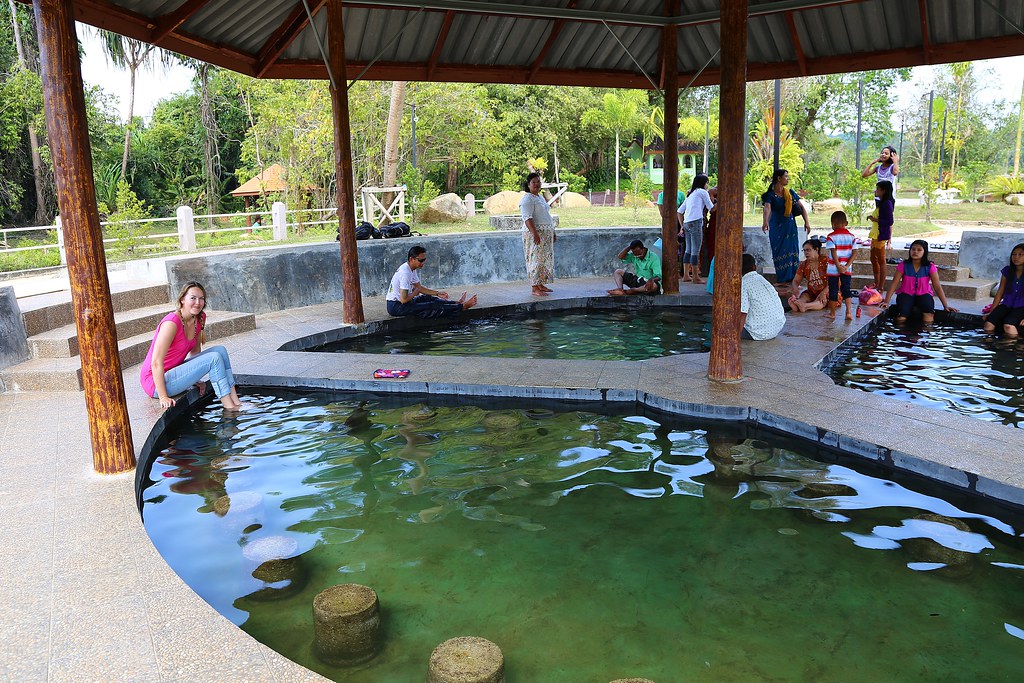
Namaste
#hibokhibok #mambajao #camiguin #Philippines #lonesometraveler #hotspring #spring #meditation #yoga #waterfalls #nature #river #water #namaste #ardenthotspring #mount
A whirlwind tour by pictures through the region, how many countries featured?
#FotoRus #ESPA #hotspring #tabanan #holiday 

The Balinese baths of ..., source.
#Amazing#holiday ... I love the #sun and the #goodweather ... Ich liebe die #Sonne und das gute Wetter ... #outdoor#hotspring#enjoy#travel#relax
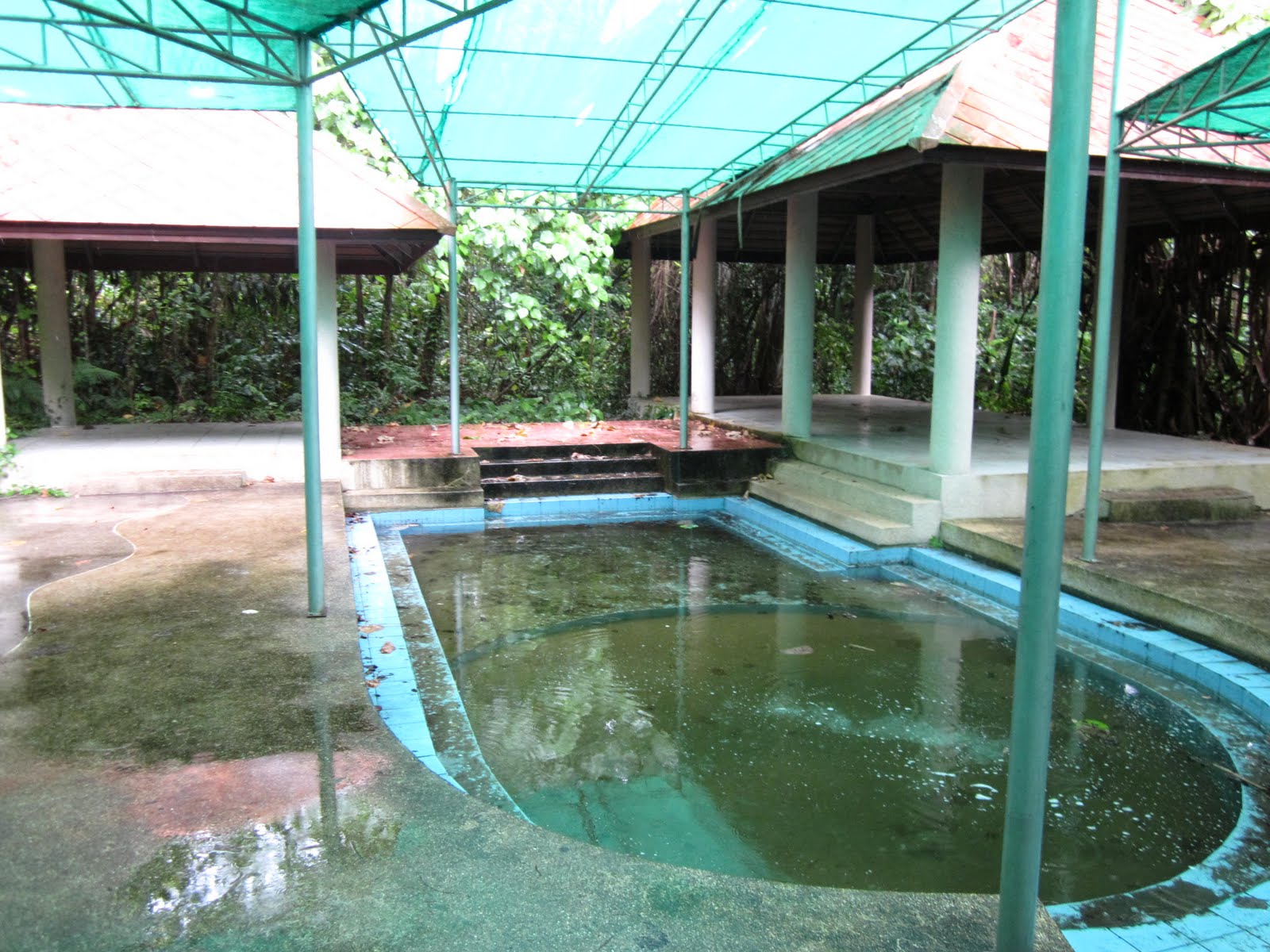
Banjaran, Perak, Malaysia; source
Flashing
That's three, back to the Philippines:
Di ra gyud mo masakpan mangihi sa kaiinit sa tubig diri. #vsco #nature #hotspring #travelph #adventure #vscobeau #mountain #trek #cebu
T minus 2 days until #bikini all day errday 


 #flashback #nhatrang #vietnam #thermalpool #vacay #2014 #theblackfloatythingismeanttobeThere
source
Then another from Vietnam at the Yangbay waterfall, likewise near Nha Trang. I once visited this place but couldn't find the hot spring. Since though development has resulted in the construction of this pool:
#горячиеисточники #термальныеисточники #родоновыеванны #мояжизнь
#длятелаидуши #экопарк #ЯнгБей #моревпечатлений #Природа #Вьетнам #thermalbaths #mylife #ecopark #YangBay #nature #Vietnam #travel #traveler #travelphoto
But first to the baths of Burma:
Hot spring
To be more precise South Burma, flickr member Jumbokedama
Vi prøvede varme kilder i dag! #hotsprings #norththai #thaibali2015
Not often pictured hot spring, at Pha Daeng National Park, Chiang Dao, Chiang Mai province, .... Thailand. source
Hot #me #talailandia #rain #amazing #place #naturalhotwater #nature #holiday #thai #thaistyle #pai
Don't go chasing waterfalls just stick to the rivers and the lakes that you're used to @laratyssel #hotsprings #rinjani
Hot spring on Rinjani volcano, Lombok island, Indonesia. source
... six.

On the edgeChumphon is a touristically underrated province in Thailand. Too far away from Bangkok to warrant a weekend trip, too close to make flying there practical. Back (and flash) packers are all on their way to Ko Tao, a veritable divers paradise slowly edging to high end boutique-ness.
See Soaking in Siam for more ...
Wow
In all honesty there's not much to distinguish visit's to some of Thailand's hot springs from each other. Sometimes well signposted, sometimes not at all. They are all are designated to 'wow' the visitors, attract more tourists and line the pockets of local entrepreneurs and governments.
See Soaking in Siam for more ....
Duc My
Confusion reins concerning the hot spring of Duc My.
Duc My is a village located along Vietnam’s Highway 26 which connects Vietnam's Khanh Hoa town of Ninh Hoa with Buon Ma Thuot (Dak Lak provincial capital), close to the Cambodian border.
However my driver speeds through Duc My, a village located on the banks of a nice river, just before the road leaves the lowland for the foothills covered by extensive sugarcane and cassava fields.
It is 9 km after Duc My village that there is a turn-off to the left down a 100m wide dirt 'avenue' before we halt in front of a house. An attentive man sells an entrance ticket (5,000 VND, about US$ 0,25) and explains to proceed to behind the house.
A short way after the house one comes across two shallow ponds. Around the ponds are a number of shaded picnic tables. Just upstream of the ponds is a 3m high, 10m wide piece of rock which emits both water and steam. The host who had accompanied me illustrates nature’s oddities by simply announcing that the water is 70-72 degrees. That’s Celsius.
The water body (see photo below) is a man-made 1 m wide basin halfway up the rock, roughly 3m long. There’s another basin, same size, equally hot.
One can scramble over the rock, there are quite a few holes from which hot water streams. It all doesn’t look soakable: the ponds are too shallow and look very muddy, the basins are for boiling eggs or such. Vietnamese guests seem to have found the only way to use the water: adding it to their noodle lunch.
I scramble around and must conclude that, no there is no way to soak.
Clear
I return to the house and try with help of my driver and the host's son try to clarify one or two things. For one, I always said I wanted to go to Duc My hot spring and my driver went straight to this place (without any need to seek questions), so this must be it.
However at the spring site itself, they refer to this place as Truong Xûan (Suan). Then there is this reference to a hot spring, about 5 km past Duc My called Ong Me with some descriptions which remind me of Truong Xûan, though it distinctly says it is not Truong Xûan: 'Beside Truong Sinh [or Xûan?] Hot Spring that is very well-known, tourists coming to Ninh Hoa District, Khanh Hoa Province recently rumoured about a new hot spring which has a very peculiar name of Ong Me'.
The description though is not of Truong Xûan.
The attendee and taxi driver have not heard of Ong Me, which if closeby seems a bit odd. Is it thus another hot spring? Or not? Then again this reference of Duc My hot spring has another description of it’s location, 'close to National Highway 1'.
Which it is not. But the other two sentences would not conflict with what I experienced.
And a reference to Truong Xuan hot stream: ‘located in Ninh Tay Village’.
Which according to my sources is correct. But surprisingly it also adds that ‘the precious natural mineral water is processed into beverages’.
Which I observed no proof of. Why can't life be more simple?
Hope
Mr Rakuda of his hot spring journal fame, has visited what he also calls Duc My and the photo's posted are very similar to what I experienced. Translation of the text does not add much to the above other than that back then (2005) he did bathe in the lower pond ... (I believe).
I've been able to find an experience from 1995 though other than hot nothing new (or old).
Odd as it seems, but there is a project underway to build Truong Xûan Hot Spring Heath-Spa Resort which the name would imply would be at exactly the same place. The first reference I found dates to 2003, but clearly nothing has come about. Even though a real estate agent is trying to sell something under this name in 2004. More importantly Wellness Vietnam ('Consulting is dedicated to the design and implementation of client-centric, cost-effective spa and wellness solutions')
now lists the project as going to be completed this summer as well as a project nearby in Ba Ho (which when visited was well under way). The above link to Wellness Vietnam though is to a cached page, it's up to date page has no reference to either projects ....

'Hot springs, near Nha Trang. Khiet showed us some very natural hot springs tucked in the foothills on the way to Nha Trang. It was beautiful to see springs kept so naturally'.
Funny that, natural cemented wall. Photo by lafeola
Elsewhere
Khanh Hoa province through Thap Ba hot spring Center has become a major destination for hot spring lovers. That said until recently Soaking in Southeast Asia had listed a number of other soaks, such as the already blogged Tubong and this entrance's Duc My. We will have to contend that until further proof Ong Me is another hot spring in this province.
But there are possibly more hot springs. Danh Thanh is often used in texts on Vietnam's potential for geothermal electricity as well as in mineral water sales.
Then there is this link that names Danh Thanh as well as another hot spring: 'By 2003, Khanh Hoa has registered 10 hot springs with average reserve of more than four litres per spring every second. The province’s famous hot springs are Danh Thanh and Suoi Dau'.
Ten? Suoi Dau?
Suoi Dau is more better known in the province for being an industrial zone as well as the place where a former colonial Alexander died (source): 'The grave of Doctor Alexandre Yersin is located on top of a nameless hill at the Suoi Dau area in Dien Khanh district'.
My hunch is that they only mean spring rather than hot. But then 10 springs are not much ...
Getting there: From Nha Trang head north to the town of Ninh Hoa and take the main road out to Buon Ma Thuot, After passing Duc My village (about 5 km) it’s about another 11km on the left side of the road. Soaking experience: Too hot.
Overall impression: Due to the lack of soaking possibilities, not really worth a visit unless passing through.
 If only life could be so good: Beer Lao & Hot Spring
Developing
The best known hot spring of Xieng Khouang province, Lao, is that of Baw Njai (Bo Nyai) which translates as big hot spring. It's also known for it's more advanced stage of development: no more just a spring, it is a real resort, with separate bathing facilities.
LP (Things to do in Xieng Khuang) describes it as follows: 'A hot mineral spring can be visited near Muang Kham. Baw Nyai is large and lies 18km east of Muang Kham, 51km from Phonsavan. The spring source is in a heavily wooded area where several bamboo pipes have been rigged so that you can bathe nearby, although the experience is a little disappointing owing to the muddy texture of the water'.
The LP Laos guidebook adds that it was originally built by Kaysone's wife (Kaysone was a leader of the Lao revolution) as a way of treating and entertaining foreign politicians.My guiding info comes from A Guide to Xieng Khouang Mountain Province in Northern Laos [1] which I also used on my other Lao hot spring visit (to Baw Noi), another 15+ kms away in the direction of Muang Kham.The spring(s)
Having visited Baw Noi previously and now expecting a major improvement in bathing facilities we were off on our way. The first advantage over the smaller spring was the entry fee (5,000 kip; 0,60 $US): the entry fee collector was on a break, possibly long term. Though the entry fees seem negligible, our driver believes we are having a really good lucky day, all smiles.The entrance is about 2 km from road to Nong Het. Passing the entrance, one glides into an expansive compound with about 10 large bungalows. On the side of the road is a path which indicates the direction of the hot spring. This tree lined dirt track goes through a forested area to a fenced-in pond. The pond is about 20m in circumference and one can walk around. On the far side one can observe the water springing and steam slowly rises above the pond.
  Mukarin has a photo when there was proof of more forest in the immediate vicinity. A sign of the times?
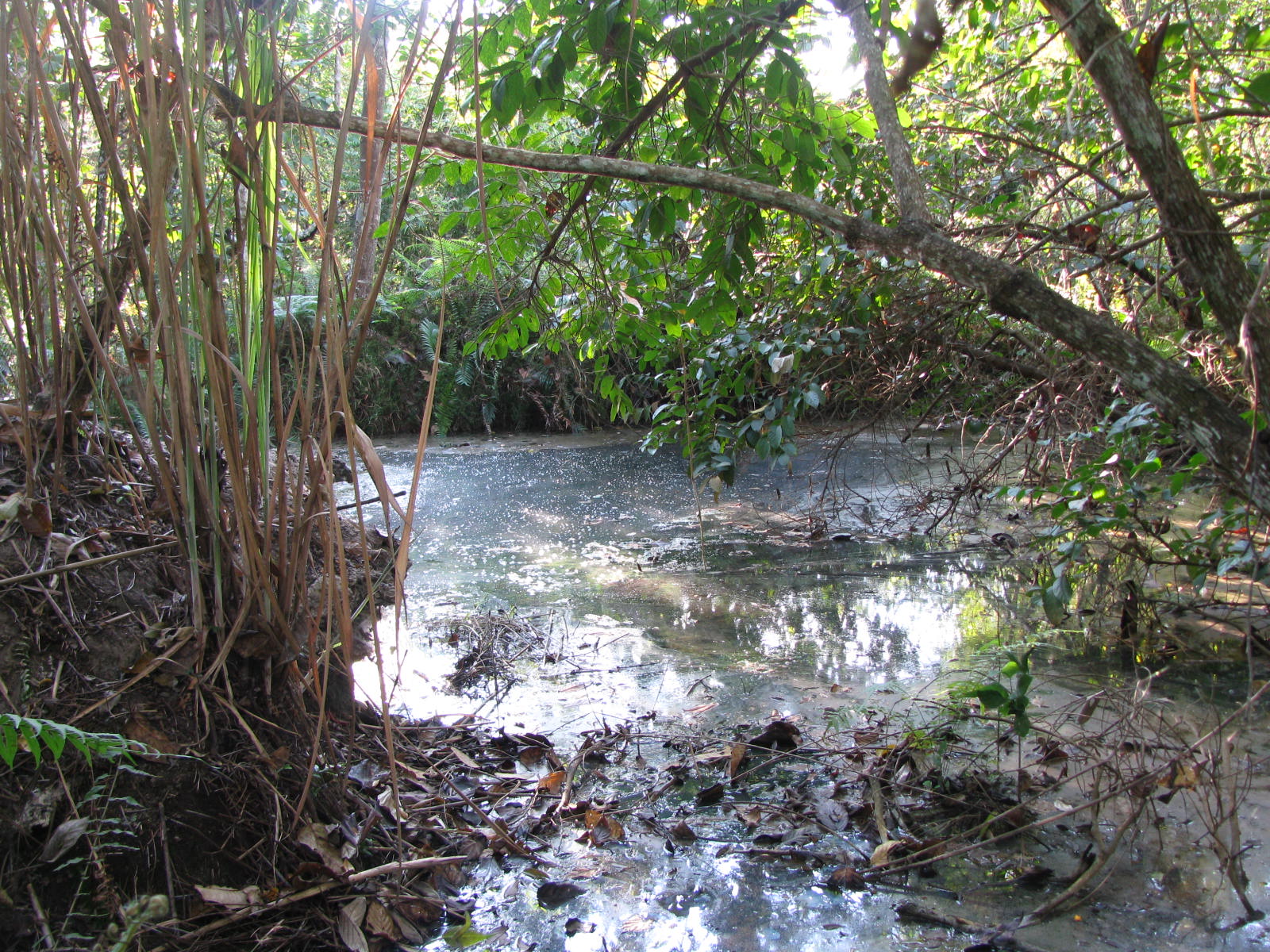
From this pond, one can also walk to a smaller pond. This track is less wide and ends in a marsh-like pond (see photo below) which contains hot water, but not really hot. Experience
We return back to the resort proper and having decided earlier that we were in need of a soak, head for the restaurant which doubles up as ticket sales point for soakers. Behind this restaurant are a number of small, stinky, damp and dark cubicles with small tubs. Though the soak would cost just 5,000 kip, for the sack of sanity we skip this part. It always surprises me how such 'developed' sites have little or no idea what a soaker would like. Me quick thinking: take away most of the walls (so one has a nice view of the surrounding) forest, expand the tubs, add a shower and a resting/relaxing corner and you really have something tourists will go out of their way to experience. Now Baw Njai only produces disappointed potential soakers.  Convincing?
 :
'I’m abysmally disappointed by the hot springs I was sure I was going to experience. The hot spring was there – green and pristine, but to try it out, I would have to go into a small room, equipped with a bathtub and toilet where the hot spring water was connected to. That’s it? I couldn’t believe it. I don’t want to try it out!'
ignatris blogs on Baw Nyai: 'a hot spring that looks like a development project gone wrong, even though the water is really hot'.
Some are more fortunate by opting to stay the night in a bungalow. At least here the bathrooms seem do-able, but not necessarily an exciting prospect. Achikochi Takema has an expansive blog entry on Baw Njai as well as on Baw Noi. His Baw Njai experience describes staying overnight and having a private bath. Drawing the bath though takes more than 5 minutes, just for the hot water to arrive. He also speculates that the spring appeared after a bomb fell at this place, thus explaining the existence of the pond. The fence would have been constructed to protect the spring from the free roaming water buffalo. He also pic's the bathing rooms in the guest bungalows, describing them as a more hygienic way of soaking.The right way
In a way, it's quite disturbing this lack of insight in tourists (perceived) needs. In this one should take the example of New Zealand. Well-known for it's mountains and geothermal activity, not often do these two combine. So in response there are innovative projects which are not / can not using natural springs but copying the soaking experiences.
See for instance Onsen Hot Pools of Queenstown 'TripAdvisor members have voted Onsen Hot Pools the best of 74 Queenstown activities for over two years!',
Omarama Hot Tubs 'You have an amazing place there, absolutely beautiful'
and Glacier Hot Pools (Overall Winner West Coast Southern Alps Tourism Awards 2010). The above are just proof of how easy it is to attract tourists if one adjusts to their demands. It needn't be so difficult.
On the positive side, some redeveloping of Baw Njai was in the process (bungalows), though I have my doubts whether it will result in better soaking facilities. If only i were manager ...MoreMore info (mostly photo's) from the recently discovered Japanese language blog site by yoshidanoharuo. He/she has traveled extensively across the world looking for hot soaks.
He/she ranks Baw Noi higher than Baw Nyai, three stars versus two on a scale of just 3. Getting there: From Phonsavan, Xieng Khouang's provincial capital, head north east to Muang Kham and continue 20 km beyond Muang Kham in the direction of Nong Het. The turn off is well signposted. The resort itself is about 2 km's from the main highway.Soaking experience: Only for the blind and gullible?Overall impression: The impression we left with was that of a missed opportunity. How difficult can it be to get it wrong? If I compare with other hot spring haunts in Southeast Asia it's certainly a common theme in the developing of such soaks. Development = not good. Notes:
[1] Creutz, S., J. Van Den Bergh (2009) A Guide to Xieng Khouang Mountain Province in Northern Laos. Lao National Tourism Authority, Vientiane, Laos.
Copyright 2009 © Soaking in Southeast Asia. All rights reserved.
No reproduction or republication without written permission.