Showing posts with label Waterfall. Show all posts

Sunday, 8 March 2015

Liebe ♨

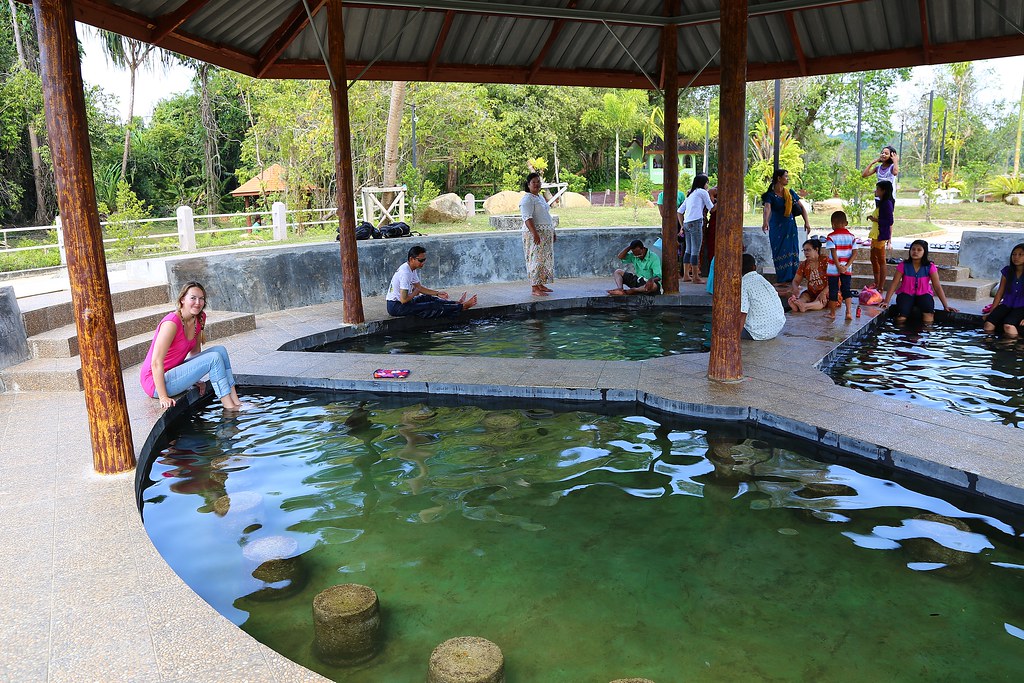
Namaste #hibokhibok #mambajao #camiguin #Philippines #lonesometraveler #hotspring #spring #meditation #yoga #waterfalls #nature #river #water #namaste #ardenthotspring #mount
Ardent hot spring, source.

A whirlwind tour by pictures through the region, how many countries featured?

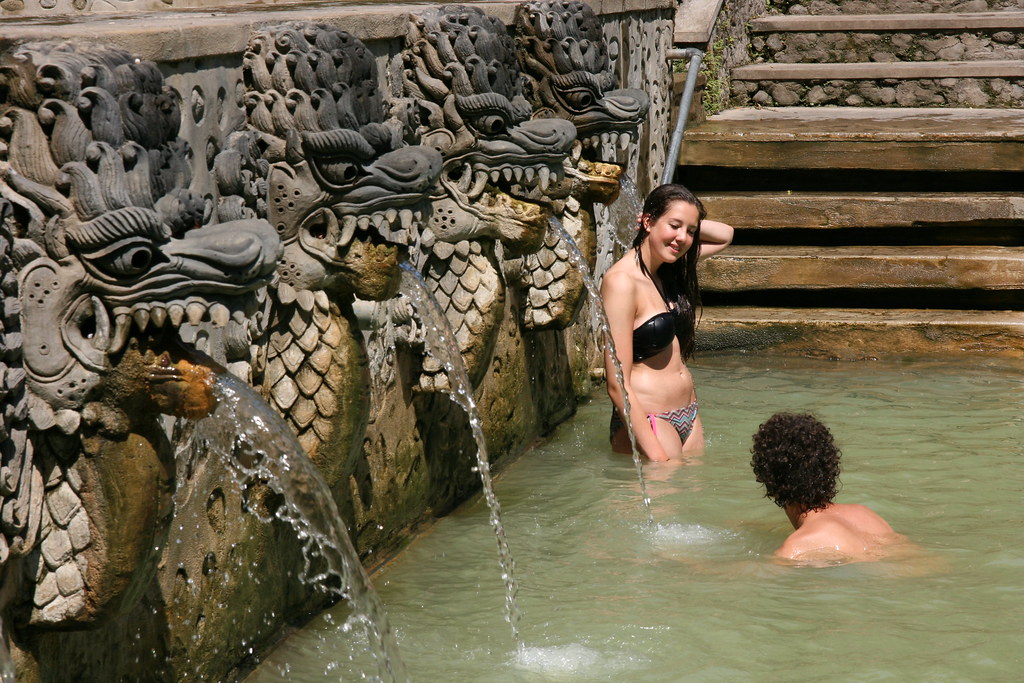
#FotoRus #ESPA #hotspring #tabanan #holiday emojiemoji 
The Balinese baths of ..., source. 
#Amazing#holiday ... I love the #sun and the #goodweather ... Ich liebe die #Sonne und das gute Wetter ... #outdoor#hotspring#enjoy#travel#relax 
Banjaran, Perak, Malaysia; source


Flashing
That's three, back to the Philippines:
 
 Di ra gyud mo masakpan mangihi sa kaiinit sa tubig diri. #vsco #nature #hotspring #travelph #adventure #vscobeau #mountain #trek #cebu

T minus 2 days until #bikini all day errday emojiemojiemojiemojiemojiemojiemojiemoji #flashback #nhatrang #vietnam #thermalpool #vacay #2014 #theblackfloatythingismeanttobeThere
source 


Then another from Vietnam at the Yangbay waterfall, likewise near Nha Trang. I once visited this place but couldn't find the hot spring. Since though development has resulted in the construction of this pool:


#горячиеисточники #термальныеисточники #родоновыеванны #мояжизнь #длятелаидуши #экопарк #ЯнгБей #моревпечатлений #Природа #Вьетнам #thermalbaths #mylife #ecopark #YangBay #nature #Vietnam #travel #traveler #travelphoto
source


Thaistyle?
But first to the baths of Burma:

Hot spring
To be more precise South Burma, flickr member Jumbokedama

Vi prøvede varme kilder i dag! #hotsprings #norththai #thaibali2015emojiemoji
Not often pictured hot spring, at Pha Daeng National Park, Chiang Dao, Chiang Mai province, .... Thailand. source  


Hot #me #talailandia #rain #amazing #place #naturalhotwater #nature #holiday #thai #thaistyle #pai

Don't go chasing waterfalls just stick to the rivers and the lakes that you're used to @laratyssel #hotsprings #rinjani
Hot spring on Rinjani volcano, Lombok island, Indonesia. source

... six.

Wednesday, 13 June 2012

Spotlight

Two entries already on European hot spring visits in the European Natural Soaking Society. More to follow.

Topical
Hot on the heels of the last update's weird and wacky hot spring and sauna experiences come's Estonia's sauna car! Follow the link and watch the clip.
I do not know if this applies to the sauna car, but in Japan you can visit a hot spring and earn airmiles!

Regional
Seldom do we see such good work in (re-)seeking hot springs in Southeast Asia, most prefer the over-trodden paths. However the blog entry 
'Unearthing Timor-Leste's Hidden Gems - Marobo's Natural Hot Springs 
by  Barry Greville-Eyres and Francisco Carlos de Araujo is a real gem by itself: 
'On a short descent we encountered ruins and remnants of what was supposedly spa or resort styled accommodation, at a picture-perfect location, surrounded by a labyrinth of ridges and valleys. Despite conflicting reports on the origins of the development - some sources attribute it to Japanese occupation forces during WWII (1942-1945) others to the Portuguese colonial occupation-era pre-dating WWII - its highly likely that local Timorese villages were instrumental in the construction of the associated infrastructure.
Much toil and backbreaking effort must have gone into the construction of the access road; distinguishable accommodation units; hundreds of metres of retaining walls; hot water diversion, distribution and drainage systems; the main bathing pool (approximately 25mx15m); an ablution facility and individual external mineral or mud baths.  Although the facility is now clearly abandoned, it still remains an important part of Timor-Leste's natural heritage and a potential drawcard for both domestic and international tourists'.
 It also lists a short overview of all Timor-Leste's hot springs. 

'A parting shot of Marobo's natural hot springs - 
yet another of Timor-Leste's hidden gems'.
Foreign control? Locals in Sabah state, Malaysia are worried that their natural wonders are being privatized. 
Always this never ending story: private ownership of public lands results in entrance fees / profiteering possibly exclusion of certain groups of persons (based on income) or public control by public organisations which (in Malaysia) don't seem to be interested in the public interests. The essence of the freemalaysiatoday article (7 June 2012):
'Ranau STAR division chief, Jalibin Paidi, said the transfer or takeover of the management of money-making Kinabalu Park or parts of it as well as the popular Poring Hot Spring near here had become a hot topic among people in Ranau and they want to know the truth'.
More worrying is the emphasis on foriegn control as if this makes non-public control worse ... 
Note also that the article mentions that all of this is rumour, hot air thus ...

The mud baths of Thap Ba (Nha Trang, Vietnam) now have a local competitor / imitator. Read more on the Thap Ba Soaking in Southeast Asia entry.
In the same area, Waterfalls of Southeast Asia reports that the famous Yangbay waterfall park, will soon expand, to include a (natural) hot spring ... 

Meanwhile in Los Baños, the Philippines, the gamble is on big-business tourism, so states inquirernews (30 May 2012): 
'The master plan also includes setting up a cable-car system along the Makiling terrain, rehabilitating the heritage sites in the town’s poblacion, and renovating the local spa and hot spring resorts'. 
More of the same thus?

Another entry on the Pinatubo hot springs:
'According to tour organizers, most of the resort’s clients are foreigners, with Koreans in the majority since it was developed by a Korean investor married to a Filipina. The resort also provides employment to indigenous Aetas, the original residents of the area, who were displaced during the volcano’s eruption.
With smoke billowing out from mountain crevices, natural pools and waterfalls sprouting from the dry earth, and oddly-shaped geologic formation, the terrain looks almost prehistoric.
It’s almost surreal to see modern amenities instead. Like in most developed resorts, there are several bathrooms and changing areas near the pools, with alert attendants handing out fresh towels to newly-arrived guests. Picnic huts, paved stairways and cement banisters made to look like wooden logs, have been carved from this mountain of stone and soil.
I dipped my foot gingerly into one of the hot pools and immediately retreated as the heat pierced through my skin. I moved to another pool where there were more people and found it relaxing in a feverish sort of way. Beads of sweat broke out on my forehead as my body slowly adjusted to the temperature. The heat of the pools really seeped in and soothed one’s aching muscles in no time'.
A great entry on an as-of-yet not-on-this-site-listed hot spring: Bogyah hot spring, neatly nestled in the Hapao rice terraces, Luzon, the Philippines. A great blog entry:
'When we got to Bogyah Hot Springs, there were locals relaxing in the hot spring. I did not mind, this was their place and I was happy that while dipping on the hot pool I get to know some bits and pieces of their life'. 
Note end line: 
'Let us not change Hungduan [where Bogyah is located] , let it change us'. Too ture.
Travelfish have added a section on the Dieng plateau, Java, Indonesia: 
'The main attractions in Dieng are the numerous temples and the geothermal area around Kawah Sikidang'.
Less local
More money being thrown around (or away?):
'GOCO Hospitality is working with Sanli Guo Yuan to develop the Xiangshan Hot Spring Wellness Center, a 6,000 sq,m. facility with an onsite natural hot spring, located 30 minutes outside Ningbo, China'. 
The cost will be only $US 25 million. For this: 
'The Xiangshan Hot Spring Wellness Center will offer exceptional wellness programs that are results-oriented and address the health concerns of the modern Chinese consumer—beauty enhancement, weight loss, detoxification, stress relief and ageing well. Benchmarked against leading thermal facilities internationally, Xiangshan will set a new standard in design aesthetics and service quality, seamlessly blending Western and Eastern wellness modalities'.
 Continuation of soaking vs geothermal energy dilemma:
'... opposition from local hot spring operators is stalling proposed large scale geothermal development in the Prefecture of Fukushima'. 
So reports the thinkgeoenergy.com last month. Seeing how the nuclear plant nearby which should be one of the most regulated industries went haywire, how is one top believe assurances from companies? Take for instance a recent entry on the soakersforum which mentions hot springs being sucked up ...

More  energetic activity in the region. $11.5 have been allocated to the Tawau, Sab ah, Malaysia project, no soaking opportunities? The Leyte, Luzon, Philippines geothermal plant will cash in (read privitize), with global energy prices at a remaining all-time high. Then there is news on Sulawesi (potential) and elsewhere on the Philippines (Kalinga).

Banjar hot spring, Bali, Indonesia (source)

Monday, 4 April 2011

The rein of confusion

Duc My 
Confusion reins concerning the hot spring of Duc My. Duc My is a village located along Vietnam’s Highway 26 which connects Vietnam's Khanh Hoa town of Ninh Hoa with Buon Ma Thuot (Dak Lak provincial capital), close to the Cambodian border. However my driver speeds through Duc My, a village located on the banks of a nice river, just before the road leaves the lowland for the foothills covered by extensive sugarcane and cassava fields. It is 9 km after Duc My village that there is a turn-off to the left down a 100m wide dirt 'avenue' before we halt in front of a house. An attentive man sells an entrance ticket (5,000 VND, about US$ 0,25) and explains to proceed to behind the house. A short way after the house one comes across two shallow ponds. Around the ponds are a number of shaded picnic tables. Just upstream of the ponds is a 3m high, 10m wide piece of rock which emits both water and steam. The host who had accompanied me illustrates nature’s oddities by simply announcing that the water is 70-72 degrees. That’s Celsius. The water body (see photo below) is a man-made 1 m wide basin halfway up the rock, roughly 3m long. There’s another basin, same size, equally hot. One can scramble over the rock, there are quite a few holes from which hot water streams. It all doesn’t look soakable: the ponds are too shallow and look very muddy, the basins are for boiling eggs or such. Vietnamese guests seem to have found the only way to use the water: adding it to their noodle lunch. I scramble around and must conclude that, no there is no way to soak. 

Clear 
I return to the house and try with help of my driver and the host's son try to clarify one or two things. For one, I always said I wanted to go to Duc My hot spring and my driver went straight to this place (without any need to seek questions), so this must be it. However at the spring site itself, they refer to this place as Truong Xûan (Suan). Then there is this reference to a hot spring, about 5 km past Duc My called Ong Me with some descriptions which remind me of Truong Xûan, though it distinctly says it is not Truong Xûan:
'Beside Truong Sinh [or Xûan?] Hot Spring that is very well-known, tourists coming to Ninh Hoa District, Khanh Hoa Province recently rumoured about a new hot spring which has a very peculiar name of Ong Me'.
The description though is not of Truong Xûan. The attendee and taxi driver have not heard of Ong Me, which if closeby seems a bit odd. Is it thus another hot spring? Or not? Then again this reference of Duc My hot spring has another description of it’s location,
'close to National Highway 1'.
Which it is not.
But the other two sentences would not conflict with what I experienced. And a reference to Truong Xuan hot stream:
‘located in Ninh Tay Village’.
Which according to my sources is correct. But surprisingly it also adds that
‘the precious natural mineral water is processed into beverages’.
Which I observed no proof of.
Why can't life be more simple? Hope Mr Rakuda of his hot spring journal fame, has visited what he also calls Duc My and the photo's posted are very similar to what I experienced. Translation of the text does not add much to the above other than that back then (2005) he did bathe in the lower pond ... (I believe). I've been able to find an experience from 1995 though other than hot nothing new (or old). Odd as it seems, but there is a project underway to build Truong Xûan Hot Spring Heath-Spa Resort which the name would imply would be at exactly the same place. The first reference I found dates to 2003, but clearly nothing has come about. Even though a real estate agent is trying to sell something under this name in 2004. More importantly Wellness Vietnam
('Consulting is dedicated to the design and implementation of client-centric, cost-effective spa and wellness solutions')
now lists the project as going to be completed this summer as well as a project nearby in Ba Ho (which when visited was well under way). The above link to Wellness Vietnam though is to a cached page, it's up to date page has no reference to either projects ....

'Hot springs, near Nha Trang. Khiet showed us some very natural hot springs tucked in the foothills on the way to Nha Trang. It was beautiful to see springs kept so naturally'.
Funny that, natural cemented wall. Photo by
lafeola

Elsewhere
Khanh Hoa province through Thap Ba hot spring Center has become a major destination for hot spring lovers. That said until recently Soaking in Southeast Asia had listed a number of other soaks, such as the already blogged Tubong and this entrance's Duc My. We will have to contend that until further proof Ong Me is another hot spring in this province.
But there are possibly more hot springs. Danh Thanh is often used in texts on Vietnam's potential for geothermal electricity as well as in mineral water sales.
Then there is this link that names Danh Thanh as well as another hot spring:
'By 2003, Khanh Hoa has registered 10 hot springs with average reserve of more than four litres per spring every second. The province’s famous hot springs are Danh Thanh and Suoi Dau'.
Ten? Suoi Dau? Suoi Dau is more better known in the province for being an industrial zone as well as the place where a former colonial Alexander died (source):
'The grave of Doctor Alexandre Yersin is located on top of a nameless hill at the Suoi Dau area in Dien Khanh district'.
My hunch is that they only mean spring rather than hot. But then 10 springs are not much ...

Getting there
: From Nha Trang head north to the town of Ninh Hoa and take the main road out to Buon Ma Thuot, After passing Duc My village (about 5 km) it’s about another 11km on the left side of the road.
 
Soaking experience: Too hot. 
Overall impression: Due to the lack of soaking possibilities, not really worth a visit unless passing through.

Tuesday, 18 January 2011

Updates 15 January 2011

Coming back from a recent visit to Lao, there are 2 entries coming. Both from Xieng Khouang province: one already published, one to be published later this or next month. This brings the list of countries with hot springs featured up to 7, nearly 40 featured soaks in all.

Despite the difficulties in traveling Lao it must rank high on anyone's 'to do' list. Culture and scenery are beautiful. And if willing to put up some effort, there are also nice hot springs and beautiful waterfalls to be visited (see Waterfalls of Southeast Asia). More entries in the waterfalls blog have taken place on Thailand, Lao and Cambodia.

Publishing new entries on Hot springs of the Himalaya has come to an end, from now on there will be only re-publishing as and when time allows, hopefully keeping the info published up to date.

Press
Other interesting news is being kept to a minimum, despite this being the ultimate season for soaking in Asia.

Sydney Morning Herald has put in a glowing overview of Banjaran Hotspring Resort near Ipoh, Malaysia. "Spectacular" is a quote which seems to justify the reporters free overnight stay; other than that she seems not very impressed.

Thanhniennews
has a feature on Binh Chau, a hot spring I visited (and featured) earlier last year. added info is the fact that the springs were
' “discovered” in 1928 by a French doctor named Salle'.
As if not known before ... Overall a very positive article though again not very journalistic.

Further away, Cityweekend's Shanghai edition hopes it can get it's readers naked. At Tangshan hot spring.
'People have been getting naked there for 1,500 years, due to the hot springs and their famously curative waters. It was fenced off as a royal sanitarium for most of that time. These days, though, anyone with a little coin can take the plunge'.
Then it transpires they mean Kayamunis:
'You see, the Kayumanis is all about privacy. The 21 villas—each over 300 q. meters—are all enclosed by high walls. Inside you’ll find a cold plunge pool and what you came for—your own private hot spring nourished by 50 degree Celsius waters containing numerous healing elements. High walls means no roving eyes. Bathrobes are optional in your private estate, even in cold, early spring weather'.
The walls come with a price, upwards of $600 per night! Stay a few nights and you could have spent the same amount on a new bathroom with your own hot spring (?!).

Geothermality
A mainstream article by National Geographic looks at the future of geothermal power generation. Apparently Kenya will be leading the way followed by Indonesia.

Readers'tips
From the UK press, the Guardian comes this list of reader's tips concerning
'spa's and hot springs - the best places to chill out in warm water'.
The winning tip concern's New Zealand's Hot Water Beach and Kerosene Creek, even though they are nearly a day's drive away. From Southeast Asia the only tip concern's Thap Ba (Vietnam) while Asia at large gets tips on a hot spring in Jordan and 2 in Japan. So much for soaking being a popular past time ...

Hot Water Beach: dig in? (visited 2007)

Monday, 3 January 2011

Little


Lao lounging

North Laos is a great place to find hot springs. It's an intricate mix of various hill tribes with different customs and uses all blended into a lowland Lao culture where simplicity and timeliness are still in vogue. Add to this, historic settling and superb natural landscape.

In general there seem to be only a few hot springs in Laos, but I suspect that many are still waiting to be discovered. General access is still poor, but the surrounding Thai, Vietnamese and Yunnan mountain areas have many hot springs on offer, so why would Laos possess heaps of hot springs?


The mountainous province of
Xieng Khouang contains 3 known hot springs, as far as I know. There is the hot spring of Ban Thak, which is still to be developed according to LP and which our guide assured us, was not worth it. the journey Especially in light of the big distance to get there via poor and tired roads. So we'll leave it for a next time.

Besides hot springs, Xieng Khouang is an interesting province to visit. The capital of Phonsavan is a bit windswept, but it sits on a high plain allowing for a nicer and cooler clime than most places in Southeast Asia. There are the mysterious Plain of Jar sites to be visited, many different ethnic tribes, appallingly war-time scars and an outstanding natural surrounding (f.i. the waterfalls of Tad Lang and Tad Ka).

Hot springs of Kham
On the road east of Muang Kham, in the direction of Vietnam, lie 2 quite accessible hot springs. Apparently everybody refers to these as Baw Noi (Bo Noi) and Baw Nyai (Bo Njai).

The hot spring Baw Noi (which translates as little hot spring) is just 3 km east of Muang Kham, a larger village in the north of the province.

My guide to this hot spring is the excellent A Guide to Xieng Khouang Mountain Province in Northern Laos [1] which includes the following:
'A little hot springs is located in Xang village, 3 km east of Muang Kham. It feeds into a stream just a few hundred meters off route 7. Note the limestone jar near the ticket office. In the village tai Dam women sell their weaving textiles; cross the river on a small bamboo bridge to visit the Phuan village and observe the women create the beautiful textiles. There is another hot spring nearby Nathong Village. Pass the village and follow for about 800 meters'.
It can be picked up in the informative provincial tourism office of Phonsavan, though large sections of the text appear on wikipedia and wikitravel.

Baw Noi

So, three kms out of Muang Kham, there is a smaller signboard indicating a turn is required if heading to Baw Noi.
One continues down this road towards the village of Xang. Or Xieng, according to this
website. At the end of the road one goes through a gate to a wide enclosure. On the stream side of the enclosure is a wooden building with signboards referring to the spring, while on the right are a number of wooden buildings, the furthest away has a signboard indicating it's a guesthouse. But it could also be a school / office.

Entrance fee for visitors is 5,000 kip, about 0,60 $US. Interestingly the ticket refers the Nam Ounnoi tour, the river behind the enclosure.

Welcome

From the ticket office it is a 100m walk along the river to a wading place across the river. Here is also the location of the hot spring. Located just above the waterline, the spring has a double cement wall defense against the 30m wide fast flowing stream. Contained within these confines is water with a temperature of nearly 60 degrees, way too hot for a soak. It is also only 20 cm shallow.

Cemented. Thnx to 'GRANT ASSISTANCE OF THE MR JOHN 2000 BATH'.

Just beyond the broken outer wall hot and cold water are mixing, but there's neither a good spot for mixing the water to a temperature bearable and use as a shower, nor a space where one can bathe, even if the waters are shallow.

It being late afternoon we hang around for half an hour watching kids splash in the water and villagers returning from work on the land and crossing the river to get to their houses. A beautiful picture and a great way to experience Lao.

View from the spring; returning home.

The smaller little spring
Having read that there's another spring nearby I returned back to the ticket seller and asked. Yes there was, not so far away, she had been there once, but it was no place for visitors to go. Because.

The guesthouse owner came over and more talking ensued with me politely trying to push the issue. The discussion took a turn as we came to discuss about Jars and their existence. Yeah, there was a find site nearby, on the other side of the river and on all fours up the mountain. Two hours walk. I had read that there was a jar close to the ticket office. Same same?
Lots of discussion further, the guesthouse owner takes me to the edge of the enclosure and there's a partially broken Jar. We're getting there.

Eventually it was deduced that the hot spring I was asking about was overgrown, 100m stream upwards of the other spring. If I wanted to see it then the guesthouse owner would assist.
We all trudged off back to the river walked beyond the spring, along a field and then beelined to the bank of the river. The guesthouse owner said it was somewhere close with us trying not to get entangled in the weeds. Eventually he mentioned that he had (re-)found it. After scrambling there there was a small hole between the weeds where hot water (but a lot less hot than the more developed springs) streamed 2m along a small 20cm wide canal to the main stream.


The smaller of the small hot spring. The black hole is 20 cm across.

Bathing and soaking
We returned back to the original spring. In the meantime, the village is coming out to bathe, one women is soaking, fully clothed in the very hot spring. Wow!
Most though are just using the river to bathe in, with little regard to the presumed convention of shame and / or offending others. Wish I could move here.

We return to the ticket office and sit down, initially for a glass of water but soon we are tasting and testing all kinds of local fruits, not all palatable. A very nice place.


Another highlight of the village is it's bamboo bridge, downstream. The annually rebuilt bridge is nothing special, but another great place to watch village life: kids jumping in the river, teenagers fishing. We are really playing the tourist.


Worth it? Or not?
Exploring the internet there is not so much information available, either in blog form or in photo's. That doesn't surprise me, the hot spring ticket seller said they often have only a couple of visitors each week and in the hot season none at all.

One good overview is presented in a Japanese language blog entry. I've applied Google Translate and much of the written content is small talk but the photo's are good. And there's a short video.

Travelfish is downright condescending:
'Baw Nam Horn Noi is small and not worth a visit'.
Wikipedia Phonsavan's entry differs:
'Xang village is located near a small hot spring. An ideal spot for a small break. Across the river Phuan women demonstrate their weaving'.
There is a photo on travel pod, at a time of the year when there is more water in the river.

Finally, there's LP's entry:
'Baw Noi (Little Spring) feeds into a stream just a few hundred meters off Rte 7, a couple of kilometers before Baw Nyai on the way from Muang Kham.You can sit in the stream where the hot spring water mixes with the cool stream water and 'adjust' the temperature by moving from one area to another'.
Getting There. Take the road north out of the provincial capital of Xieng Khouang, Phonsavan, all the way to district town of Muang Kham (55 km). Head out of town towards the Vietnamese border (Nong Hed) and after 3 km there's a clear (though small printed) signboard announcing the hot spring on your right.

Soaking Experience
. Very rustic place not designed as a soaking experience. Well-intended but someone needs to put there thinking cap on.

Overall impression
. The site is beautifully located, interesting and welcoming. If not for the hot springs the other attractions are more than enough reason to detour here. Just do it.

Author and wife at Baw Noi.

Notes:
[1] Creutz, S., J. Van Den Bergh (2009) A Guide to Xieng Khouang Mountain Province in Northern Laos. Lao National Tourism Authority, Vientiane, Laos.

Tuesday, 26 January 2010

Rant

Friday nite I was watching the film Julie & Julia with Meryl Streep as lead actress. The plot revolves around a modern day blogger who manages to change her life by creating a blog on the re-creation of Julia Child’s 1960’s cook book, Mastering the Art of French Cooking. Besides entertaining, it also got me thinking.

Apart from cooking and baking, my passions in life (other than family) are football (playing, coaching, watching and reporting), cycling, swimming and … enjoying the outdoors. Alas the former is not so easy to pursue here in Cambodia. Yeah, there are great outdoors here, but somehow I have motivation problems. Could it be that temperature and the hassles of city life are simply demanding too much energy? That added to the fact that the outdoors (jungle) in Cambodia is pretty much inaccessible.

When I started this blog, it was an act of unselfishness; centralized (and extensive) info on the web concerning hot springs in all Southeast Asian countries is not available. It also gave me a goal while enjoying the (more accessible) outdoors.
I’ve since visited quite a few hot spring sites mainly during (short) holidays. Though I do try to avoid dragging my family around, from one soak site to the next. From my childhood, I remember the image of my ‘holiday in hell’: a distant relative of mine used to visit a couple of churches on a daily basis in Europe solely to admire the organs with little regard for the other family members wishes. How can that be healthy? So I always try to vary the holidays and minimize the drive to add more soaks to the blog list.
This need for variation has lead me to seek out waterfalls (as a more pleasurable (?) pursuit); often a fresh dip beats a soak in these countries. And especially in Thailand waterfalls are still very natural with the forests around them well protected.
Any road, my hot spring holy grail would be an untouched and natural spring, deep in the jungle, uncrowded, with locals enjoying and socializing with each other and welcoming to the outsider.

Unfortunately it doesn’t seem that this type exists anywhere in Southeast Asia, therefore I have expanded my web-search to include the Himalaya’s as well as describing the joys of water-holes. Up in the mountains there certainly must be great soaks. From living in Nepal in the nineties I have been to a few hot springs. And again, at the same time I’m centralizing information and assisting fellow (potential) soakers. And other outdoor enthusiasts.
Despite the success in part of the objective (95% of the visitors arrive at this web site from search sites), I am still not so satisfied. The unselfishness of the above stated objectives is not the reality. The blogging is a means of driving me to explore new places, to expand my imagination and make myself worthwhile to society. Or so I at least hope. And like the blogger in the film above, it might just make me rich (though I have no delusions on this). I suspect a regular job would be of more assistance …

Ultimately in this search for hot springs in the real world, what I have missed is the fun part. Having visited so many natural hot springs in various Southeast Asian countries they all seem to alternate as local attraction parks, rather than sites which cater to soakies; be it for recreation or for health purposes. Poor management is synonymous with these sites, resulting in some places having such poor water quality that the “hot spring = healthy” phrase seems to have been reversed. In all honesty most hot springs (with a few exceptions) are trashed. Oddly it doesn’t matter if it is Bali or Bokeo, Sumatra or Sankhampaeng. Same, same.
The best I can hope for is that through this blog, increased awareness of uniqueness of hot springs (and waterfalls) and their natural surroundings will lead to better soaking and cleaner facilities. In some cases tasteful, but not over the top. Enhanced natural surroundings, though preferably undisturbed. Until then, I’ll continue the quest in person and on the internet, a relentless search for the ultimate Shangrila La. Who knows? As with Julie in the film it might just change my life. Or inspire others ….

An artificial picture of an artificial geyser. Fang Thailand. Caption:
'Painting in acrylics by NAPAT YOTHONGYOS'.

Saturday, 16 January 2010

Under water

This concerns a re-posting from Soaking in Siam.


Finding
The first day of this year saw me visit two waterfalls (Cyber and Pha Rom Yen), the day to be capped off with a visit to the local hot spring. One of the first problems with finding soaking sites in Thailand is exactly that, the finding.

From info I had printed before I knew that Samo Thong was a hot spring in Uthai Thani province. Somewhere in Tambon Khok Khwai. From highway 3282 north of Ban Rai the hot spring was mentioned to be a whopping 24 kms from the highway.


Submerged
Samo Thong hot spring had been an usual hot spring, the water gushing from the ground and flowing away. However the area around it had been flooded when a large irrigation dam was constructed, creating Huai Khun Kaeo reservoir. But a decision was made to save the springs and a earth bund had been erected around and over the springs so that they would not be flooded.


The above mentioned highway follows the northern stretches of the reservoir and the turn off (a ridiculous 150 degree turn) were clear, only 24 km to go. Surprise, surprise, it's just a km up this road. Why the disinformation?

Development awaited
After saving the springs, it was thought that the soaks would become attraction points and a larger island was created to stimulate future recreative development. Thus when one arrives there's a big car park with to your right a single restaurant. Left is an official building which it turns out sells soaking tickets, rents out bicycles, where you pay for camping and provides a massage if required.

Before purchasing the right to a soak though, let's discover what the soak entails. Along 1 shore are a number of soak cells. Still fail to grasp why they would put these at such a place with that beautiful view; if the 4 person tubs inside fail to have any view than that of the inner walls and roof which does excellent work to capture the hot air, why come here? Towards the back are bigger cells, with bigger tubs and the exclusivity of being able to access a toilet. Somewhere forlorn between the various structures is a covered foot bath which is packed this New Year's day.

Biding your time, waiting for a space to soak your feet?

The springs
Clearly it's a hot spring resort but where is the hot spring itself? In a depression one sees a pond with water bubbling up. that must be it. But on closer inspection the bubbles come from blue pipes and soon this flow stops temporarily as a mechanic is throwing some taps. Opposite this though are 2 cement rings sticky up, revealing two deep hot water sources. One distinctly has some sulfur smells.


The source?

Soaking
This being a family day we and the mother-in-law rent ourselves a cabin. The moment we take possession of our cell the tub is empty, but water flows in swiftly, but also disappears just as fast. The attendant gets down the slope of the reservoir slope turns the discharge tap and our tub begins to fill. We close the door, undress and envelop ourselves in the heat.


Your Thai soak cell.
For the faithful
After the soak we wander around the island which has a second attraction a 20m high golden Buddha. It sees nearly more visitors than the springs themselves. But that's all there is to see.


Experience discussed
I must say I enjoyed this find. But what always trouble's me is that much more could be made of the location. The reservoir continues for miles to the southwest, in the opposing direction are high mountains (the 1500m + Khao Yai). Due to it be an island seclusion, privacy is guaranteed on three sides.

Soaks should be followed by a refreshing plunge and lo and behold this lake is just meters away from the soak sites, but inaccessible. When will be a real soak established in Thailand?


Just the other day I was looking at a programme which is aired every weekend on Channelnewsasia. It involves two middle age Japanese ladies who are traveling and discovering their own country, Japan. They focus mostly on food but yesterday they also visited 3 onsens on the Izu peninsula. But hey, two onsens were really special (one added brime, the other Arame, edible sea weed) while the third had a beautiful sweeping view of the sea. Why is that not possible here?

From the internet
Tourism Thailand:
'This is a small spring that sprouts up to the surface. The hot water from underground converges to form a little stream that flows down to Than Khok Khwai or Huai Khun Kaeo. The water is clear and pungent with the aroma of sulphur. The water is so hot that it can boil an egg in 5 minutes. The Royla Irrigation Department has constructed Huai Khun Kaeo Reservoir, flooding the stream and the spring itself. However, and earth levee has been developed around the spring and some landscaping has been done to create a good rest area for visitors. The spring has an area of 4,000 square metres and consists of 3 springs. A mineral bath is available for tourists and nearby is a 20-metre-high Buddha image sitting high amidst the wonderful scenery of the area'.
The only other original source is a blog on Uthai thani province:
'Formerly a natural hot spring gushing over the ground's surface, the water is clear, but with a sulfur dioxide semll. The temperature of the spring sits between 80-86 C, hot enough to boil an egg in five minutes. The hot spring has now been modified into a public park 4,00o square meter with bathing pools for visitors to enjoy a healthy bath. The public park has three hot spring wells 4-5 meters deep, with cement rimes around them one meter high. In the middle of the park sits a Buddha statue some 20 meters tall painted in gold, which can be seen from a good distance. Near the statue you'll find a reservoir. This landscape forms a beautiful scene and a pleasant atmosphere. visitors can enjoy fishing or cycling around the reservoir'.
Cement rimes?

Getting there: From Ban Rai take the 3282 highway north in the direction of Lan Sak. At km marker 41 follow the road heading due east (you'll be coming from the northeast) and follow for 1 km and you are there.

Soaking experience: This being a relatively cool day, the soak at the end of the afternoon certainly was worth the visit. That said, once inside the soaking cell, the experience is the same whether you are in Samo Thong or somewhere else in Thailand. Depends on your mood.

Overall impression:
Good, the area around is certainly relaxing. Possible because of new year, business (such as refreshments and restaurants) were doing well, adding to a conducive atmosphere. A stroll around the island is possible and pleasing with sights of mountains and the lake.


Add ImageStriking a pose for 2010?
Related Posts with Thumbnails
Copyright 2009 © Soaking in Southeast Asia. All rights reserved.
No reproduction or republication without written permission.