Stumbled across an amazing natural hot spring in #bandung #indonesia. Had to hike up a small trail into a little rustic village to get here. #stunning #outdoors #natural #nature #landscape #hotspring #hotsprings #life #outdoors #travel #travels #water #spring
For now, let's see what else there is to provide feedback on from the world of soaking ...
Nosy
An excerpt from an article from New Zealand (NZHerald, Apr. 21) which notices something strange:
'Last year, a writer from the Guardian newspaper asked people on Twitter for recommendations about what to do on a short visit to New Zealand. She got hundreds of responses. Broadly, they fell into two categories: those from Kiwis and those from foreigners who had visited here. And - broadly - it was the foreigners who recommended she find a thermal pool in which to soak.Kiwis recommended vineyards, skiing, beaches, cafes in Wellington, that sort of thing. Not hot springs.Sometimes, you miss the obvious beauty under your nose'.
On Hainan Island (China) reports have been made that a (possible forgotten)
hot spring has been taken over and now functions as a bathing spot (Shanghaiist, May 14):
It's difficult to somehow unrelate the two, is a hot spring not simultaneously a bathing spot?'The hot spring, around 500 years old, is left unmanned, and has more or less become an open-air bathing spot for people living nearby'.
A nice blog entry by onsen addict reflects on how a soak may result in cultural exchange (May 8):
'You should get naked in Japan as often as you can, not just because soaking in Japanese hot springs revitalizes your body and soul, but because Japanese onsens are places to observe and participate in cultural observation. If anybody implies that you are lazy for soaking for hours, just tell them you are doing sociological research....Our conversation about Japanese hot springs continued until we all headed up the hill. Later in the parking lot way above the hot spring, he showed us photographs that he took out from his car. We saw him and his hot-spring-addicted friends building rocky baths around natural springs in various forests. He was rightfully proud of the baths that they had constructed in remote woods. The baths were simple baths constructed from natural materials. The people I saw were members of a Japanese subculture, people who relish relaxation in natural surroundings and are willing to work hard for their sensual pleasures'.
Ever heard of the Hot Spring Traveler? She is
'A Hot Spring enthusiast on a quest to visit 365 Hot Springs. Current Tally=25'.
That's still a long way to go ...
More from Hot Spring Traveler:
'I am a water chaser. In my childhood I leaped into the waves, charged head first down slip and slides, and ran through sprinklers with my clothes on (or off). I was terrified of just about everything, but I was always chasing water. Naturally, it would make sense that I would turn this chase into a formal adventure, and so Hot Springs Traveler has been born. I am ready to chase down 365 hot springs in all their glory, from dusty desert backroads to lush northern forests.Why hot springs? Because their surreal, secretive, calming, and wild. They feel other-worldly. You are literally bathing in waters that have traveled through the interiors of the earth'
From 7x7 (May 5) comes
'5 Best Hot Springs for Skinny Dipping in the West [of the U.S.A.]'
Heed their intro:
'It’s an age old tradition. From Japan to Iceland to the dusty backcountry of the American west, people have been soaking up the geothermal magic provided by wild hot springs since time immemorial'.
Let's hope it remains a tradition adhered to ...
So hot
The all-encompassing Huffington Post (May 6) looks into Indonesia's power questions. In particular it asks:
'Is Geothermal Power the Answer to Indonesia's Energy Demand?'
Summing up the article one could conclude the answer to be yes, if.
There's quite a bit of geothermal power news from Indonesia.
ThinkGeoEnergy
(Jul. 6) notes that Indonesia has inaugurated one geothermal project
with the intention of many others all across the archipelago:There's quite a bit of geothermal power news from Indonesia.
'This is clearly a step forward for geothermal and renewable power in the country, signalling a the commitment in Indonesia for geothermal development'.
Channelnews Asia (Jun. 9) also notes Indonesia's apparent ambitions:
'Indonesia aims to double its use of renewable energy in 10 years. It plans to have 30,000 megawatts of power generated from geothermal, hydro, wave and solar energy'.
Major problems lie in funding.

Enjoying the natural Hot-springs #hotspring#ketambe#sohot#ketambe#sumatra #roland #ichbindra#dubischdra #kendall&kylie-collection
In Japan, so notes ThinkGeoEnergy (Jun. 23), the debate on the merits of geothermal exploitation in their national parks continues:
'On one side, conservationists argue that directional and conventional drilling should be banned in these areas while academics and members of the geothermal industry agree that no plant should be built directly on the protected areas, but directional drilling should be allowed'.
Despite all the upbeat reactions on Indonesia's geothermal power future, all is not rosy. For instance strong local sentiment in Bali (see following) is
pitted against the mights of both the national government as well as the
commercial establishments.
The Renewable Energy Magazine (Jun. 4) has a lengthy article on background of Bali's struggle:
The Renewable Energy Magazine (Jun. 4) has a lengthy article on background of Bali's struggle:
'According to Balinese culture, mountains and forests are highly sacred because they are believed to be sources of life. As a result, environmental activists and religious members of Balism both believe that geothermal drilling in the Bedugul area would not only worsen Bail’s water crisis, but would also damage the sanctity of the area.Though geothermal power can offer tremendous energy quantities, the governor of Bali has restated his refusal to allow the geothermal project in Bedugul in a statement from his office on May 6, 2015. He not only placed a moratorium on the construction of this location, but also reiterated the fact that this project would trespass on protected forest area in a religiously sacred area of Bali'.
To
overcome opposition, the article lists a variety of approaches so as to
inform and convince those involved. Though these seem common-sense, it does miss how you can overcome
environmental, spiritual and religious opposition. Relaying simple fears,
fails to address these all-encompassing concerns ....
The kind of opposition that seek to win over? ThinkGeoEnergy (May 14):'The Governor’s office said that the people of Bali would never tolerate any geothermal project that trespasses on protected forest area in a religiously sacred area of Bali. Balinese religious belief holds that the forested areas in the hills at Bedugul are home to the headwaters of Bali and must remain undisturbed'.
Ways
of increasing the ability of local population to stomach geothermal
power projects? Win-win solutions are just one possibility. Kenya's Kengen's Olkaria project includes a natural spa (sic).
There's this recent visitors experience (and photo):
There's this recent visitors experience (and photo):
'On our arrival an attendant at the natural spa walked up to us and gave us a quick introduction to the site. He advised us that only those who promised to adhere to the rules of the spa would be allowed to sign in on the visitors’ book and also use the spa. We were a well mannered group and we listened to the attendant keenly as he read out the spa regulations. There was nothing he read that was out of this world, so we all signed in and off we went into the spa!'

ThinkGeoEnergy (Jul. 10) notes that now Kengen will expand their local community initiatives to include vegetable farming in geothermal heated greenhouses.
Finally, ThinkGeoEnergy (Jun. 2) notes the fad of geothermal BBQ-ing on Lanzarote. It refers to a Daily Mail article (Jun. 1):
'Forget a portable barbecue in the park, the aptly-named El Diablo (the devil) restaurant in Lanzarote uses the 450 - 500 degrees Celsius of geothermal heat to cook the meat and fish on the menu'.
Hello
We see some inventions come by and think mûh ....
This one could be more successful. A Hydrohammock.
Just a waterproof hammock which you could use as a bath in far away places. Not too expensive, but if willing to have a hot bath, there's a need for a heater system. That comes at a cost of nearly a fully priced jacuzzi. The inetia (Jul. 7) thinks likewise.
This one could be more successful. A Hydrohammock.
Just a waterproof hammock which you could use as a bath in far away places. Not too expensive, but if willing to have a hot bath, there's a need for a heater system. That comes at a cost of nearly a fully priced jacuzzi. The inetia (Jul. 7) thinks likewise.
A HelloKitty themed hot spring? If that's what tickles your fancy, start packing your bags. Singapore's New Strait Times (May 24):
Alas, it's a women's only onsen ...
Pictures
- Lao
A mention of Muang La hot spring on Travelfish (Apr. 21):
'Muang La’s main attraction is the natural hot springs. Picture yourself soaking sore muscles in hot water while taking in the river scenery. The experience is tonic for both the body and soul – and it’s free. It doesn’t get much better than this'.

#hotsprings
Lao's Bo Njai hot springs, Xieng Khouan province. Source
- Malaysia
There was a lot to do about the deadly earthquake on Sabah earlier this June. Especially as blame seems to be heaped on lesser cultured individuals who insisted on celebrating yet again a life's achievement with a naked picca (source). That celebration could have been much worse b.t.w.
Anyway, another unknown consequence of their actions was that Poring's hot springs turned black, that's what Asiaone reports (Jun. 6):
There's no info on whether or not the waters have since cleared.'The water at Poring Hot Springs near Friday's 6.1 magnitude earthquake that struck at 7.17am has turned black.Poring Hot Springs and Nature Reserve office confirmed that the water has changed colour'.
How to kill off the soaking vibe? Malaysia's Borneo Post (Jun. 12) notes that officials want to promote soaking at Panchor more aggressively ..., whatever that means.
'The management board of Panchor Hot Spring should initiate a more aggressive promotion campaign to attract more locals to drop by.Tourism Ministry permanent secretary Datu Ik Pahon Joyik said there were many ways to promote the hot spring, ...'.


On allvietnam.com (Jun. 26) an outlay of Alba Thanh Tan hot spring near Hue.
'Alba Thanh Tan resort is always busy with many guests. People come here to soak in the hot springs which is full of natural minerals underground as well as under Truong Son Mountain. Needless to say, Thanh Tan hot spring resort is making the clear difference in the model of ecotourism on the central strip'.
Note that it's not so natural anymore ...
A visit to Mui Ne's new hot spring and mud center as reported by Vacationchecklist (Apr. 21):
'One important thing Avoid submerging your entire head down the mud water, a water dipper is provided for a reason. I do silly things sometimes, i mean all the time ahahaa. After I dipped my entire head down the mud water it filled my ears of course and the water didn't flow naturally. Some sand particles were trapped inside my ear, I was half deaf for the entire bath session. If I'm not wrong think were in the mud bath for 30 minutes or more than, my mum wanted to stay longer but I know it's not advisable. The staff didn't bother to check on us or maybe allowed us to take our time because we were the only customers around at that time. She came to us when she noticed we were already in the rainshower'.

#diving requires healing. Here we see 8 specimens recuperating in hot springs. #mainit #cebu #Philippines #hotsprings Mainit hot springs, malabuyoc



 ️
️ #vanistravel#vaniaroundtheworld#hotspring#swim#forest#bali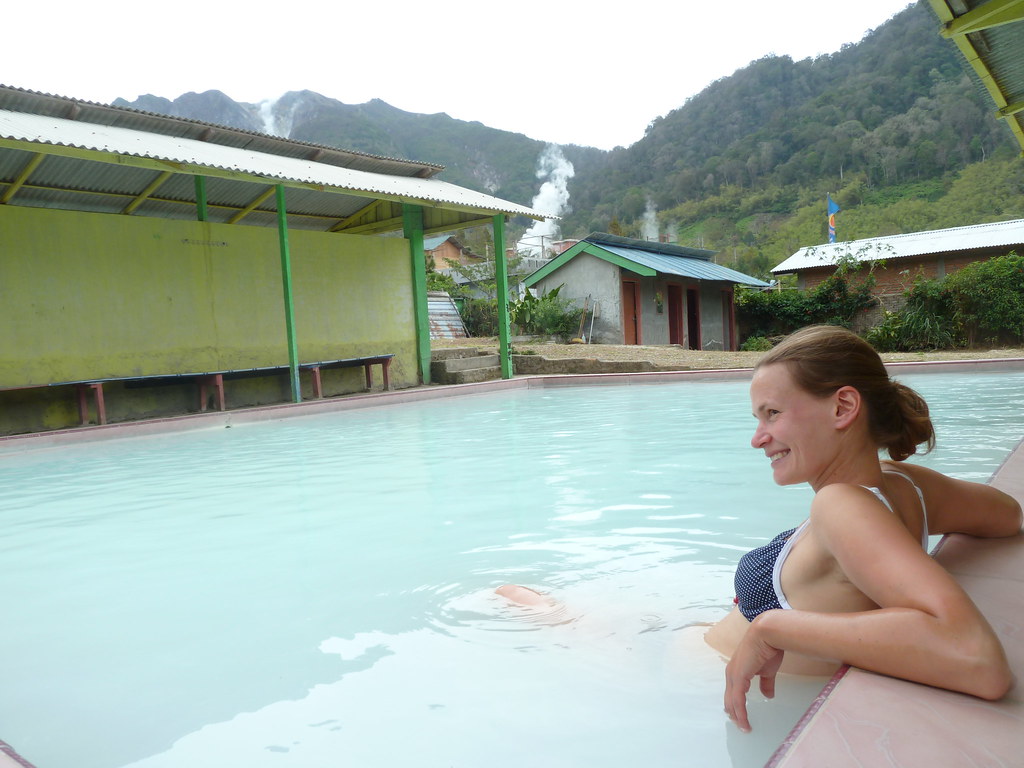


 '
'


 ? #roadtrip #taybac #vietnam #ontheroad #hotspring #suoinuocnong #letsgetwet #instamood #doyoutravel