Showing posts with label geothermal energy. Show all posts

Thursday, 14 April 2016

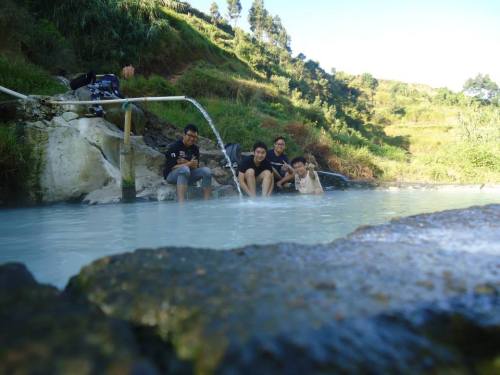
Instasoak

 
antai sore di kolam air panas ber-belerang sambil menikmati kopi kotakan,, #menikmati #hidup #epic #awesome #hotspring #mountain #gunungpeyek #parung #bogor #visitbogorn#explorebogor #explorejabar #instapic #instagram #iphonesia #iphone6s #landscape #selfie #weekdaytrip #backpackerjakarta #backpacker #instanusantarabogor #sunset #parapejalan #paradise #instagunung #visitindonesia #indonesia @Ciseeng, Parung Bogor, Indonesia 
 source

There's little newsworthy to add; more and more the internet is becoming just a pictural roll of all what sparkles and shines.

Fortunately hot springing seems a never ending experience of respect, pleasure and relaxation. So there's no dearth of photo's of soaking.

But beware for mainstreaming (i.e. is soaking becoming too popular?) lurking, waiting to pounce on the opportunity to literally sell itself and the soakers soul for a pittance.

What follows is just a brief insight into what's topical (and interesting) and too many photo-ops ...

Doubts
See also the section below on the Philippines. Why? Because it deals with social aspects of geothermal development. With some hope, this is a subject which will be dealt with at the forthcoming Iceland Geothermal Conference which goes out of it's way to highlight that besides all the normal hoopla, there needs to be social inclusion. Thinkgeoenergy (Mar. 29):
'So it is great to see the Iceland Geothermal Conference in Iceland in April this year, to dedicated a whole session and several presentation to this important topic. The session will feature experiences from a project in Ethiopia, a new project in the North of Iceland, a project in Hungary, as well as a view from the Iceland Geothermal Cluster. In an additional presentation, Marietta Sander from the International Geothermal Association will talk about the implications from the recent climate meetings and agreements of the COP21 meetings for the geothermal sector'. 
Whether excluding this theme to a byline to a big money / big science event will justify it's cause or give legitimacy to current geothermal development remains to be seen. Benefit of the doubt?
 
Bathing at Ardent Hot spring, Camiguin, Philippines
Totally
News.com.au has a report (Jan. 31) from a business person getting business through soaking at deep Creek hot spring, California. U.S.A.: 
'I never thought I’d strike a business deal while sitting in a hot spring, totally naked except for a pair of sunglasses, and sharing a plate of hummus and carrot sticks with a tech executive, a medical student and the CEO of an online shopping website'.
The  NZ Herald (Apr. 7) has a piece on using stickers to overcome tattoo problems in Japanese onsen.
'The Japan Tourism Agency has compiled measures to be taken by ryokan inns and bath facilities to reduce the number of cases in which foreign visitors are refused admittance to bath facilities because of their tattoos.
The guideline measures include distributing or selling stickers to cover tattoos, and allowing customers who have covered their tattoos with such stickers to enter bath facilities'.
Though the article refers to the Washington Post, there's a more original article from Japan Today (Apr. 3):
'For generations in Japan, it was almost exclusively yakuza who had tattoos. Recently, more young Japanese people than in the past have been showing an interest in tattoos from a fashion and personal style standpoint, but inked flesh is still far more common in Japan’s criminal underworld than the law-abiding sectors of its society. Because of this, hot springs in Japan commonly bar individuals with tattoos from entering their baths, since the relaxing atmosphere that draws onsen fans tends to be somewhat disrupted when sharing the tub with a mobster.
...
so an obvious foreign national with “Go Lakers!” tattooed across his bicep or a butterfly on her calf is unlikely to produce extreme uneasiness among the other bathers.
However, hot spring operators are understandably averse to the idea of putting up notices stating “Tattoos are OK…but only if you’re a foreigner!” Still, proponents of relaxing restrictions feel that even if tattooed people of any nationality are allowed to use the onsen, inked Japanese will refrain from doing so, out of consideration to existing cultural attitudes, and thus a change in policy will not result in an increased yakuza presence in the baths'.
Enjoying the silence
 And then the Southeast Asian focus
  • Burma


After a lengthy bike ride we arrived at the hot springs #worthit #khaungdaing #naturalhotsprings #myanmar #Burma 
On the Inle lake (right), source
I acabar el #trekking dutxant-te com si fossis birmà! [bikini] [sun_with_face] And finish the trekking taking a local shower! [bikini] [sun_with_face] #Integració100perCent! #Lipotímiques #Vacances #Vida #HotSpringWater #NaturalHotSpring #HotSpring #Hsipaw #HsipawTrek #Kyankhin #Integration100percent #NearFainting #Holidays #Life #FollowTheRixi #LreneAndLainMyanmarTrip #Birmania #Myanmar
Shan state (left), source 


  • Indonesia

Bathing at hidden hot spring kawangkoan #bathing #hidden #hotspring #kawangkoan #streetphoto #streetphotograpy #travelgram #airpanas #like4like #likeforlike #nature #green 
Sulawesi,  source

Natural hot springs in Jatiluwih, Bali. [hotsprings] #hotsprings #ubud #jatiluwih #bali #natural #hot #water #gopro #nonletture #yumiswanderlust #enjoythesilent #jungle #nature #enjoylife #wanderlust #amazing #chillout
  •  Laos
 
มึ่นี้ขี้นป้ายไห่มหมานแต่ฟัรงแช่วชะ 
Hot springs, near Kasi town, Vientiane province, Lao P.D.R.. Source: Facebook page of Vieng Laty
  • Malaysia
A local Malaysian government wants to upgrade hot springs (New Strait Times, Apr. 13):
'The Tourism and Culture Ministry is upgrading several infrastructures at the Lubuk Timah Hotspring recreational centre, Simpang Pulai here, towards making it a first class tourism centre'.
What was once (decade ago) a very natural hot spring will now naturally not be so anymore ...
A visit to Paku Hot Spring by aaronng88 (Feb. 27): 
'According to Sarawak Tourism and Sarawak Vacation Destinations .com (HERE), Paku Hot Spring is also another Bau attraction. So, on a day when I was craving a little lazing and relaxation in a hot spring, I decided to drop by. Not directly in town, Paku Hot Springs is not the easiest location to find, however, you do get several sign boards on the highway showing where to turn. You will have to turn to a kampung (village) called Pekan Paku, and keep going. Paku Hot Springs (Air Panas Paku), is not a building or a sheltered area. Just an open air, natural spring. Which at first glance looked abandoned. All it had was a sign board. And on closer examination, it wreaks of pollution and floating potato chip bags. The water is murky, with a greenish greyish hue, with colloid-ish bubbles. I was disgusted and disappointed. I did put my foot in for a few seconds at the 'cleaner' area. The water is warm and comforting, but the gross water is just too much of a turn off for me. Sucks cause I wanted to take a nice long dip and be all wrinkled when I come out~ Meh~ '
Walk out
Continuing ... 

 
Hot spring in Hapao rice terraces [clap] [skin-tone-2] #45minswalk #hotspring #banaue #hapaoriceterraces #march2016
Luzon, source
  • Philippines
How to play the press. The Philstar (Apr. 13) notes how opposition to a new geothermal plant near the town of Valencia (Cebu) has disappeared. Or has it?
'The mayor further recognized the concerns raised by certain groups but during consultations and a public hearing, which was widely disseminated to all the barangays in Valencia, and other stakeholders through his office, thus mitigating measures were recommended to address any negative effects of the expansion'. 
The town would receive extra taxes and royalties.
But it seems that money enough, is not that's what's requested. 350.org has a look at the flip side of this (Mar. 10):
'We [= environment groups] walked out to raise our opposition to the unjust process of the public hearing and the deliberate expansion project of EDC (Energy Development Corporation) at the Mount Talinis Range [= expansion of Southern Negros Geothermal Power Project]'.
The old tricks were used in what was supposed to be a public hearing. Opposing voices were silenced (literally, their microphones were turned off!). The Environment Impact Assessment presentation was poor / brief. 
'The Public Hearing held today is sadly a failure– reflective of the tragedy it can bring to this generation and the future generations. They may turn off the microphone to silence us, but they can never stop the collective voices resounding at the ranges of Mount Talinis [where the project is planned]'.
More problems and opposition. Businessmirror.com.ph (Mar. 5): 
'The popular hot spring of Pampanga, found in the hinterlands of Mount Pinatubo, is under fire from businessmen and 4×4 vehicle enthusiasts. .... Romero [Rene Romero of the Land Rover Club of the Philippines (LRCP)] said he was informed recently that residents living near Puning are “barred from touring their own relatives, friends and visitors at the portion of Sacobia River near the resort.” “As far as I know, the river is owned by the government. I can’t believe that our own province mates are not allowed to enjoy what belongs to the community,” Romero said. 
.... 
Tourism Regional Director Ronnie Tiotuico said on Thursday the Puning Hot Spring “cannot claim ownership of a property in its vicinity, much less prohibit people from using the same as entry point to certain places and beyond.”
#dumaquete #hotspring #philipinnes
Negros, source
  • Thailand
The Tourism and Culture Ministry is upgrading several infrastructures at the Lubuk Timah Hotspring recreational centre, Simpang Pulai here, towards making it a first class tourism centre.

Read More : http://www.nst.com.my/news/2016/04/137038/lubuk-timah-hotspring-upgraded-first-class-tourism-centre
The Tourism and Culture Ministry is upgrading several infrastructures at the Lubuk Timah Hotspring recreational centre, Simpang Pulai here, towards making it a first class tourism centre.

Read More : http://www.nst.com.my/news/2016/04/137038/lubuk-timah-hotspring-upgraded-first-class-tourism-centre
The Tourism and Culture Ministry is upgrading several infrastructures at the Lubuk Timah Hotspring recreational centre, Simpang Pulai here, towards making it a first class tourism centre.

Read More : http://www.nst.com.my/news/2016/04/137038/lubuk-timah-hotspring-upgraded-first-class-tourism-centre
Taking a hotspring bath when the temperature outside is 33 degrees celcius feels blessed:) #backpacking #hitchhiking #ranong #thailand #hotsprings  
Raksawarin, Ranong source
  • Timor
 
Maliana #hotsprings in Timor-Leste #laswim  
  • Vietnam
No pictures (!) but Vietnam's hot top 5 (paolionthemove) it seems:
1. Kim Boi Hot Spring in Hoa Binh, 
2. Bang Hot Mineral Spring in Quang Binh, 
3. Kenh Ga Hot Spring in Ninh Binh, 
4. Tay Vien Hot Spring in Quang Nam and 
5. Dam Rong Hot Spring in Lam Dong.

And to finish a picca from Indonesia instead:
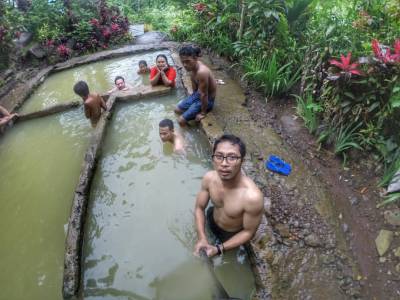

 
#hotspring #bogor #ciapus #indonesia #indotravellers #rushpackers #traveling #wisataindonesia (at Ciapus, Indonesia)  

Tuesday, 14 July 2015

Stunned

Stumbled across an amazing natural hot spring in #bandung #indonesia. Had to hike up a small trail into a little rustic village to get here. #stunning #outdoors #natural #nature #landscape #hotspring #hotsprings #life #outdoors #travel #travels #water #spring

I usually start these updates with a sort of an editorial. But such was the idea for this editorial, that I will take a forthcoming full post to tackle recent developments on the subject of public access to natural soaks, public misuse and abuse and managerial measures taken as a reaction to the aforementioned.

For now, let's see what else there is to provide feedback on from the world of soaking ...

Nosy
An excerpt from an article from New Zealand (NZHerald, Apr. 21) which notices something strange:
'Last year, a writer from the Guardian newspaper asked people on Twitter for recommendations about what to do on a short visit to New Zealand. She got hundreds of responses. Broadly, they fell into two categories: those from Kiwis and those from foreigners who had visited here. And - broadly - it was the foreigners who recommended she find a thermal pool in which to soak.
Kiwis recommended vineyards, skiing, beaches, cafes in Wellington, that sort of thing. Not hot springs.
Sometimes, you miss the obvious beauty under your nose'.
On Hainan Island (China) reports have been made that a (possible forgotten) hot spring has been taken over and now functions as a bathing spot (Shanghaiist, May 14):
'The hot spring, around 500 years old, is left unmanned, and has more or less become an open-air bathing spot for people living nearby'.
It's difficult to somehow unrelate the two, is a hot spring not simultaneously a bathing spot?

A nice blog entry by onsen addict reflects on how a soak may result in cultural exchange (May 8):
'You should get naked in Japan as often as you can, not just because soaking in Japanese hot springs revitalizes your body and soul, but because Japanese onsens are places to observe and participate in cultural observation. If anybody implies that you are lazy for soaking for hours, just tell them you are doing sociological research.
...
Our conversation about Japanese hot springs continued until we all headed up the hill. Later in the parking lot way  above the hot spring, he showed us photographs that he took out from his car. We saw him and his hot-spring-addicted friends building rocky baths around natural springs in various forests. He was rightfully proud of the baths that they had constructed in remote woods. The baths were simple baths constructed from natural materials. The people I saw were members of a Japanese subculture, people who relish relaxation in natural surroundings and are willing to work hard for their sensual pleasures'.
Ever heard of the Hot Spring Traveler? She is
'A Hot Spring enthusiast on a quest to visit 365 Hot Springs. Current Tally=25'.
That's still a long way to go ...
More from Hot Spring Traveler:
'I am a water chaser. In my childhood I leaped into the waves, charged head first down slip and slides, and ran through sprinklers with my clothes on (or off). I was terrified of just about everything, but I was always chasing water. Naturally, it would make sense that I would turn this chase into a formal adventure, and so Hot Springs Traveler has been born. I am ready to chase down 365 hot springs in all their glory, from dusty desert backroads to lush northern forests.
Why hot springs? Because their surreal, secretive, calming, and wild. They feel other-worldly. You are literally bathing in waters that have traveled through the interiors of the earth'
From 7x7 (May 5) comes
'5 Best Hot Springs for Skinny Dipping in the West [of the U.S.A.]'
Heed their intro:
'It’s an age old tradition. From Japan to Iceland to the dusty backcountry of the American west, people have been soaking up the geothermal magic provided by wild hot springs since time immemorial'.
Let's hope it remains a tradition adhered to ...

So hot
The all-encompassing Huffington Post (May 6) looks into Indonesia's power questions. In particular it asks:
'Is Geothermal Power the Answer to Indonesia's Energy Demand?'
Summing up the article one could conclude the answer to be yes, if. 

There's quite a bit of geothermal power news from Indonesia.
ThinkGeoEnergy (Jul. 6) notes that Indonesia has inaugurated one geothermal project with the intention of many others all across the archipelago:
'This is clearly a step forward for geothermal and renewable power in the country, signalling a the commitment in Indonesia for geothermal development'.
Channelnews Asia (Jun. 9) also notes Indonesia's apparent ambitions:
'Indonesia aims to double its use of renewable energy in 10 years. It plans to have 30,000 megawatts of power generated from geothermal, hydro, wave and solar energy'.
Major problems lie in funding. 

Enjoying the natural Hot-springs  #hotspring#ketambe#sohot#ketambe
#sumatra #roland #ichbindra#dubischdra #kendall&kylie-collection 

In Japan, so notes ThinkGeoEnergy (Jun. 23), the debate on the merits of geothermal exploitation in their national parks continues:
'On one side, conservationists argue that directional and conventional drilling should be banned in these areas while academics and members of the geothermal industry agree that no plant should be built directly on the protected areas, but directional drilling should be allowed'.
Despite all the upbeat reactions on Indonesia's geothermal power future, all is not rosy. For instance strong local sentiment in Bali (see following) is pitted against the mights of both the national government as well as the commercial establishments. 
The Renewable Energy Magazine (Jun. 4) has a lengthy article on background of Bali's struggle:
'According to Balinese culture, mountains and forests are highly sacred because they are believed to be sources of life. As a result, environmental activists and religious members of Balism both believe that geothermal drilling in the Bedugul area would not only worsen Bail’s water crisis, but would also damage the sanctity of the area.
Though geothermal power can offer tremendous energy quantities, the governor of Bali has restated his refusal to allow the geothermal project in Bedugul in a statement from his office on May 6, 2015. He not only placed a moratorium on the construction of this location, but also reiterated the fact that this project would trespass on protected forest area in a religiously sacred area of Bali'.
To overcome opposition, the article lists a variety of approaches so as to inform and convince  those involved. Though these seem common-sense, it does miss how you can overcome environmental, spiritual and religious opposition. Relaying simple fears, fails to address these all-encompassing concerns ....
The kind of opposition that seek to win over? ThinkGeoEnergy (May 14):
'The Governor’s office said that the people of Bali would never tolerate any geothermal project that trespasses on protected forest area in a religiously sacred area of Bali. Balinese religious belief holds that the forested areas in the hills at Bedugul are home to the headwaters of Bali and must remain undisturbed'.
Ways of increasing the ability of local population to stomach geothermal power projects? Win-win solutions are just one possibility. Kenya's Kengen's Olkaria project includes a natural spa (sic). 
There's this recent visitors experience (and photo):
'On our arrival an attendant at the natural spa walked up to us and gave us a quick introduction to the site. He advised us that only those who promised to adhere to the rules of the spa would be allowed to sign in on the visitors’ book and also use the spa. We were a well mannered group and we listened to the attendant keenly as he read out the spa regulations. There was nothing he read that was out of this world, so we all signed in and off we went into the spa!'

ThinkGeoEnergy (Jul. 10) notes that now Kengen will expand their  local community initiatives to include vegetable farming in geothermal heated greenhouses.

Finally, ThinkGeoEnergy (Jun. 2) notes the fad of geothermal BBQ-ing on Lanzarote. It refers to a Daily Mail article (Jun. 1):
'Forget a portable barbecue in the park, the aptly-named El Diablo (the devil) restaurant in Lanzarote uses the 450 - 500 degrees Celsius of geothermal heat to cook the meat and fish on the menu'.
Hello
We see some inventions come by and think mûh .... 
This one could be more successful. A Hydrohammock
Just a waterproof hammock which you could use as a bath in far away places. Not too expensive, but if willing to have a hot bath, there's a need for a heater system. That comes at a cost of nearly a fully priced jacuzzi. The inetia (Jul. 7) thinks likewise.

A HelloKitty themed hot spring? If that's what tickles your fancy, start packing your bags.  Singapore's New Strait Times (May 24):
'Among the more than 200 onsens in Gunma Prefecture [Japan] is a Hello Kitty-themed indoor onsen (right) at the Shima Grand Hotel that opened in January.Soak up the onsen’s beauty benefits surrounded by Hello Kitty decor'.
Alas, it's a women's only onsen ...

Not all soaking is good for you. Take this article which reports on a death by soaking. Worldne.ws (Jun. 20):
'A 73-year-old woman died of heat stroke after bathing in an outdoor hot spring in Wulai, New Taipei City [Taiwan]yesterday noon, according to officials of the New Taipei City Fire Department'.
Apparently the air temperature was also above 37C.

Pictures
  • Lao
A mention of Muang La hot spring on Travelfish (Apr. 21):
'Muang La’s main attraction is the natural hot springs. Picture yourself soaking sore muscles in hot water while taking in the river scenery. The experience is tonic for both the body and soul – and it’s free. It doesn’t get much better than this'.
#hotsprings 
Lao's Bo Njai hot springs, Xieng Khouan province. Source
  • Malaysia
There was a lot to do about the deadly earthquake on Sabah earlier this June. Especially as blame seems to be heaped on lesser cultured individuals who insisted on celebrating yet again a life's achievement with a naked picca (source). That celebration could have been much worse b.t.w.
Anyway, another unknown consequence of their actions was that Poring's hot springs turned black, that's what Asiaone reports (Jun. 6):
'The water at Poring Hot Springs near Friday's 6.1 magnitude earthquake that struck at 7.17am has turned black.
Poring Hot Springs and Nature Reserve office confirmed that the water has changed colour'.
There's no info on whether or not the waters have since cleared.

How to kill off the soaking vibe? Malaysia's Borneo Post (Jun. 12) notes that officials want to promote soaking at Panchor more aggressively ..., whatever that means.
'The management board of Panchor Hot Spring should initiate a more aggressive promotion campaign to attract more locals to drop by.
Tourism Ministry permanent secretary Datu Ik Pahon Joyik said there were many ways to promote the hot spring, ...'.
Suggestions include lower entrance fee or organising a carnival. 
So much for killing the spirit ...
  • Philippines
Hot spring on a hot day! #hotspring #mambukal #NegrosOccidental #Philippines #itsmorefuninthephilippines #visitphilippines2015 #travel #friends    
  •  Thailand

Klong Thom, Krabi. From the Facebook of Kyoko Kitade source.

Floating head at Waree Raksa Hot Springs #krabi #thailand2014 #wareeraksa 


  • Timor
Venilale Baucau - Hot Spring
  • Vietnam
On allvietnam.com (Jun. 26) an outlay of Alba Thanh Tan hot spring near Hue.
'Alba Thanh Tan resort is always busy with many guests. People come here to soak in the hot springs which is full of natural minerals underground as well as under Truong Son Mountain. Needless to say, Thanh Tan hot spring resort is making the clear difference in the model of ecotourism on the central strip'.
Note that it's not so natural anymore ...

A visit to Mui Ne's new hot spring and mud center as reported by Vacationchecklist (Apr. 21):
'One important thing Avoid submerging your entire head down the mud water, a water dipper is provided for a reason. I do silly things sometimes, i mean all the time ahahaa. After I dipped my entire head down the mud water it filled my ears of course and the water didn't flow naturally. Some sand particles were trapped inside my ear, I was half deaf for the entire bath session. If I'm not wrong think were in the mud bath for 30 minutes or more than, my mum wanted to stay longer but I know it's not advisable. The staff didn't bother to check on us or maybe allowed us to take our time because we were the only customers around at that time. She came to us when she noticed we were already in the rainshower'.
#diving requires healing. Here we see 8 specimens recuperating in hot springs. #mainit #cebu #Philippines #hotsprings Mainit hot springs, malabuyoc

Sunday, 8 September 2013

Development blends

Norm
What's always intrigued me as how bathing customs differ, how they evolve and how current culture seeks to cope with the differences and the outer world trying to influence local culture. 

However, with the lessening of cultural and social diversions, traditional bathing cultures are increasingly threatened. 

Unfortunately the Southeast Asian bathing culture is a modernist one which with elitist overtones has regarded au-naturel bathing as backward and laughable. However the last laughs I believe are of those fully clad snobs who must feel tremendously uncomfortable. Or not?

But internationally, in the bathing custom discourse it are the anglo-saxon wannabe star cultures which are pushing their agenda however unknown. 
For instance, many a blog entry on Japanese onsen reflect on the backwardsness of naked single-sex bathing. 

Which raises the question why travel to a foreign culture at all, if you disapprove?
Others express fear of the unknown, but find out that it's actually a pleasure and become life-long converts. Southeast Asians, while radically opposed to disrobing, will do everything to blend in, however opposite it is of their own culture (remember in Singapore private nudity is even forbidden). Alas, their voices are often too meek in the current day internet overload. The same goes for us Europeans who have less binds either way.
Back in July I visited two hot springs, one in Aachen (Germany), one in Holland (Thermae 2000). In Holland it was a costume free day, which 99% happily enjoyed, whereas in Germany a beautiful part of the springs was suit-free. Not many have qualms about the lack of dress. But that said, overseas guests are at minimum and when researching internet the English language responses are often filled guilt / shame ridden. 
To me simple nakedness is purposeless (we are bathing after all), but it leads to increased self-esteem, self-confidence and acceptance of nature.

Sheepish
Here are some recent examples of au-naturel bathing experiences by you. First by Irreplaceable, from Malaysia (July 14) enjoying an experience in Korea:
'Yeah, the very first time getting naked in public with two of my girlfriends. If you never have such experience before, this might sound so awkward for you, am I right?
In fact, I had been struggling for so long whether shall I try this nude hot spring. For me, it is just so embarrassing to appear in front of strangers without wearing a single piece of cloth. But after all, I decided to try it. How brave am I right. Bravo. To make you clear, it is a hot spring only for girls. Not mix one okay.
...
Miss that wonderful hot spring soaking moment with my girls. Wish to visit other nude hot springs of another country next time LOLOL. Don't think I am crazy okay I am not. Come on. Don't be shy. You all must try it if you all have a chance. That gonna be a very unforgettable memories I promise. :D 
Peace'.
Peace to you too. Then Big on trips from Singapore in Japan (July 21):
'I started out a bit self-conscious and sheepish about the whole thing. But having the husband in the same bath made me feel more comfortable. It helps that the baths are also sprawling so you can easily stake out your own little nook where no one can see you. After a while, you just get used to seeing everyone’s bits and realise that man or woman, it’s just a different anatomy so no point getting the knickers in a twist about it. Plus if you go as a couple, it is nice to be able to enjoy the onsen together'.

There is the odd exception and some are written with great wit. Take Joann from the USA in Japan (August 12):

'So it was that Diane and I, two fairly well-endowed women, stepped outside, naked as the day we were born, whereupon we made three crucial discoveries: we were the only Gaijin (foreigners) at the spa, the resort was co-ed, and the two of us were missing one small, but essential item. Every Japanese person we encountered, and 99.9 percent of them were of the male persuasion, was holding a small hand towel the size of a wash cloth, over his genitals.
Diane and I were not just naked. We were beyond naked. We were Über-naked.

Had we missed the warning sign in the locker room: “Please remember, don’t shame Buddha, all of the Shinto deities and the memory of hundreds of generations of your ancestors by stepping outside without your little washcloth?” Or perhaps there was no sign because the Japanese are born holding these tiny cloths as they exit the birth canal?

Desperate to cover ourselves, Diane and I crisscrossed our arms over our bodies. With our hands hovering ineffectively over our nether regions, we darted to the nearest hot spring for cover. The dark gray, mineral-laden water conveniently covered our nudity, and thankfully, we were alone.
But not for long.
Apparently, word of the two, too-naked, big-breasted American women, had spread like wildfire throughout the spa. Suddenly, dozens of extraordinarily friendly men, also unclothed, but of course with the obligatory washcloths, joined us in our pool. I did my best to fend off the many overtures from these interlopers who floated dangerously into my personal space, trying to chat us up. The Japanese love nothing more than to practice English, but the last thing I wanted to do was encourage naked fraternizing.
After a few minutes, I noticed that I had begun sweating profusely from the intense heat. After fifteen minutes, I felt nauseous.
I knew that I had to get out of this bubbling caldron, but escaping would have required climbing up a three-foot ladder to exit the pool, thereby providing a front-row view of that to which only gynecologists and lovers should be privy. My mind, which was now melting along with the rest of me, struggled to reason that I was thousands of miles from home, and the chance that I would ever see any of these men again was infinitesimally small. But I couldn’t bear the thought of baring my undercarriage, free of charge, to this rapt group of strangers. Diane agreed, so the two of us waited it out with a steely determination that would have impressed any prisoner of war.
One by one, our fan club left, and finally, we were alone, once again. We quickly made our getaway. Like two boiled lobsters plucked from a pot, steam rose off our crimson bodies, as we climbed out and once again scurried for cover to the nearest pool.
And so it went.
We spent the rest of the afternoon sprinting from one hot spring to another until we came to the last one of the day. Divided into three sections, each about the length and width of a bathtub, Diane and I chose adjacent pools. As we stretched out, we discovered that the water was only a few inches deep, so our entire torsos were completely exposed to the air.
We sat up and struggled to reposition ourselves to find some cover. A moment later, a man in a deep pool next to ours who had witnessed our thrashing, floated over to us, stuck his foot out of the water and pointed at it. It took only a moment to realize that Diane and I were lying in the footbaths—a fitting end, I suppose, to an altogether much too naked and humiliating day'.
In an overview of current day nudism in China (which 'reveals' a few hot springs where nudity may or might have been common practice). From nakedhistorian (August 8):
'Whilst there is very little nudism amongst the dominant Han Chinese, there is more tradition of nudist activity amongst China’s minority groups, especially down south.
...
In western Yunnan, the De’ang tribe bathe in the Imperial Hot Springs whose waters are rich with coal and salt extracts. We’re not entirely sure how they’d feel about foreigners stripping down and hopping in alongside them, but if you ask nicely, the chances are they’d clear a space.
The Mosuo minority believe in the disease curing properties of their local water, so they frequently bathe naked. During the Cultural Revolution, the government built walls across their pools to segregate men and women, but the Mosuo tore them down soon after. The pools were opened to tourists in the 1990s.
A little further north in Sichuan Province, nudism seems to be all the rage. Chongqing Girls Nude Bathing Area;sounds more like the title of a dodgy DVD, but it’s actually an area set aside for women in the Ba’nan District’s tranquil East Spring Village. The pool has been in use since the Ming Dynasty, and its water is said to cure blindness. If you fancy a dip, you’ll be pleased to know that it’s open to tourists. Female ones'.
A Thai in Japan (Nation, August 28): 
'Most of the skiers in Niseko spend their off-piste time in the Onsen. The Green Leaf Onsen stands out as one of the most beautiful natural rock pools in Niseko. The Onsen has separate indoor and outdoor pools for men and women with the water source originating from mineral spring.
But stripping off my clothes, soaking in hot spring with other men and watching huge flakes of snow swirling down, doesn't turn me on. I decide instead to occupy a bar stool and exchange words of wisdom with the bartender though I do agree to take a side-trip to Otaru and Yoichi'.
That's despite visiting onsen is no. 2 of Japan's Top 5 (Lonely Planet, Sept 8).

Blending in. In Uganda I believe (source).

Geo-spirit
Thinkgeoenergy (July 12) has an article by Jon Cheetham who can not understand why Indonesia is not embracing geothermal energy more whole heartedly:
'As my proof, take a look at PT Supreme Energy, who just received approval from the Rajabasa indigenous people to explore for geothermal resources in Lampung. What it took was frank information and compromise from Supreme Energy chief Triharyo Indrawan Susilo, who informed the Rajabasa of the minimal environmental damage to be feared from geothermal exploration, and promised to plant double the amount of trees that have to be cut down. How is that for a truly admirable renewable spirit? That was all it took; now Bp. Triharyo gets to go ahead with his project hoping to make himself and his employees successful, and the Rajabasa have nothing to fear for their environment. Everyone wins. The country wins. This generosity and openness is the attitude that is needed'.
In New Zealand they fail to understand why the Chinese would want to invest in geothermal energy in the already saturated energy market in NZ (Thinkgeoenergy, July 1). But also at stake is New Zealand nationalism:
'Overseas Investments Office, so the news, has just approved the deal, but it immediately receives criticism. ”Power is a critical component of any economy,” says New Zealand First leader Winston Peters. “To give away its ownership and profits to a foreign interest is not capable of being explained away.”'
In Italy opposition is growing towards the proposed Amiata Bagnore 4  geothermal plant. From Smartplanet (August 8): 
'He [Andrea Borgia, a geologist and volcanologist who works in the Italian High Commission for Environmental Impact Assessment] opposes the new plant because, he says, geothermal fields have already dropped Amiata’s water table, increasing the concentration of naturally occurring arsenic. What’s more, Borgia says that Enel is releasing carbon dioxide and other pollutants such as hydrogen sulfide, ammonia and mercury into the air — and that it doesn’t have to. (Of the geothermal fluid extracted at the plant, only a quarter is re-injected into the reservoir, and the rest, containing these pollutants, is released in the form of vapor.)'. 
All-in-all it's a very complex issue and it seems both sides have the truth on their side. However: 
'She [Adele Manzella, a geophysicist and researcher at the National Research Council] believes the controversy stems from the residents’ lack of trust in Enel and local policy: They did not solve air pollution problems in the Amiata area for a long time, creating bad publicity that is fueling suspicions about the drinking water.
Unfortunately, Manzells says, there is no conclusive evidence as to whether the geothermal work is affecting the level of the drinking water, and a study will take years: “It is a matter of debate, and people there do not know what to believe. It is left to the opinions of the people or scientists or other experts having one interest one way or another.”'
Then we already discussed dual use systems, as proposed for in the Philippines (source). Thinkgeoenergy has an article (August 12) on the Icelandic success of dual use. But that's not all: 
'While the Blue Lagoon remains the top tourist spot in Iceland, the power plants – all can be visited – are among the most visited tourist attractions in the country'.
Malaysia hopes to get it's first own geothermal energy as of 2016 (Thinkgeoenergy, August 8): 
'The power plant at Apas Kiri, would be the first renewable and sustainable project of its kind in Malaysia, with power to be sold to the Sabah Electricity Sdn Bhd (SESB) grid. It was originally scheduled for completion in 2015'.
Apex
Ever heard of the Global Spa and Wellness Summit? Well, the upcoming 2013 meeting slated for early October 2013 set for New Delhi hopes to attract hot spring operators and leaders to discuss soaking issues: 
'According to co-organizer Charles Davidson, from Peninsula Hot Springs in Australia, the Forum will include presentations and open discussions on how the best hot springs operators in the world’s most competitive markets build profitable spa, bathing and accommodation businesses; which evidence-based studies in hot springs bathing practices provide proof of the health benefits of hot springs; and the various ways cultures utilize natural hot water for health, wellbeing and community happiness.
Participants will also jointly explore ways the global hot springs industry can work together in marketing, research and development and on philanthropy projects to bring hot springs bathing facilities to communities in third-world countries'.
The press release certainly pushes the right buttons and this initiative is to be applauded. What I have my doubts about, is the insistence on commercialism. Little is done to preserve, protect and allow enjoying hot springs so how hob-nobbing with the rich will enhance this remains a question mark.

More in depth soaking enthusiasts will be looking at:
'On the table for discussion:
  • How do the best hot springs operators build profitable businesses? 
  • What are the key evidence-based studies supporting hot springs bathing practices? How can they be promoted better? 
  • How do global cultures use natural hot water for health, wellbeing, and community happiness? 
  • How can the global hot springs industry better work together in marketing, research and development? 
  • Are there joint philanthropy projects that can bring hot spring facilities to third-world communities? '
Tellingly there is yet to be a sponsor for this part of the programme .... 

Especially in China, hot spring development is taking on a commercial dimension unbeknown to traditional soakers. Take the doughnut hotel (Yahoo, July 20):
'It's a hotel Homer Simpson could love.
China's Sheraton Huzhou Hot Spring Resort's deliciously shaped oval design looks like a giant doughnut. The building, dubbed the "horseshoe hotel," opens next month in the town by the same name, Huzhou'. 
Though it names itself a hot spring hotel it's own web site is conspicuously silent on what it entails.

More high end development pouring in. Banyan Tree Chongqing is receiving it's first guests (Breakingtravelnews, September 6): 
'Nestled within the new Banyan Tree Chongqing Beibei, the first international hot spring resort in Chongqing, the resort embraces the natural healing waters of the North Hot Springs'. 
Dieng plateau, Java, Indonesia. From My Journey keeps Inspiring.

Mostly unhopeful dreams 
  • Brunei
Brunei is eyeing yet again the development of a remaining hot spring. Read what the article (mysarawak, July 30) thinks is the good news: 
'Second Minister of Resource Planning and Environment Datuk Amar Awang Tengah Ali Hasan said lessons could be learnt from the Republic of Czechoslovakia, which managed to turn a valley with a hot spring into a renowned medical tourism attraction.
“Tourism is a money spinning industry, and it can provide employment and economic spinoffs. Czechoslovakians used their creativity and innovation on the valley, which now contributes to their national coffers,” he said at a Sarawak Energy Berhad (SEB) gathering in Hotel Seri Malaysia to present Raya goodies to orphans, the disabled (OKUs), and single mothers over the weekend.
Awang Tengah said Lawas had great attractions in the Merarap hot spring and Mount Murud, the highest mountain in Sarawak'.
'Indigosix outing! Yipeeee ...'
West Bali, Indonesia: Menjangan hot springs. Source: nininathania
  • Laos
Hot springs are increasingly becoming popular says the Vientiane Times (July 19). But is this the start of the end?
'The house's rooms will be built as many visitors like to bathe naked in the spring; however, visitors are required to bring a large towel to cover themselves when they emerge from the water. Bathers say they feel healthy after they finish and walk out of the bathrooms at the hot spring.
Since the bath opened last year, visitors there are mostly Lao people. Mr Phouvanh added about 40 foreign tourists per month have visited the hot spring to relax in the refreshing water. The cost to use the bath is 5,000 kip for a foreigner and 2,000 kip for a Lao person.
The department has received funding from the state to build a bathhouse and a souvenir shop at the site'.
It's bye-bye to this?
'For many local people, the spring is even better than a regular hot shower – while they have electricity installed in their homes, most still head to the springs for the traditional experience.
The local community often prefers to bathe communally in the hot spring before turning in for the night and again before breakfast'.
Then on the 25th of August, the same source mentions finding a new hot spring:
'Zone Administrative Office Head, Mr Somphone Southam, said a group from his office visited the hot spring at Poungloc village earlier last week on an unofficial trip, and discovered the spring was the biggest any of them had seen in the province.
“The spring boiled in the middle of a stream in the centre of the village; it bubbles hot water to a height of about 40cm while the stream covers the entire area,” he said. Mr Somphone said a local official had told him the village was located near an ancient volcano, which explained the hot spring activity'. 
Obviously, authorities want to develop the site ....


Viengthong hot spring, as it is.
  • Malaysia. 
Another nail in the coffin for a yet to be well visited hot spring? Metro online broadcast Malaysia (21 August ) reports
'AMONG hot springs in Hulu Selangor, two are already well known — Kerling and the Hulu Tamu hot spring in Ulu Yam. 
However, a third hot spring is begging for some attention. It is located in Jalan Ariff 12, Taman Ariff, Kuala Kubu Baru.
Although the hot spring was discovered almost 10 years ago, it remains a well-kept secret among locals.
...
Last year, the Hulu Selangor District Council (MDHS) beautified the area by covering the dirt road to the area with gravel, building a small concrete pathway, and a few seats. However, there are still no toilets and changing facilities.
MDHS’ aim is to make the Kuala Kubu Baru hot spring an international tourist destination'.
  • Philippines
Asian Correspondent (September 2) visits Manquinit hot springs, Coron islands, the Philippines: 
'... reputedly one of just two saltwater hot springs in the world'. 
Not really good research. A simple google search will lead you to f.i. the Zhaori Saltwater Hot Springs, Taiwan. It's 
'This is one of only three saltwater hot springs in the world along with the springs on Kyushu Island of Japan and Sicily in Italy'. 
But no Manquinit. Or what about Mount Mangunui, New Zealand? Triton Bay, China?

   
Who knows this hot spring in Chaiya, Thailand?
  
Further afield. The Secret of India website lists a couple of Indian hot springs.
Related Posts with Thumbnails
Copyright 2009 © Soaking in Southeast Asia. All rights reserved.
No reproduction or republication without written permission.