Showing posts with label sauna. Show all posts

Tuesday, 11 March 2025

Diversion

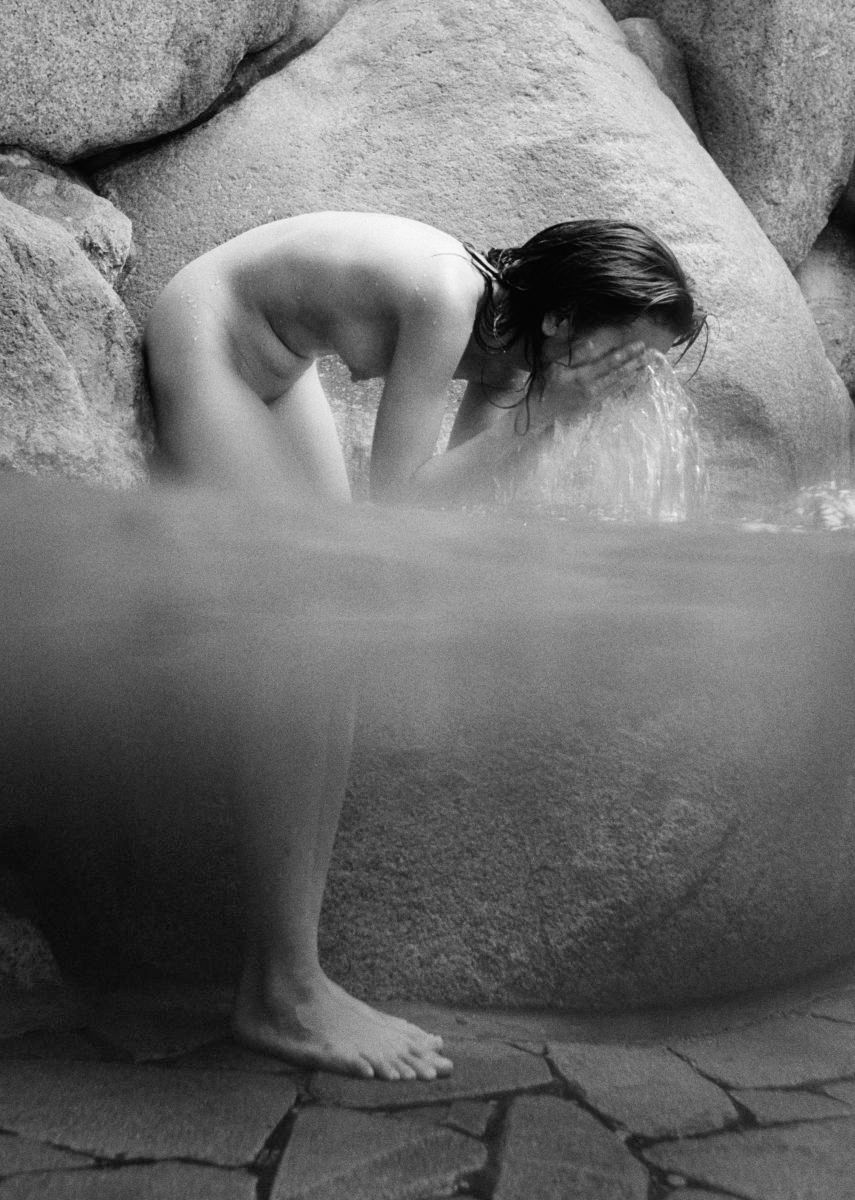
新年必來的野溪溫泉行❤️
#芃芃溫泉
Hot spring info from the region.
So very little. Or maybe everything is becoming so non-informative.
Anyway we start from Taiwan, not even in the region.

TaipeiTimes (Oct. 21) on another natural soak set to disappear. Also the lead photo.
'The Fanfan wild hot spring (梵梵溫泉) in Yilan County is to be diverted to formal tourist facilities and closed to the public if approved by the local council, as overtourism is harming the area’s ecology and disturbing residents.
...
The Fanfan hot spring has become popular in recent years, with many visitors driving their vehicles directly onto the riverbank, barbecuing and leaving trash behind.
The situation has raised the ire of local residents, who have closed off the access road to try and stop people from coming to no avail'.
Hotspringjourneys (Feb. 4) lists 12 "best" Indonesian finds. Oddly no. 1 isn't even a hot spring, then there's also a duplication.

A report from the Philippines News Agency (Jan. 10), where apparently new hot springs are occuring:
"Reports of hot springs in Barangays Sinisian and Calawang in Lemery date back even before (the) 2020 eruption. The(re) are videos on YouTube as early as 2014," Phivolcs Director Teresito Bacolcol said in an interview.
A video posted recently by Facebook user Imman Supremo showed an apparent hot spring at Sinisian East Beach.
The video had 105,000 views as of writing'.
Plugging
A wider look at soaks and soaking.
From New Zealand (even outside the wider region) intriguing news concerning the fate of Waiwera hot spring (NZHerald, Mar. 9). The main points of the article:
  • 'After decades of decline, Waiwera’s famed coastal artesian hot springs are showing signs of recovery.
  • That recovery has come after the 2018 closure of the iconic Waiwera Thermal Resort, which was demolished altogether in 2023.
  • Scientists say it’s possible the springs could again become a tourist draw if the remaining leaking boreholes are plugged'.
Further more, the prospect / potential nightmare:
'If the springs were to return through sustainable management of the system, Viskovic [ study lead author] said they could again become a major tourist attraction.
He noted the 700,000 visitors who flock to Coromandel’s Hot Water Beach each year.
“The community in Waiwera is not set up for those numbers of visitors, but these kinds of natural springs are hugely popular with international visitors, so [it] could have a positive economic effect on the economy of the local area,” Viskovic said'.
Further Magazine has a shout out (Dec. 24, 2024) to Greta Rybus's world tour of hot springs, in book form:
'Hot springs aren’t just great for unwinding. As Rybus demonstrates in the essays accompanying her photographs, their depths contain stories — and diverse ideas about wellness, environmentalism, and social life. For the book, she visited 23 hot springs on five continents over several years, a journey that sent her from the wind-whipped salt flats of Bolivia to the desert sands of South Africa and the fjords of Greenland. We talked to the Maine-based photojournalist about what she found'.
Snippets from the ensuing Q and A:
'You’re an American who spent part of her childhood in Japan. How did that affect your perspective?
I grew up going to hot springs as a kid in Idaho, where we did things like climbing and skiing, and where enjoying nature was almost this competitive or work relationship. But then my parents, who were schoolteachers, moved us to Japan to teach on a military base and I noticed this difference in the hot springs there.
How so?
I saw more families going. I have a very distinct memory of going to this onsen that was really popular with old ladies and having an elder tell me to clean more thoroughly. I wasn’t being admonished; I was being invited in. They’re using buckets of water, washing their hair, scrubbing under their nails, brushing their teeth. For most Americans, this whole process is not something we’re used to'.
So Japan then. Japan Times reports (Dec. 23) on how the town of Ginzan onsen is trying to limit the number of visitors:
'Many [visitors] share photos online of its old-fashioned buildings blanketed in snow and illuminated by lamplight that create a nostalgic atmosphere.
However, authorities in Ginzan Onsen, as in more famous destinations such as Kyoto and Mount Fuji, have become fed up with a rise in road problems, quarrels and other nuisances.
From Monday, only people staying at local hotels will be allowed to enter the town after 8 p.m., while those wishing to visit between 5 p.m. and 8 p.m. will need a reservation'.
Knobbly
Over to soaking culture, we would like to share from the region, though it's mostly from Japan.

The Times (Feb. 28) for instance, comes with another one of those "how taking an onsen changed me; to the positive":
'Because, as I bore it all that day, unshaved legs and knobbly knees included, I joined a crowd of women who were comfortable with how they were. And it made me realise that my body hang-ups were the most insignificant thing in the world. Here were all kinds of bodies. Young. Old. Wrinkled. Smooth. Decrepit. Sexy. And no one cared. I had been so desperately worried about taking my kit off and — now that I had — I was just another bare arse in the crowd.
It was something quite beautiful to behold. A sea of security. A celebration of the female form and an acceptance that just to be, as you were, was good enough''.
But even this is slowly evolving. 
Hotspringaddict suggested (Jan. 28) bathing habits are changing in Japan, notably that's how he experiences it:
'Around three decades ago, my Japanese wife brought me to Suzume-no-yu, a traditional hot spring within the boundaries of Kyushu's Aso-Kujo National Park. It was my first time bathing naked or almost naked with men and women that I had never met before. But soaking unclothed in the hot mineral water of this konyoku, which means a mixed-sex bathing area, felt natural and relaxing.
...
So I was shocked when I recently returned and discovered all the bathers wearing swimming suits. Japan has changed considerably in the last thirty years.
...
The fear of being photographed while innocently bathing and having one's body exposed on the internet shows the pernicious influence of smartphones and SNS on bathing culture.
I predict the number of public baths where naked men and women can bathe together in a relaxed environment will continue to decrease'.
Chic
Then an article on the above (communal bathing dare we say?) from Sydney Morning Herald (Feb. 1) which likens this as the new fade in Australia (thus the neccesity to report on):
'But as they [the rest of the " older"? world] have done for millennia, public baths are evolving and driven by our ever-expanding interest in wellness. Now a new generation of bathhouses is rising in urban destinations, including Brisbane, Melbourne and Sydney.
...
Chic design and easy accessibility for those living in and visiting cities are the hallmarks of these places. So too, bathing suits – unlike many of the traditional experiences where nudity is requisite. Dean says what also sets the new-style bathhouse apart from the traditional is connection.
“While traditional bathhouses focus on silence and introspection, we believe wellness is about conscious connection as much as self-care. Soak is a space where you can spend quality time and enjoy genuine in-person connection with friends, family, or even just yourself. We’ve also brought the healing powers of the natural world into the urban location, creating a serene environment where guests can reconnect with both themselves and the natural world around them.”
So just a notch above the swimming locale?

From Sense of Self (Jan. 22), a blog about well-being burnt-out:
'While the idea of ‘wellbeing’ is supposed to help us move away from destructive behaviours and move toward a healthier, happier version of ourselves – the commercialisation of what makes us well could be doing the opposite.
...
Recent reports show that the relentless pursuit for wellbeing is actually keeping us from being well. Misinformation on social media platforms is adding to societal pressure to ‘appear well’. This is obviously counter-intuitive to avoiding further stress, anxiety and burnout. To quieten the noise of wellbeing messaging, we now need to make a conscious choice to resist the clutter. To allow oneself to rest has become a radical act of self compassion.
One of the possible solutions:Instead of accumulating more things, invest in a visit to the bathhouse, taking yourself to a film or simply a day off to do nothing at all'.
Finally the sauna movement of Japan as reported by Japan Times (Nov. 25) is gaining ever more popularity in the country:
'According to a 2024 survey by the Japan Sauna Institute, the number of sauna enthusiasts — or “saunners” (pronounced saunā), as they’re called in Japan — has grown by an additional 1 million in the past year alone.
...
If you’re a budding saunner looking for a place to start your journey, why not start at the top? Mimicking the authority of Michelin’s gourmet rankings, sauna consulting collective TTNE confers its own prestigious Saunachelin Awards upon a handful of locations each year.
This year’s No. 1 spot went to Totopa, a gorgeous location in Tokyo’s Shinjuku Ward with several saunas, breathing rooms and other amenities. An hour there will only set you back just over ¥2,000 with tax. Coming in at second and third place were Tokyo Sauna and Treatment Sauna SteaMs, both in Minato Ward.
Concerning the popularity among younger generations:
'With pandemic restrictions over, saunas not only provide young people with a place to meet but a reprieve from electronic devices. As an escape from the relentless barrage of notifications, social media and surveillance, saunas have become spaces where patrons can savor meaningful bonds or find contemplative solitude.
An architect of sauna and sentō (public baths), Kentaro Imai notes that financial challenges also play a part in their popularity.
“One factor is that young people today don’t earn much,” he says. “In that context, I think many young people prefer to spend time with just a small group of close friends or like-minded individuals. For just a few thousand yen, it’s the perfect leisure activity.”
At the same time, amid broader trends of self-improvement, fitness and beauty in Japan, saunas also offer the tangible benefits of radiant skin and relief for tired muscles, making them an appealing choice for young people seeking both wellness and connection'.
The forest birthed her soul in me, and I belonged to every tree. 🍃

Monday, 2 October 2023

Liberation

ren.flystory on Lombok:
Volcanic Hot Springs 🌋
#hotsprings #volcano #rinjani #mountains #góry #gorąceźródła #travel #podróże #podróżniczka #podrozemaleiduze #travellife #mustsee #365photochallenge #icanrelate #hotwater #vacation #wakacje
News - Taiwan - side shows. That's all to share this time round.

Some Taiwan experiences then.
Foreignersintaiwan (14 Aug.) heads to Fanfan hotspring, an undeveloped and wild spring in northern Taiwan. It's very much a photographic share. Nothing qualitative from this visit is noted, with this exception:
'I have been to Fanfan Hot Spring once in 2020. It was a nice experience, but there were a lot of people there. Because it is so easily accessible and well known, it attracts a lot of people'.
Nickkembel has an overview (Sep. 7) of hot springs on Taiwan:
'In this article, I’m going to introduce 20 of the best Taiwanese hot springs from north to south, including famous spas, hot spring villages, hot spring parks, and wild hot springs, most of which I’ve personally visited in my 10+ years of living in Taiwan'.
A very good article, with experienced samples as well as a map with the soaks highlighted. Most though developed, only a couple are referred to as 'wild'.

 Valerie (Jun. 21)

On OxfordStudent (Feb. 21) another experience of soaking on Taiwan.
'Thus, in true British fashion, when I was first informed that the hot springs in Taiwan offered both an indoor, nude pool and an outdoor, clothed option, I assumed I would always be sticking to the latter.
My year abroad in Taiwan thus far had been stuffed with new experiences and going out of my comfort zone, but the Brit deep down inside of me still recoiled at the thought of stripping down and sitting in a pool alongside twenty odd other unclothed women. Eating cured jellyfish I could just about manage but being naked – God forbid!
...
People often say that nudity can be liberating, but I had always thought that required a bold gesture leading to a grand, sudden rush of freedom and empowerment. This, however, was no I Capture the Castle moment. Instead, it was a slow process – as I sunk into the steaming pool, I also sunk into the comfort of not feeling self-conscious about my body. For most of my life, nudity has been sexualised, yet here, it was amazingly normal.
Not to mention, it is very hard to find nudity sexual when surrounded by ten or so butt-naked elderly Taiwanese women arguing over water temperature'.
Stars
News from the region.
Soakers on Singapore are afraid that their Sembawang springs may fall victim to a geo-energy project (Mothership, Sep. 6):
'Singaporeans will not lose their access to Sembawang Hot Spring Park after the Energy Market Authority (EMA) issued a Request for Proposal (RFP) for an islandwide geophysical study to assess the country's geothermal potential for power generation, said Ong Ye Kung in a Facebook post on Sep. 6, 2023.
Ong was responding to queries from residents.
He is the Member of Parliament (MP) for Sembawang Group Representation Constituency (GRC)'.
In Vietnam soaking possibilities seem more secure (Vietnamplus, Sep. 20) :
'Boasting hot springs and unique historical and cultural relics, Thanh Thuy district in the northern midland province of Phu Tho is striving to turn tourism into one of its spearhead economic sectors, raising income for local residents.
...
There are 45 tourist accommodation establishments in the district with more than 3,900 rooms, including 3,388 ones that meet three-star standards. A five-star resort, the Wyndham Thanh Thuy Mineral Hot Spring Resort, has been put into operation recently, creating a highlight to attract tourists to Phu Tho'.
Sống chậm lại...xả stress
Deepen
Heading further afield, both topically as well as regionally.

Global Wellness Institute notes (Mar. 28) a new developement: the trend to note how wellness experiences are at a premium (and pricing them thus). Such that wellness enjoyment will tend to be something for the very few privileged and fortunate enough. And access to wellness experiences to broader sections of the population will be excluded. 
They do note that nature is the only thing that can not be premiumized. Though seeing where the market is heading (money) there's no doubt that this will also happen some time in the future (the optimist).

Spoon & Tamago report (Mar. 30) on a bus serving as a mobile sauna (btw we're now in Japan):
'Saunas have been picking up steam in Japan for the last several years. From immersive art saunas to in-home saunas, the cottage industry has seen numerous innovations to make the hot and steamy experience accessible to all. One of the latest initiatives combines sustainability with saunas by refurbishing out-of-service public buses and transforming them into mobile saunas that can travel Japan.
The Sabus, as it’s called, is a project launched by Sauna Ikitai, a start-up focused on promoting saunas and all their health benefits. The company teamed up with Tokyo and Osaka-based architecture firm OSTR to renovate and retrofit old buses so that they function as saunas.
Rather than reviving the bus to a shiny, new state, the architects focused on retaining much of the old-school charm that the bus had. And by making small updates to the seating and handles, they managed to create a unique experience that feels somewhere in between a bus ride and a visit to the sauna.
SaunaTimes (Jun. 17) has an interview with Marishi Mochida of Japan Sauna-Institute. On Japanese sauna culture:
'In Japan, saunas are a major form of entertainment, regardless of gender or age. Public saunas are everywhere, and you just invite your friends, co-workers, or family members to go together. Let’s be naked, enjoy the sauna and drink good sake or beer, that’s how we deepen the connection with people.
Another thing is silence. In Japan, you’re expected to be quiet in the sauna, and in many spas you can actually see posters that say you have to refrain from talking'.

The interview comes complete with the latest Japan Sauna Survey (2023) in pdf reader format.

The Sydney Morning Herald (Jun. 9) lists 6 of Japan's best hot spring towns. 

BBC Travel (May 17) has an overview of their five best sento's in Tokyo:
'Yet, these days, nearly every neighbourhood in the capital still has at least one sento, and with a new generation of sento owners updating their bathhouses with saunas and other facilities, sento are currently enjoying a revival among both young and old'.
Tohuku reports (Jan. 10) on efforts to re-popularize traditional mixed bathing in onsen. There's a catch. Translated:
'Sukayu Onsen is a famous hot spring that has been around since the Edo period, and is famous for its 1,000-person bath, which is made entirely of cypress and has four different spring qualities in one bath. Today, it is popular not only for hot spring treatments but also for climbers as a base for climbing Hakkoda. Some people may be hesitant to use the Senninburo because it is a mixed bathing facility. It's a shame that even if you come all the way, you won't be able to enjoy the real pleasure of Sukayu Onsen. Therefore, we are trying to get as many people as possible to use the 1000-year-old bath, called ``Yuami Arari Day.'' Originally, Senninburo had women-only hours, but they were for one hour each in the morning and evening. On ``Yuami Wear Day'', you can take a day trip bath from 10:00 am to 3:00 pm, and all people are welcome to come wearing bathing clothes, so you can use the bath with family and friends without any hesitation.
Also reported by Kyoko Kitade on Facebook (Apr. 17). So the future is to adapt to foreign cultues?

I’m not salty, I just have resting beach face 😌
📸— @swghhiirl_ 🥸
#philippines #coron #palawan #beach #travelphotography #travel #itsmorefuninthephilippines #rbfproblems #hotsprings #islandhopping
#adidassponsorme
Finally Korean spa culture in the US. Salon (May 6):
'I'm not alone. Studies show women face overwhelming pressure to be thin — exacerbated by social media — which can lead to distorted body image and even disordered eating. As a daughter born into Indian culture, this pressure started when I was a young girl. My mother and her peers were groomed by society to be hypercritical of themselves and later, of their daughters. Early on I was talked to about weight — how I couldn't gain it the way my brother could, how my arms weren't meant to be muscular and thick, how noticeable it was when I gained or lost a pound or two.
...
Finally, at 40 years old, I found a potential antidote: a visit to the Korean spa.
...
Sitting in the aromatherapy sauna at Olympic Spa, I realized how normal I suddenly looked: somewhere between one breast size and another, with some cellulite and scar tissue matched by some and not others. Baring it all felt like leveling the playing field. And for the first time in my life as an Indian-American woman, I felt blissfully anonymous. Nudity among strangers can boost self-esteem and improve body image. When there are no barriers left between us, it's much harder to find points of comparison to envy'.
There's maaaany reasons to love Northern Thailand but the hot springs are right up there at the top ♨️ This was taken on new year's day; start as you mean to go on and all that. The drive to get to Mueang Paeng Hot Spring was absolutely crazy beautiful too, highly recommend it ✨

Friday, 6 November 2020

Obsession

Taking a cue from my own blogging, I decided to order in the first edition of Hamam magazine; as suggested in the previous post.

Recap: it's a new initiative, it's print only and it seeks the curious minds:

'A quarterly magazine that features essays, artist projects, photography, and interviews from contributors from all over the world. We think of bathing as a practice of letting go. We will explore many practices, but there’s no denying: we’re bathing obsessed'.

It's slogan: 
'The Magazine of letting go'

It's a hefty magazine (heavy quality paper 100+ pages) and outside the US not available everywhere. Thankfully, a book store in my crazy capital was also in the mail order business and forwarded my order in.

First impressions were that it's certainly neat; very high quality all round. Flicking through though it brought me back to the pre-internet days when a magazine was king. Maybe in the US it's still such, but over here internet is so ubiquitos, magazines are going out of business.

Contentwise there are articles on Victorian Turkish baths in the UK, Mongolian sky burials (stretching the definition of bathing a bit),  there are a couple of takes from the onsen photo reportage by Mark Edward Harris (below; The way of the Japanese bathing) and and there's a long article on the Saunatarian (SWEATERS OF THE WORLD, UNITE!). Other theme's dropped: US banya, Korean bath experience, Totto-na-tta (Japanese tuning), rewilding, James Mortimer, Palau Swimming Association, David Mason poetry and Urban bathing.


But what did I think, other than the presentation? 
Refreshing. 
Overall, I am very interested in what they are seeking to convey. Maybe not too keen on the photographic presentations, but there were a couple of surprises included. The article on sky burial stood out, I knew it still takes place sporadically in Tibet, but the description of actually witnessing the process in Mongolia was beautiful. 

The article by Jack Tsonis (aka the Saunatarian) was quite thought provoking. Jack (from the sauna barren Australia) takes a liking to sauna, such that his travails are noted with 1 city / 1 sauna motto. Not always possible of course, but what he describes as the moral of his story:
'... not to convince everybody to travel my way, or that every Saunatarian needs such zeal. Instead the point of my telling is to inspire others to their own kinds of creative travel, and to record for history what happened when one man said that he was going to sauna every place he visited'.
In fact I've been doing as such already. Being outside, being active, but also encouraging my body to rejuvenate through water immersion has brought me to soaking. And lately sauna-ing.

What also struck me as he describes his visits to 2 Berlin sauna complexes as how these are not in tone with what he associates as taking a sauna:
'The only downside to this whole situation was my deep and abiding unease about the opulence of these facilities,
...
which are completely inaccessible to the majority of the population in financial terms. This observation extends, by and large, to the entire global wellness sector, which preaches a message of well-being but is generally priced at the luxury end of the market. Put another way, wellness is like money: it doesn't trickle down. The dissonance here -between the message of the wellness sector and the practical realities of access- is deafening, and in need of significant critical theorization in coming years. The aim of such theorization would be to expand access to facilities of regeneration in all areas of human habitation'.
I would wholeheartedly agree. 
In western Europe (where I live) the smaller, often inner city commercial saunas are disappearing quickly, as on the one hand larger complexes in attractive settings are offering a full day of sauna fun, a mini holiday as opposed to a weekly routine of a couple of sweats. It means you need a car to visit these places, as too often than not, they're not reachable by other transport methods. Entrance is hefty, so you presume to make it worth by staying the whole day, but then enjoying a meal is making the pricing of your visit even higher. It's also a question of big money versus small-scale family run businesses, the ability of either to invest.

So the first issue was interesting enough, let's see if the can keep up the same qualities, especially content wise.

Sunday, 8 July 2018

Magic

merel3ssen in Indonesia:
Taking a #shower with the locals of #flores #hotspring
This entries lead concerns Japan - hot springs - naked. Oh no!
Yes. Articles on how to behave while enjoying a Japanese hot spring have been circulating around the globe the last few months. A selection:
Star Tribune (Jun. 4):
'Japan is proud of its bathing traditions. For many Westerners, though, the fact that these traditions involve being naked with strangers is awkward at best, even though men and women bathe separately.
On my first trip I tried to wriggle out of a friend's offer to take me to an onsen, or hot springs resort. I suggested a different town that had an attraction I wanted to see, and thought I was off the hook.
...
It turned out for the best, though, because I've become a fan. Nothing is more relaxing after a tiring day of sightseeing than a long soak, and you can reassure yourself that you're experiencing authentic culture at the same time'.
A more personal experience from yahoo7.com.au (Apr. 5):
'I’m standing in a small room wrapped in a towel. I know I have to go in to a further room to shower, but I’m finding it hard to will myself to go in there because… well, when I get in there I will have to shower naked.. with other people.
...
I get in and under before I’m spotted by anyone ('anyone' being the other three women - two of whom are already in the water, and one who is focusing on her own bits for the time being).
And then something magical happens.
It’s so relaxing... I allow the steaming hot water to envelop me. I do what I’ve read is customary and place the facecloth on my head, then lie back against a wall and relax.
...
My visit has made me realise that no one is really looking at me, that everyone has a body with bits that wobble or bits that we don't like, and yet, we’re all just wasting valuable time worrying about showing it'.
Shape.com (Apr. 20):
'I knew it was something I needed to do—a cultural experience to cross off my travel bucket list. But I was nervous about other people seeing me naked. I don't have any particular reason for my fear, other than years of American culture conditioning me (and all women) to shower solo, change your clothes as quickly as possible, and use robes and towels whenever possible. (You know, you've wrapped a towel around your waist while sliding underwear on and off in the locker room.) I worried that if I stripped down in front of other women and stayed that way for more than five seconds, then they would find something to silently judge. The cellulite on the back of my thighs. The slight pudge in my stomach. Hell, maybe I had too much—or too little—pubic hair for their liking. I didn't know, but certainly, they would find something.
....
We weren't forced to use public onsens the entire trip. In fact, only four of the 11 days had them as our only option. The other, larger accommodations had private onsens or personal en suite bathing facilities available. But by the end of the trip, we were all forgoing those private tubs and opting for the public onsens instead. There wasn't much talk, if any, of who would go when. A simple, "I'm hitting the onsen!" sufficed as we checked into our rooms, ditched our dirty hiking clothes, and slipped into our yukatas. Sure, my heart still skipped a beat each time I derobed, but the cry for a rejuvenating soak was louder than my body image fears. And as the warm water soothed my achy muscles and the quiet conversation between other women buzzed around me, my fears were, little by little, washed away.
I may not be down to dip in my birthday suit on the regular, but if this trip taught me anything, it's that body confidence—just like everything else—is always a work in progress'.
Japan Today (Apr. 8) notes how some national bathing traditions are on the fade:
'If you find yourself on Japan’s southwestern island of Kyushu, you will come upon delicacies that are not offered abundantly in other parts of the country. However, what the island is the most well known for are its onsen, or hot springs. Dipping into the thermal waters of Kyushu is a must, especially if you can do it with all of your friends or significant other.
These days, the konyoku onsen, or mixed gendered bath, is a rare and dying breed. Every year, more facilities are closing their doors or changing their policies so that men and women bathe separately. Traditionally, onsen were meant for men and women to bathe together, so many advocates are pushing to preserve the old ways'.
It then refers to gaijinpot blog which lists 9 Kyushu konyoku's.

yakushima.kamesennin.iwaki with friends, bathing in one of the referred to konyoku's:
平内海中♨️温泉♨️#屋久島 #yakushima #温泉 #屋久島ガイド亀仙人岩城輝龍 #屋久島ガイド亀仙人 #屋久島写真 #平内海中温泉
Channel News Asia (Apr. 13) tries to broaden the cultural thing.
'Travelling the world is about exploring new cultures and traditions. And sometimes you do that completely naked, surrounded by equally naked locals, wearing nothing but your warmest smile.
...
But contrary to what you might think, going au naturel won’t embarrass you in front of the locals as much as your lack of etiquette might. For instance, what is customary in a Japanese onsen may be downright rude in a Turkish bath house'.
What follows is just some pointers for sauna's, onsens, Turkish baths and jjimjilbangs.

Soakings stamped
Then the stranger side of soaking, more or less related. 

Spoon and Tamago (Feb. 12) on the peculiar art of soaking-themed stamps:
'Each of Hirose’s stamp designs depicts an individual bath house in Japan with a particular focus on the bath house’s unique features: a stunning mural of Mount Fuji, a stately front entrance, a water spout in the shape of a lion’s head. By highlighting these specific quirks, Hirose hopes to inspire others to visit local public bath houses more frequently. In fact, traditional bath houses are disappearing in Japan, where one public bath house goes out of business about once a week.
Last month, Hirose held two exhibitions in Tokyo of his stamp designs intended to generate interest in local public bath houses. The first, a partnership with the Tokyo Sento Association, included stamps Hirose created for the 22 public bath houses in Tokyo’s Arakawa Ward, which has the second-highest ratio of bath houses to residents in Tokyo.
The second exhibition showcased roughly 100 stamps of individual bath houses all across Tokyo, representing what Hirose describes as a “sento pilgrimage.” Visitors can even embark on their own sento pilgrimages by collecting stamps from each bath house featured in Hirose’s designs'.

What happened to the Onsen Magazine? Pity, it seems there are no more updates.

Too much
lincy_rangsinee in Umphang, Tak, Thailand:
หนาวจัง แช่นำ้อุ่นหน่อย 🎋🎋 #privateonsen🏔♨️
And the trend in soaking Southeastasian-wise seems to replicate the Japanese experience, but then back home. And without the public viewing.
The Indonesiaexpat describes (Apr. 11) an onsen experience (The Onsen Resort) to be had in Batu, Eastern Java. 
'Batu’s most recent attraction has truly made this town unique in all of Java. The Onsen Hot Spring Resort opened its doors at Jalan Arumaldu, Songgoriti in December 2017. Though small, this resort is regarded as one of the most unique resorts in Southeast Asia as it is the very first resort with a Japanese bathhouse theme.
...
Though the water may seem dirty, it actually isn’t. The brown colouring comes from the sulphur powder used to prevent itching and cleanse the skin. It’s simply divine to soak in the hot water after a long day discovering the beautiful Japanese-inspired grounds of the resort'. 
A recent booking.com reviewer (average score 7.3) however notes: 
'The food!
The staffs were very friendly, the rooms were clean, there is a nice view, but the food was so bad [and] not tasty. The breakfast was also bad. A lot of empty food trays and the staffs were so slow too'. 
Tripadvisor, handing a visit with a review feedback of 3.0 stars, continues: 
'Japanese culture is popular around the world. In this place,I can experience it completely,no matter Japanese traditional clothes or onsen or food. Honestly, I like onsen most , because the water is yellow and not hot. It is really relaxed my body and mind. Of course, the lady clothes is fascinating and food price is suitable . I wanna get here again'. 
Quotes for a family villa for 2 nights, €508 no less.

_marnelli_ at Marawar hot springs, Kapatagan, Mindanao, Philippines:
💦 #nature #hotspring
More onsen, this time from Vietnam (Viet Nam News, Apr. 13): 
'Located 30km north of Huế City, the newly opened Alba Wellness Resort is nestled in a tranquil land cradled by tropical forest, hot and cold streams and a local lifestyle rich in Huế traditions.
...
Boasting a natural hot spring, a precious gift of nature scattering around the property, Alba Wellness Resort offers Việt Nam’s first authentic onsen and spa centre, where I enjoyed a seven-step contemporary Japanese bath.
Although I had experience with traditional onsen in Japan, where nudity is required, I was as a bit hesitant to strip off and bathe in front of other ladies. (There are separate spaces for men and women.) My embarrassment vanished quickly after I got into the ‘silk bath’ pool, which had thousands of small bubbles that I used to cover my skin'. 
Tripadvisor (the max of 5.0 stars no less): 
'The only minor thing was the water temperature of Onsen Spa. They were somehow lukewarm, and I was a bit unsatisfied with being an expert in hot springs. I left feedback so it will be fixed soon... I hope'.
This was the first review. Management responded that they would solve the problem and I see no repetitions of this comment.
Booking.com (8.9) on the same: 
'I like the beautiful atmosphere here. The staffs are very nice and helpful also. The hot spring here is a really great present of God'. 
Quotes are from US$180 and above.


Da Nang Corner on a visit to Nui Than. Google translates from Vietnamese: 
'Onsen bathing area is surrounded by two mountains of Thanh Long and Bach Ho, behind is Ba Na mountain, the two sides are the stream of water in front. This is a prime location with gas. Onsen Towers are built on the Japanese architecture and are standardized according to strict procedures of Beppu province, the home of hot springs in the world' 
It's not the only onsen experience to be had in Vietnam. Nui Than Tai Hot Springs Park (near Danang) boasts of an Onsen Tower
'Is a place for mineral bath in the tub with large size according the Japanese style and characteristic. At Onsen in Nui Than Tai hot spring park has qualified with standards of Beppu city - the famous city of Onsen in Japan'.
Tripadvisor (4.0 stars):
'We came during summer holidays on the weekends, so it was quite noisy and crowded in swimming pools. The Osen bathing facility was not too crowded so it was quite pleasant and relaxing. We tried out the 2 bathtubs, first with lemongrass then with milk, which we found very refreshing. There are more choices that we didn't try: with vietnamese wine, tea, coffee, and mud'. 
And: 
'Expensive, poorly run, slides closed, restaurants closed, 120k for Pho?? They made me share a mud tub with two other people?? Slippery tiles and screaming kids everywhere. Turned away from slides because of size (we are not overweight at all)'. 
Quotes from $60US. 
Booking.com gives it an 8.6.

hexezy in an onsen-like setting in Petchabun (Thailand). Read more here
『Hot spring ♨️』 バンコクから車で3時間かかる所です。 1時間で300バーツです。1人当たりで300バーツではなく、一部屋当たりで300バーツです。複数の人数でも入れます。肌がツルツルになるよ〜❤ 

ちなみに私は変態やな(笑)#温泉 #hotsprings #transgender #tanskin #まったり
Then in Thailand, Bangkok Post (May 8) posts the following:
'The popularity of onsens has been bubbling up in Thailand, even though it is a tropical country, says one wellness brand.

Thai onsen lovers no longer need to fly to Japan to enjoy a hot soak as onsen services are available across the country, particularly at major tourist destinations such as Pattaya, Chiang Mai, Chon Buri and Bangkok -- specifically on Sukhumvit Road and at the K Village retail complex on Rama 4 Road.

Panpuri, a leading wellness brand, is set to open its first onsen on the 12th floor of the Gaysorn complex on Ratchaprasong Road next month, aiming to tap fans of the bathing ritual.

"It is the first onsen downtown. Apart from shopping in the area, onsen will be an alternative activity for visitors," said Vorravit Siripark, chief executive at Puri Co, the operator of Panpuri Wellness and Spa. Onsen will be one feature at the 100-million-baht Panpuri Wellness and Spa, which entails a variety of services, including organic spa, wellness bar, studio, body massage and meditation.

There are 10 onsen pools separated by gender and two small individual pools.The company has hired a consultant from Japan to design the onsen system, with hot springs imported in the form of powder from several Japanese cities. This wellness centre was soft launched last December.

"We've had better than expected responses, and about 60% of our customers are foreigners from China, Japan, Korea and Hong Kong," said Mr Vorravit, a self-described spa and massage lover.
Mr Vorravit first opened a Panpuri store in a 120 square metre space at Gaysorn Complex to sell organic spa products for body care. He opened the space shortly after returning to Thailand from Italy in 2003, where he was studying for a master's degree and was inspired to realise his entrepreneurial ambitions.
"I had a chance to try spa treatments at famous hotel chains. Their services are excellent. But there are no Thai products available there. This inspired me to create my own health and services, without imaging they would one day become part of a global trend," said Mr Vorravit.
He said there is huge potential for spa and wellness centres in Thailand, with foreign tourist arrivals reaching 35.4 million in 2017. Thailand is ranked No.1 globally as a spa-holiday destination, generating revenue of 32 billion baht from foreign customers in 2015'.  
Dis-spelled


Mountains Waterfalls and hot spring.. what more could you ask for 😀#vietnsm #nahtrang #waterfalls #hotsprings#beautifuldestinations #natureboy#naturelover #greatday #gopro
Let's look at the more natural springs, starting with Vietnam. 
Above a more touristic destination near Yangbay, I believe.
Condé Nast (Jun. 25) announces it's 
'105 of the most stunning swimming pools in the world'.
Including Nha Trang's (Vietnam) hot spring I-resort.

Possibly more to do with the lead and the local spin-offs but nonetheless interesting:


Baomoi.com describes (Jan. 23) the hot springs of Ngoc Chien hot springs in Loi village (Ngoc Chien commune, Muong La district, Son La province). Afforded with google translate:
'And Pham Ngoc Son, a traveling tourist from Hanoi, shared, working week with computer, head tense, Mr. Son gathered group to go to relax. His group runs a distance of more than 300km from Hanoi along Highway 32, to the Kim junction (Mu Cang Chai, Yen Bai province) to Ngoc Tuan to experience, relax, soak in the hot mineral water. Mr. Son and his friends all feel the same, when the bath is full of stress, tired all dispel them in a moment'.
_donsweet_ at Ngọc Chiến: 
------- Tắm tiên 👌Lần đầu thấy suối nước trong vắt sôi nổi bọt, ước chi mang được về để khỏi sợ tắm vào mùa đông 😆#NgọcChiến#MườngLa
Does Bali have some beautiful hot springs? Kura Kura Guide (Apr. 10) thinks affirmative. They
'... have summarized briefly 5 Natural Hot Springs in Bali with stunning scenery that will feast your eyes'.
In the Philippines, Nognoginthecity (Jun. 23) experiences Puning hot spring(s):
'It was a worth while experience that is combination of both fun and relaxation'.
 mr.cuthbert at Moalboal, Cebu, Philippines:
Hottest bath I've ever had 🛀🌡️
A visit to Laos Muang La hot spring (Daily Beast, Jun. 11) draws the author to see the future passing: 
'But the days of undisturbed authenticity are numbered in Muang La, and Laos in general. The Chinese are investing heavily across the country, building infrastructure that threatens the undeveloped tranquility of much of the country, including Muang La.
One of the biggest changes coming is a high-speed train line being built to China, which will cut through Oudomxay, a small city about an hour from Muang La. Today, Muang La villagers enjoy welcoming small groups of visitors, but they fear the train will bring development and crowds of tourists.
...
The villages were rustic, but a visit to Muang La can be luxurious. We stayed at Muang La Lodge, about a 45-minute drive from the mountains where the tribes live. The resort is set over a river with natural hot springs, with food from local markets, fisheries, and chefs, and only 10 rooms. It was an unpretentious indulgence. The only nuisance was a stray goat we had to shoo away from the pool'.
guterres05 Waicana Hot spring!•••#goprophoto#gopro#goprolife#gopronation#gopro_captures#goprouniverse#goprotravel#beahero#hero5#goprohero5#goprophotography#gopro_epic#lightroom#goprouniverse#gopro_moment#moodygrams#ig_masterpiece#goprooftheday#aov#hot_shotz#master_shots#exploretocreate#exploreeverything#fartoodope#earthpics#beautifulseasia#photooftheday#timorlesteparadise#timorleste🇹🇱#hotspring#turismotimorleste🇹🇱
Related Posts with Thumbnails
Copyright 2009 © Soaking in Southeast Asia. All rights reserved.
No reproduction or republication without written permission.