Wednesday, 29 October 2014

Light bulbs


 Who doesn't emoji️ #hotsprings ? #dieng #java #indonesia #travel #nikon #nofilter #latergram
(source) 
Fine Line 
In the most recent posting on this blog, I presented a possible definition of a soaker:
Soaker: a person who enjoys and values (possibly through  maintaining the vicinity, but with reference to traditions and history) hot naturally occurring liquid which mostly is publicly accessibly / free of charge with a preference for natural bathing habits.
Though this may be the global definition, would it stand for Southeast Asia? 
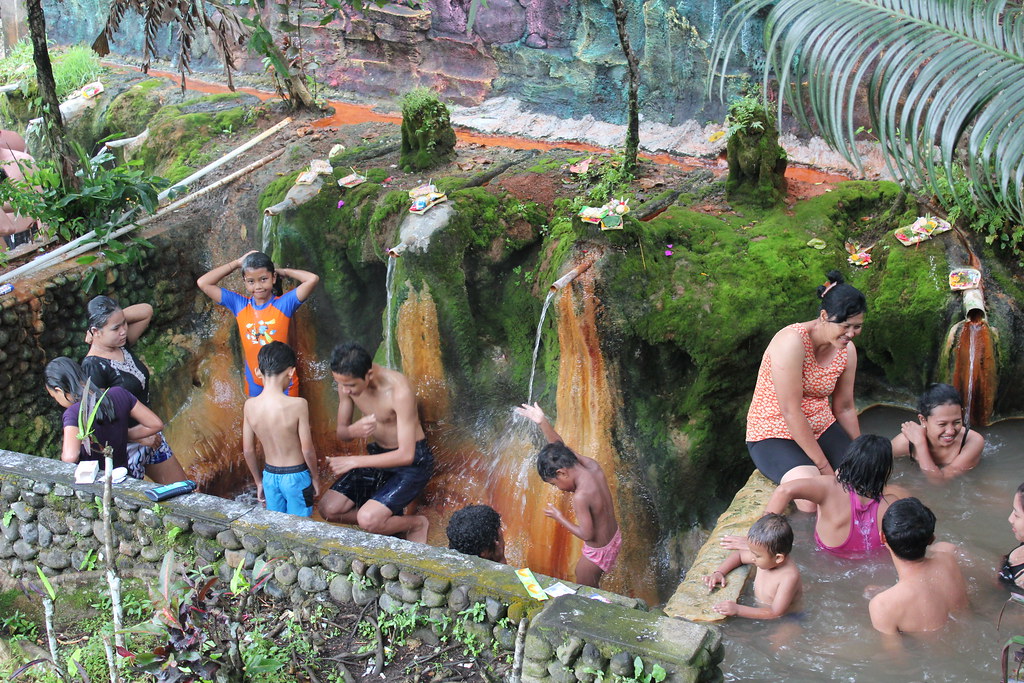
If we exclude the most popular soaks of Southeast Asia, which tend to be micro Disneyworlds with little regard to soaking, soakers in Southeast Asia are mostly driven by potential health benefits. There are always entry fees to contend with, albeit mostly nominal. Dining is a quintessential part of the experience. Natural bathing habits are out (and with it hygiene!), though socialising is in ...
So a Southeast Asian soaker definition could be:
A person who enjoys and values the therapeutic qualities of hot naturally occurring liquid which is affordable and includes dining opportunities for the (extended) family / friends. 

Not so standard news
Probably the most striking bit of news the past two months concerning wellness came from Germany. What makes it more mind-boggling is how it has been disregarded by the mainstream news channels.
Bad PR for the wellness branch:
'In fast zwei Drittel der Pools von Wellnesshotels entspricht die Wasserqualität nicht den Hygienevorschriften'. 
So two-thirds of the (swimming) pools of wellness hotels fail hygiene rules. The results were taken from hotels in Germany and Austria and make poor reading. In general outdoor facilities were cleaner and using the facilities around lunch time was the advice, later and earlier gave worse results ...
If in Germany this was the result, one can only imagine how poor such facilities are in general as regards to hygiene ...
'A man was hospitalized after jumping into a hot spring on the northern Nevada desert to rescue a dog'. (source). 
No word on the condition of either jumper or dog.

Looking for a different soaking connection: mountain biking and hot springs.
'The Hot Springs Route is a brand new mountain biking route, the brainchild of Casey Greene, an avid rider and a cartographer for Adventure Cycling in Missoula, Mont. Casey came up with the idea after doing a 10-day bike tour across North Idaho and Montana when he and some friends biked to a different fire lookout tower every night. "At the end of the tour, I thought this whole concept of having a destination where you end up each night was kind of cool ... basically, destination mountain biking," Casey said.
The light bulb for the hot springs route went off when he was soaking at a hot springs in Pole Bridge, Mont. He was thinking that Idaho had the highest concentration of hot springs in North America, so why not try to connect the dots? He started evaluating the situation from looking at maps, plotting the hot springs, looking at connecting routes, and came up with a tentative route. Then he ground-proofed them to see if it would work. Last summer, he rode the whole route that's connected by dirt roads, all 517 miles of it, and he also logged a number of singletrack routes that add spice to the whole experience'.
What happens when you crash a drone in a hot spring? RT (Sep. 23) notes that:
'The German tourist who crashed a camera-equipped drone into a lake in Yellowstone National Park in July has agreed to a plea deal that would ban him from the park for one year, as well as unsupervised probation in his home country [yeah, right]'.  
But then 2 days later Reuters reports (Sep. 25):
'A Dutch tourist has been ordered to pay penalites of more than $3,000 for crashing a drone aircraft into a famous hot spring at Yellowstone National Park, a park spokesman said on Thursday'.
So how come the difference in sentencing?
 
Uncertainty about a Japanese onsen experience? Japan Realm has a guide (Sep. 24) on how to get naked with strangers. Apparently for normal non-Japanese this is a possible situation of pure terror. Embrace it, is the main advice ... 

A hot tub gondola? Yes, in Japan (source).

We've heard about the declining bathing culture in Japan (mostly non-hot spring sourced). So what to do with bath houses having been closed? Rocketnews24 (Oct. 2): 
'Japan has been going through something of a hot spring renaissance over the past decade, but at the same time, things are tough for Japan’s other traditional venues for communal bathing, sento, or public bathhouses. Despite a recent uptick in their number of foreign customers, most Japanese have a pretty lukewarm reaction to the prospect of taking a soak with others if the water isn’t heated by geothermal sources.
For the current generation, a hot bath drawn from the tap is no longer a luxury nor something that necessitates leaving home for, and so sento have been shutting down around the country. But rather than close their doors for good, a few have converted their bathing facilities into dining spaces and been reborn as stylishly retro sento cafes'.
Complete with 5 examples.

Onsenaddict (Oct.) has a top 5 of the best cascading hot spring massages.

Foreign Affairs need not always lead to a panacea for hot spring development. The NZ Herald (Oct. 27): 
'A master plan to turn the picturesque Waiwera thermal resort into an international destination with jobs and other economic benefits became bogged down in red tape'. 
That seems to be the case, but there were quite a few question marks concerning the investor which drew out the process. Money doesn't always pave the way.

Geothermal
A very good read. From thinkgeoenergy (Oct. 8) Alexander Richter let's us know how he started up the website and how he hopes to continue doing so. A very genuine article and thought provoking.

The Economist has a very upbeat article (Oct. 26) on geothermal energy in the USA. Despite being one of the cheapest means of power generation, subsidies to let this sector mature have been lagging. No word on double use (power & soaking) of generated steam though.

From Bandung.bisnis (Sep. 20) an article about developing the geothermal power development of Kamojang near Bandung (Java, Indonesia). At the same time they hope to develop the tourism potential. Thinkgeoenergy was a recent visit here (Oct. 27), no news of the tourism potential though.

Hotspring waterfall in #mountrinjani #lombok #indonesia #hotspring #waterfall
(source)

Not top notch
  • Indonesia
A great posting on Sumatra's answer to Turkey's Pamukkale (tripzilla, 22 Sept.):
'At a glance, Kawah Putih Tinggi Raja resembles the natural rock pools of Pamukkale, Turkey. “Kawah Putih” literally translates to “white crater” in Indonesian, and it is one of North Sumatra’s best kept secrets. Found in the village of Tinggi Raja in the Simalungun province, Kawah Putih is a natural hot spring that has hardened to form white terraces rich in calcium carbonate deposits.
It takes about 4 hours to drive from Medan to reach these “warm snow” terraces. Bear in mind that this location is not a typical tourist hotspot with top-notch facilities. It’s completely off the beaten path and the road leading to it is paved with huge uneven stones. If you don’t mind a super bumpy car ride, hiring a four-wheel drive is the way to go'. 
Unfortunately the springs are too hot to soak in, it's more a place for sightseeing ...

It's all Sumatra btw, in this update. Yahoo Singapore notes (Aug. 14) that Sumatra's capital Medan is highly underrated. One of the 16 reasons to visit:
'To soak off all that travel fatigue, I highly recommend a soak in one of the hot springs at the foot of Mount Sibayak. The warm sulphur water can relieve rheumatism and help you de-stress. The smell of bad eggs and the entrance fee of S$0.30 is a small price to pay for a spa experience surrounded by nature'.
Photo:

They do fail to tell prospective tourists that due to an eruption of the Sinabung volcano the area is covered in ash ...

Lonely Planet on Flores (Oct. 8): 
'Like a fiery dragon snaking out of the Komodo Sea, Flores boasts a sinuous highland landscape that is spiked with no less than fourteen active volcanoes (only Java and Sumatra have more). This is the heart of the ring of fire and volcanic activity is visible everywhere from the black sand beaches to the smouldering mountain peaks. Near the village of Moni, there is a pair of sacred thermal springs, one reserved as a bathing area for men, the other for women. After work the entire village frequently gather to bathe in the gigantic hot-tubs and chat happily about the pleasures of highland life'.
Not really natural, but the Australian Traveller names six of Ubud, Bali's best spa retreats.
  • Malaysia
An overview of 10 hot springs in Malaysia.

Another extensive photo review (Sep. 23) of Banjaran hot springs. So many photo's. But no people, let alone no soakers?

  • Philippines
Oi pre?! Nakayakap kaba skin? Wahahah @hi5ange emojiemojiemoji ayysoosss nmn! @simplyarmie @nvrheard emojiemoji @ #mtIsarogHotspring #hotspring #tripniprince #galaniprince #bicolandia #bicoliscool
'Just two hours away from the hustle and bustle of Iloilo City, the unassuming town of Anini-y offers a much-needed respite to weary travelers.  Rugged and bountiful, this 4th class municipality in Antique Province is home to some tourist attractions worth a visit'. 
And what are then the attractions? Yahoo Philippines (Oct. 5): 
'Siraan Hot Spring is a local favorite. Here, one can take a refreshing dip at any of the hot springs enclosed in bathtubs and pools. A mossy swimming pool with sulfuric water is the key feature of Siraan. The water flowing here is believed to be therapeutic; it is said to cure skin diseases like fungal infections and eczema as well as soothe muscle and body aches'.
  • Singapore
Experiencing an onsen. In Singapore. The concept of onsen bathing is slowly being introduced to the city elites of Southeast Asia. Albeit without the natural surroundings. And even the natural waters. Just the concept. The Evacomics has a blog entry (Sep. 23) on the experience of the Ikeda Spa in Singapore. Score: very impressed.
  • Thailand
#squaready #タイ#パーイ#温泉#hotspring#GoPro#GoPro#GoPro#水が茶色い 三ヶ月ぶりくらいにお湯浸かりました。のぼせた。
(Pai, source) 

Just out of our geographical scope, but a nice read nonetheless, how to soak in Taiwan. Ligeia describes (Sep. 7) her experiences at the Long Nai Tang Hot Springs:
'Wanting to include a hot springs experience in my day trip to Taipei’s Beitou district, I looked up places online and found an vast array of choices. Long Nai Tang Hot Springs seemed the most appealing as it was the oldest, dating back to 1896, and it had no website of its own. I only found it because a blogger had visited and wrote about his experience there using words like “local” and “authentic”. So, of course, I had to give it a try.
It is not the easiest place to find unless you can read Chinese. But the concierge at a hotel (that turned out to be right next door) pointed me in the right direction.
I was greeted by the most efficient older Chinese man, who responded to my “Ni hao” with “naked”. Clearly waiting for a response, I said, “naked is ok”. “Towel”, he continues. “I have my own towel”, I said pointing to my bag. “One hundred”, he replied holding out his hand. I paid the money and he said, “shoes” and pointed me towards the women’s section'.
Thus becomes easy communication. 

'Mateo Hot and Cold spring'
Sorsogan, Bicol, Philippines (Source)

Sunday, 12 October 2014

Publications: Hiking Hot Springs in the Pacific Northwest


Soaking attributes
Is there something as such? I mean soakology. A good description might be the science surrounding the act of soaking with reference to hot springs.
We would have to define hot (above 30 / body temperature/ hotter?) and what is soaking (probably the most difficult)? And how can it be a science?

Well the former does leave us shaking our heads. Do note that in Japan this is very different, however the science of taking a hot spring has still some way to come by in the western scientific literature. In the past I've noted about 2-3 books on soakology. But in all fairness listing a couple of hot springs after each other with their characteristics is hardly scientific. What's more this seems to be dying trend: listing on the internet is rendering all this obsolete.

So it does come as a surprise that a publisher has been found for what is essentially a list of ultimate natural hot springs which are located in the Pacific Northwest of North America (Oregon, Washington, Idaho and British Columbia) and have somehow failed to be "developed" due in part to problems of access and/or being on state land. Question mark. 
What's even more surprising is that the authors (Evie Litton and Sally Jackson) have turned this essential and entertaining item for hot spring hunting into what could be contrived a scientific listing of where and what, but also how. How soaking is done. I like it.

Though I call myself a soaker, I've yet to find out what distinguishes myself from those non-soakers. Collins notes on a soaker:
'a person or thing that soaks sb or sth else'.
With soak possibly referring to
'to take in (a liquid) by absorption'. 
Though there are some definitions of soak referring to getting drunk or heating up. Maybe a soaker is simply someone drunk on absorbing heated liquid!

In the blurb of the Hiking Hot Springs etc., the publisher notes that all hot springs covered in the guide are free of charge and on public land. So that are two characteristics of what a soaker seeks: free of charge with public access. But that would be specific to North America; in Japan other rules would have to apply and free, public accessible hot springs are few and far between in Europe. Asia-wide there would be more differences, while New Zealand differs yet again and then there's still Latin America and Africa which all have other characteristics. Add traditions, history?
Dames Litton & Jackson though note in the preface that the guide is dedicated to all those who
'... struggle patiently and often ingeniously to create and maintain soaking pools for everyone to enjoy and who value hot springs in a natural setting enough to pack out the trash left by others, ...'. 
So here they add more possible attributes of a soaker, this is getting complicated ...

What's more wherever I go in nature (beach, river, waterfall) I make an effort to carry more trash out than in. Does this mean I'm an ultra soaker? Or should this be characterised as common sense? And if so why is it not common? So a soaker focuses solely on hot springs. Hmmm.

The science of soakable skinnydipping
What the previously mentioned blurb of the guide fails to inform it's (potential) readers, is that the authors have gone to great lengths to describe the (un)dress code of the relevant hot springs. Aside from the fact that the publisher might have purposely missed this, it gives us certainly another possible attribute of the soaker: he/she prefers the undressed code. And here comes the science.

The authors have looked into what the swimwear code of each hot spring is. Of the 162 featured hot springs I've collated what the various advisory standards of dress are brought forward. There are 33 possibilities ranging from 
'swim wear is a must' 
or even 
'no nudes' 
to 
'swimsuit / birthday suit mix' 
to the ever clear
'mixed bag' 
to 
'swimwear: first come is first serve'
and ending with 
'swimwear is the least of your worries'.
The top 3 advisories were: 
  1. swimwear optional (17 out of 162),  
  2. keep swimwear handy (?) (15) and  
  3. jointly third with 10: swimwear required/essential, swimwear superfluous and the strangely advised swimwear is advised/vital/essential when standing up!?
In total, 38 advisories implied that whatever the correct amount of dress society requires you, that's what's needed. Meaning a hefty majority of soaks allows you to lower (literally?) your guard.

Interesting in the above, is that Canadian soaks and soaks in Idaho require more clothing. On the other hand, Idaho is the only featured state with the curious habit of 
'skinnydipping after dark' (5 counted) 
as well as the widely advised stand up / dress up rule mentioned above.

So now where are we? Soaker: a person who enjoys and values (possibly through  maintaining the vicinity, but with reference to traditions and history) hot naturally occurring liquid which mostly is publicly accessibly / free of charge with a preference for natural bathing habits. 

Still not me I think, but close enough.

Screened
But as said the guide is an enjoyable read, even though I'm not from that part of the globe. Who knows that could still happen. 
It's also a book of inspiration, there's still so many places we soakers can (still) enjoy. Hopefully the trashers amongst us, won't get their hands on this ....

Just flip the guide open. Let's read together. Page 217: Anderson hot spring, Idaho:
'A hot pool screened by trees in a creek canyon, near a dirt road. Keep swimwear handy'. 
It then comes with general characteristics and how to find the springs. A photo by Ms. Litton of a male soaker in his natural habitat and then a text box on how Sally lost a sandal but found another hot spring nearby.
I compared this to the Idahohotsprings page on Little Anderson:. Coincidence or not: the two descriptions don't line up. Anymore. Another question mark.

Others note some progress / lack of as compared to earlier editions (this is the fifth) especially when updating prior info: that goes to show that an internet listing does have it's own advantages. Maybe a website to keep the list up to date?

Reference:
Litton, E. & S. Jackson (2014) Hiking Hot Springs in the Pacific Northwest - A Guide to the Areas Best Backcountry Hot Springs. Falcon Guides, Globe Pequot Press, Guildford, Connecticut, U.S.A.

Saturday, 13 September 2014

Celebration

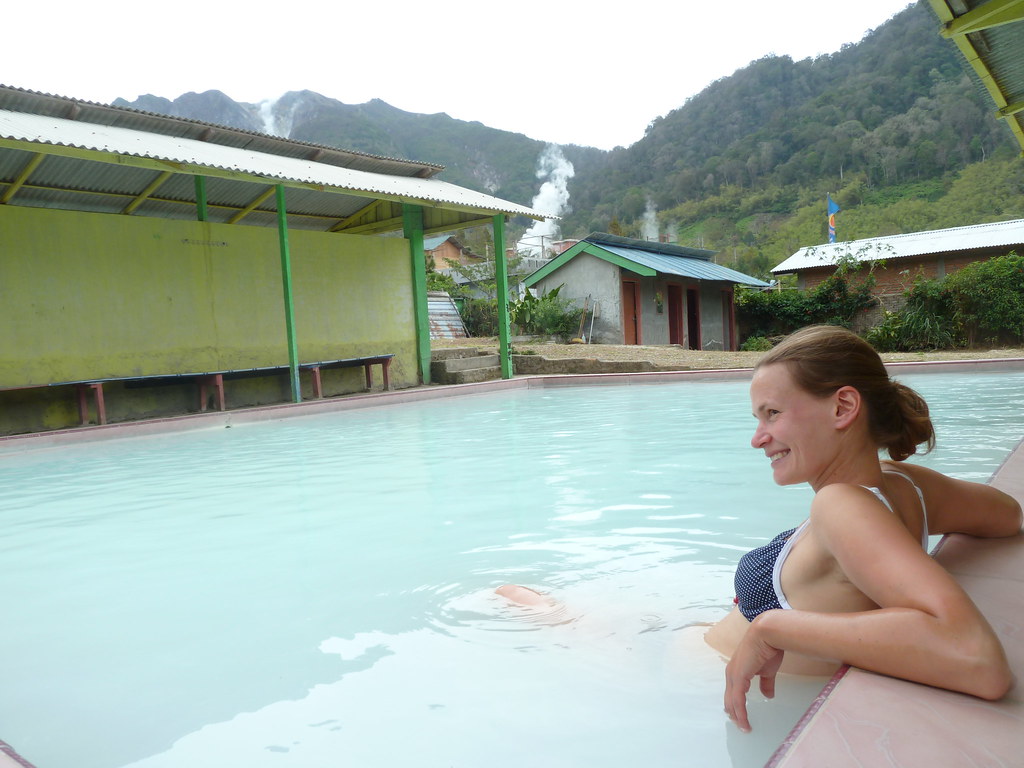
'Afternoon at the hot spring. emojiemojiemoji️emoji#vanistravel#vaniaroundtheworld#hotspring#swim#forest#bali #banjar#indonesia#summer#holidays'
Rages
Quite  a few items from the wackier side of soaking. What about theoriginalnomad who have now developed a collapsible hot tub, ideal for trekking into the forests and over mountains!

Other strange news: 
'Boise City’s Public Works Department and Boise State University are partnering to commission a public art project to celebrate the use of geothermal water on campus'. 
Follow this link to find out the three proposals.

Only in Australia. From the greynomads (Sept 2):
'A fisherman at Douglas Hot Springs south of Darwin believes he saw a 1.5-metre saltwater crocodile in the supposedly safe swimming area.
...
No saltwater crocodiles have previously been spotted at the hot springs, although one was seen eight kilometres downstream'.
If you are logged into Facebook go here for a photo of the foot spa on the Shinkasen train to Fukushima.

The use of drones is all the rage, so it shouldn't come as a surprise that the use of drones in natural geothermal areas is now on the radar. It became all the more apparent when a drone crashed into Yellowstone's Grand Prismatic Spring (CNN, Aug. 7). Drones are apparently forbidden in US national parks though it's doesn't seem clear to all users, especially since the ban was just announced in June. Possible problems:
'Park rangers have not determined if the drone damaged the spring and if it's necessary to recover it'.
Finally less pleasant news. The Costa Rica News has an article (August 26) on whether or not their nation's hot springs are safe:
'Floating on your back or dipping the your head underwater are common actions when enjoying a natural hot spring. However, experts now recommend not submerging your face or head in order to prevent infections that can enter these more vulnerable cavities.
This recommendation stems from the case of Jordan Cole Smelski, an American 11 year-old boy, who died in July in Orlando, Florida, due to an infection resulting from the amoeba Naegleria fowleri. The deceased boy was on vacation in Costa Rica, where he visited the hot springs in the Northern Zone and began to feel sick afterwards and never recovered.
....
So in conclusion, yes, Costa Rica’s hot springs are safe.  But it’s safer to keep your head above the water'. 
More info on this from the Ticotimes (August 19).

Hot in here
There's really not too much reports/news coming from Southeast Asia itself.
  • Indonesia
'Not far from the magnificent Kawah Ijen (Mount Ijen) lies Kalianyar Village, Sempol. Like many villages that you may find in Indonesia, this one is unique because of it's hot springs area that it has. Amazing to have a soak in once you're done with your hike up to Mt. Ijen. Nothing like hot spring water to soothe those aching muscles. Thanks to Mr. Slamet, he brought us to a hidden charm if you walk in toward the village'. 
Link to this video from East Java.

Indonesia has passed new legislation meaning less environmental regulation for geothermal projects (MSN, Aug. 26). Oddly enough is this piece of news (Jakarta Post, Sep. 1):
'Rida Mulyana, director general of renewable energy at the Energy and Mineral Resources Ministry, said that local administrations would receive more money from the development of their geothermal resources even if they will no longer decide the issuance of exploration and exploitation rights to investors'.
Thinkgeoenergy (Sep. 10) notices that more larger scale projects are in the pipeline. 


'Baden in Schwefelquellen'.
Hot springs at the foot of  Sibayak mountain, Semangat Gunung, north Sumatra. By Katharina V
  • Laos
A flickr album on Viengthong, Houaphanh, Lao PDR.
  • Malaysia
One of Asia's most upscale natural hot springs (the Banjaran, Malaysia) has a new management team. so announces Thai Travel Review Weekly (Aug. 14).

A Japanese website which highlights no more than 18 Malaysian hot springs! With translate a very interesting summation of what's on offer.
  • Philippines
'It's getting hot in here! Natural hot pool. #hotspring #alegria #cebu'
Source
  • Thailand
 
'natural hot springs #pai #hotspring #thailand emojiemoji'
  • Timor Leste
'Day trip to the hot springs in Marobo! #marobo #timor #timorleste #hotsprings #boiling #hot #pool #mountains #view #bathtime'
  • Vietnam
While Indonesia may have opened up to more investment in geothermal power with it's new laws being passed, Vietnam's potential is still to be developed as it fails on the legislative side. Thinkgeoenergy (Sept. 4):
'Another relevant hurdle the country has to address is the lack of specific legislation regarding geothermal exploration and feed-in tariffs, which makes the process of moving forward more uncertain yet, according to the article, the main regulatory framework for renewable energy seems to also cover geothermal'.
any place for me to enjoy this messy happy bathemojiemojiemoji? #roadtrip #taybac #vietnam #ontheroad #hotspring #suoinuocnong #letsgetwet #instamood #doyoutravel

Tuesday, 26 August 2014

Getting air

TAKE EVERY chance. DROP EVERY fear! #enjoy #myparadise #jump #hotspring #lombok #Mountain #Rinjani
Source: esthermasuy

Here at the bureau of soaking affairs, we are seeing ever more interesting hot soaks from surprise, surpris, Indonesia. Not one or two, but many. So we thought that a one-off Indonesian special may be called for. If in need of a soak, just ask around for an air panas.

What's even more surprising is seeing how often the Rinjani mountain crater hot spring pops up. It's a long day long slog up here, so you won't see that many a tourist, but it seems that those that do make it up are relishing sharing their images of themselves or others soaking in the rusty colored hot springs with us, the general public. 

And hey, it does bring up envy to us stuck with our 9-to-5 jobs. Sigh!

Enjoy! 

After a day without shower. You can't get better than this. Hot spring under the cold weather!!! #steam #gopro #rinjani #hotspring #bikini
 Source: thamcinyee

Heading East
#hotspring #ketambe #aceh #Sumatra #indonesia
Source: alexgoestoofar 

Sumatra sees less tourism than the western islands of Java, Bali, Lombok and upcoming Flores. However geothermality here is commonplace, sometimes too upfront as volcanic activity is all too apparent just under many of Indonesia's islands.
Hot springs are less of attraction for tourists and are often just bathing places for local insiders.

Near the Gunung Leuser National Park, north Sumatra. Source 

Skipping the densely populated Java one arrives on the quintessential tourist destination of Bali, home to a couple of hot springs, some hardly known others a must stop on the round the island tour.
 
Batur Natural Hot Spring, Kintamani, Bali 
Source: stevencavell
 
Hot springs part2. Совсем волосы выгорели)) #bali #airpanas #balidreamsru #hotsprings #onelove 
Source: svetichelo

Swim swim emoji emoji #kintamani #hotspring #bali
Source: ariefandry

'at Belulang hot spring on Bali
' Sources d'eau chaude ~ Hot spring ~ Air panas [EXPLORE]
Découvertes par hasard, au cœur de fabuleuses rizières en terrasses, au bout d'une interminable piste à peine carrossable dans laquelle je me suis fourvoyé.
Surprise, il a fallu s’acquitter d'un droit d'entrée de 10 000 roupies pour moi et de 5 000 pour mon épouse! Et d'une redevance de parking de 2 000 rupiah.... J'ai tenté d'expliquer que mon visa de retraité me donnait les mêmes droits que les locaux, rien n'y a fait, j'ai du payer le tarif touriste étranger... (10000 roupies = 1 US$ = 0,80€) Je n'ai pas insisté, la retraite est une notion incompréhensible par les gens ici!
Les habitants des hameaux alentours viennent y faire leur toilette. Une dizaine de petits commerces sont installés autour des sources, ainsi que quelques temples...

#airpanas#espa#penebel#tabanan#refresh#tindakalit#

And from Bali we head northeast to Sulawesi, another exciting destination yet to see an apparent upswing in tourism ...

by nurkitty:
#selfie #lombongo #airpanas
Then directly south is the island of Flores which has some nice hot springs.

#bajawa #hotspring #flores #indonesia #vsco
From the instagram account of dandagiacomo

Varm källa bland risfälten emoji️emoji #backpacking2014#indonesia#flores#moni#hotsprings#ricefields
Source: johannatunell
 
Soa Hot Springs. The perfect ending for a trek emojiemoji #hotsprings #soa #flores #indonesia #primoslejanos

Wednesday, 6 August 2014

Defining


Горячие источники#вроде река, а вроде и ванна#emoji#hot#springs#airpanas#hotwaterfall#river#
Mengeruda Soa, Flores, Indonesia
Source instagram katyaspencer

The geo downside
When is news newsworthy? We rely too often on commercial broadcasts to set our priorities. But how important is an earthquake in Yunnan, China? Not so, says our telly.

But for the internet we would be none the wiser about the Yunnan's tragedy. Just imagine. The Telegraph (Aug. 4) :
'Another man described a huge landslide that smashed cars and buried tourists at a local hot spring.
"We were in the hot spring when the quake happened and we saw boulders rolling down the mountain towards us," said Wang Xiong, from Ludian county, to the same newspaper.
"I grabbed the kids and ran out of the pool, but my right ankle was hit by a rock. Our three cards [cars] were destroyed by the rocks falling on them. A huge rock killed my great aunt, it hit her in the stomach.
"There must have been 300 or 400 people in the hot spring at the time. Some were hit by the rocks before they could escape. I saw blood everywhere in the water."
Away from these tragic events is an interesting article from Japan (Japan Property Central, June 23) which continues on the future of onsen resorts as reported in the interview with Miho Tabuchi. Apparently hot spring resorts are in fear of new regulations requiring them to meet  new standards for earthquake safety:
'The regulations target kyu-taishin buildings used by an unspecified large number of people, such as ryokans, hotels or hospitals, over 3-storeys tall and with a total floor area over 5,000 sqm. -
... 
The regulations require that building owners make their best efforts to ensure a building is up to code, but the regulations are not legally enforceable. However, the end result is the same. If the hotel is not up to code, the information is made public on government websites. Tourists and tour companies may choose to avoid making reservations at ‘risky’ hotels.
Beppu City in Oita Prefecture is one of the most well-known hot spring areas in Japan. It has 8 facilities that fall under the inspection regulations'.
Going global
The Sydney Morning Herald has an article on South Korean bath houses (June 8): 
'This is the world of the jimjilbang, the traditional South Korean bathhouse. In previous centuries they were a practical neighbourhood facility but with the advent of modern home plumbing they reinvented themselves as 24-hour leisure centres'. 
All in all, the writer seems quite satisfied with the experience.

Another experience, a bit further away, Moroccan hammams. Perthnow (July 25) shares with us and how the writer concludes her enjoyable experience:
'The women in the hammam spend their outside hours covered from head to toe in a djellaba, yet it was me, with my decadent Western exposure to incidental nudity, who was bashful'.
Onsenaddict (July) compiles a small list of Japan's most muddiest hot springs. A good albeit brief read.

Wacky spa treatments. The planetd.com (June 2) lists nine. 
Asia's contribution: Ayurvedic massage (that's not weird), hot cupping, Vietnam's mud bath, Jordan's Dead Sea, Penang's reflexology and ion foot bath's in Nepal. 
Basically the experiences were wacky, not the treatment themselves ...

Phasoet Hot Spring, Chiang Rai #Thailand. Temperature is 87 Celsius. 30B for adults & 10B for kids pic.twitter.com/zvYbJofxBH
Source Richard Barrow on twitter

Obstacles
Thinkgeoenergy (July 25) reports that China will be seeking to upgrade it's use of geothermal energy as a solution to end the devastating impacts that coal fired power generation is creating. By both using geothermal energy for heating purposes and expanding geothermal energy generation, it hopes to lower this dependency:
'... a nationwide geothermal heating program will cover an area of 500 million square meters while installed geothermal capacity will be expanded to 100 MW. As of the end of 2013, China’s aggregate installed capacity of geothermal power generation projects was a mere 27 MW with all projects located in Tibet, including the 25-MW Yangbajin geothermal power station'.
Meanwhile Taiwan is thinking likewise. Taipei Times (June 12): 
'Several academics and specialists yesterday said Taiwan has the natural resources to develop geothermal energy, but there are still many obstacles that need to be overcome, including strict regulations and a lack of government funding'.
Indonesia seeks to up the ante on geothermal power by announcing 9 areas open for geothermal power research (Thinkgeoenergy, June 4).
Furthermore Thinkgeoenergy (July 16) is upbeat that Indonesia legislation will free geothermal power from being labelled a mining activity thus making environmental concerns less important.
Thinkgeoenergy (July 17) then reports on a Bahasa report of continuing opposition towards geothermal power on Bali. This comes a day after the same source had it's hopes up for opposition to disappear, as new legislation might pave the way. Part of the hope was because this new legislation would see forests areas become geothermal power plants! So much for green energy!

Basking in sweet sweet nature. #ahlife #tabanan #hotspring #balidays 
Tabanan, Bali, Indonesia. Source crystallivingthelife

Charming
Not much reports from Asia alas. 
  • Malaysia
Blogger Sarah Low reports on Banjaran hot springs, Ipoh, Malaysia, one of Asia's most upmarket natural hot spring places. Two hundred photo's on, there's no word on what she thinks of the resort, nor any evidence that she visited here for a soak!

The Borneo Post (Aug. 3) has a massive article on the hot springs of Annah Rais and Panchor, both near Kuching, Sarawak. Do we learn anything new:
- Despite all the investment and priority given, it seems that no one has done any simple research as towards the mineral content of the waters. 
- Using mud at Panchor is becoming more popular. 
- Annah Rais springs were used for spiritual meditation:
'The spirit would then ask the person what he wanted.
“According to my grandfather, in the old days, men liked asking for charms so they could marry the women of their fancy.
“However, more often than not, the spirit would tell them he could not fulfil their wish because he has no power and could do nothing.”'
  • Philippines
The Benguet local council hopes to be able to build a swimming pool next to it's hot spring, so reports Banguio Midland Courier (June 22). The idea is to save on heating costs.
 
Define relaxation??? #hiddenvalleylaguna #Waterbaby #weekend #awesome #wanderlust #hotspring
Laguna, Luzon, the Philippines. Instagram user hello_anne28

Related Posts with Thumbnails
Copyright 2009 © Soaking in Southeast Asia. All rights reserved.
No reproduction or republication without written permission.