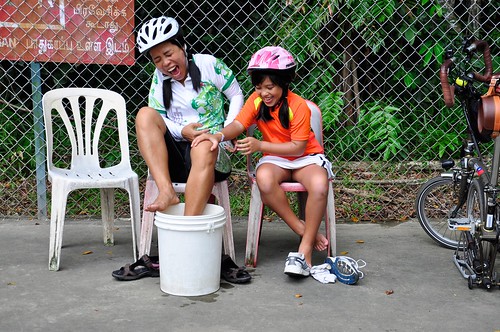
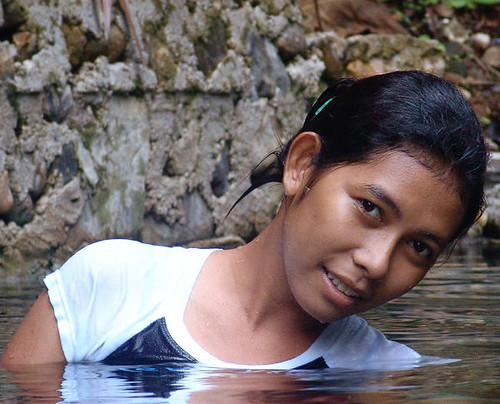
'Swimming in the hot springs on the Rinjani trekking tour ! Lombok - Indonesia'
From webstagram page of gogi29
What's customary?
A variety of recent articles / blog entries follows, all concerning customs of foreigners vis à vis local customs.
Travelling to foreign countries opens oneself to different experiences. In this piece by CNN
(Apr. 10) they discuss the advent of Chinese tourists abroad. Both the
expectations of those coming and those offering hospitality are
challenged. However when both adapt great experiences may occur.
The same source follows it up with more comments: basically all tourists which come in hordes irrespective of nationality are hard to handle:
'Summing up the "just because you've got money doesn't mean I have to respect you" contingent, THEGenuineOLiTWiST
wrote: "In general, most mainland Chinese who are 40 or over are
suffering from this money= respect syndrome. The younger ones are much
better at 'fitting in' with their travel destination's social and
cultural norms"'.
So how does one re-act to outlandish social norms? With hot springs? This (young?) lady,
from Singapore, while in Japan does go into the onsen. Though she has
misgivings:
'Then we unpack and went to the hotspring only me and
chenhong went
seriously i think between friends it's also a very awkward thing looking
at each others boobs and vagina and everyone (locals) were like so open
about showing their body.... you know there's those door then you go in
is locker room you see in anime?
But in real life the moment you enter the door you see all the naked
aunties saggy boobs young kids boobs and many people not blow drying
their hair but their vagina hair. FUCKING WEIRD RIGHT.. I took such a
long time to undress myself and psycoing myself that this will be my
only experience i should just go....'.
From the above citation it can be expected to conclude that this is a the first part of an overall poor experience. It's not, the lady in questions does enjoy the experience.
It's odd that on the one hand when from Singapore, a society which is possibly one of the most prudish in the world, one has no qualms about at least partaking in the locals' habits however contrite. On the other when abroad, Asians (in general) are very well aware that this is not home ... and adapt ...
This attitude seems to differ from for instance North Americans (Anglo-based), where experiencing traditions not meeting the social norm known, means a no-no to the experience ....
That it is not always the case, illustrates the following experience from i heart rachabees
(Mar. 27):
'When people ask me what was the best thing I did in Japan, I
usually mull over the question, my mind wandering to the weekend trip
with my friends to Naoshima, the day spent celebrating a small local
festival in Himeji, biking the Shimanami Kaido
or the big dance festival in Kagoshima. However, when it comes down to a
unique, off the beaten path experience, Kita Onsen was possibly the
absolute best.
...
I came across Kita Onsen as a photo on tumblr, an atmospheric shot of a woman reclining in steaming waters under the imposing face of a giant tengu demon
mask. I was so intrigued that I started researching the mysterious hot
springs hotel, discovering it dated back to the 1600s, and, even better,
it was relatively affordable for me (at least in comparison to other onsen hotels).
...
After they retired for bed, I decided to take advantage of the late hour and go in the mixed onsens without
a bathing suit. I crept outside to the big outdoor pool. The wind was
absolutely howling and I quickly jumped into the warm water, beautiful
and surreal in the dark night. The sky had semi-cleared and there were
stars visible and clouds lit white-blue by the half moon were racing
across the sky. I swam and swam, as great gusts of wind whirled autumn
leaves around me and chilled any inch of me not covered by warm water.
Next I went to the Tengu no Yu, where I sat in the bath and
took in my strange surroundings, the enormous masks watching me with
their scowls. Then the third floor baths, where I soaked for a bit,
listening to the strangled gurgling of the old drains'.
What about differing soaking habits without foreign tourists? An interesting discussion on the Facebook site of the Friends of Cougar
(hot spring), Oregon, U.S.A.. Administrator posts this:
'This weekend at
Cougar I interviewed several people and came up with what I think are
the reasons many people don't go nude [for which this hot spring is partially known for]:
The relative importance of each varies with each person.
Common:
1. Vibe. Presence of people in suits relative to people nude.
2. Fear of inferiority. Self conscious about their suit-covered areas.
3. Insensitivity. A disregard for suits causing discomfort for people nude or wanting to be nude.
4. Habit. Long instilled habitual behavior.
Special cases:
5. Fear of superiority. Fear of being judged too hot and getting too much attention and scrutiny.
6. Friends. Presence of judgment of friends / family'.
After much response this evolves to:
Other strange tourist habit news. Debat on Sanya, Hainan, China's (only?) nudist beach. China.org (Mar. 25):
'Many tourists have posted nude photographs while vacationing at Sanya's
nudist beach in south China's Hainan Province, giving the Chinese public
a vivid imagination of what happens at Sanya, Taiwan newspaper Want
Daily reported.
Sanya is a popular tourist destination
in China. The so called nudist beach lies on Da Dong Hai (Great East
Sea) beach, is only three kilometers from Sanya. It has become
increasingly common to see groups of people chatting and playing cards
in the nude at the far end of the beach.
There is no sign posted to inform
tourists that the area is for nudists, and there have been reports of
embarrassing encounters between clothed and nude beach goers.
An internet user called "yilunanfeng"
said that the beach used to be frequented by foreigners on vacation, but
gradually more and more Chinese tourists took over the nudist beach'.
Solution:
'"Yilunanfeng" [internet user] advised that the local government should
set up a notice to remind people that there is a nude beach here'.
Apparently, some habits are not so outlandish as one would suppose ....
Another example in the customary section. Is Thailand uptight? TTR weekly
(Apr. 10) reports that just one third of respondents to a Thai national poll were
uncomfortable with perceived relax of dress code during Thai new year
celebrations (Songkran):
'The poll of 1,253 people countrywide reported
36.79% were unhappy and
opposed celebrations involving females wearing skimpy or see-through
dresses or suggestive dancing'.
Strange? Just to put this perspective,
nearly half of the respondents thought the government should ban the sale of alcohol during
Songkran! Priorities or common sense?
More
(or less) on the same. One could be surprised (shocked even?) in Malacca, Malaysia:
'"It was a real shock to see someone in the nude like this in
conservative Malacca," he said.
Security guard P. Saravanan, 39, said he reprimanded the [French?] woman but she was nonchalant about it.
"She only replied 'I am going naked to save the world. I am a naturist' and she continued walking," he said.
Saravanan
said he called the police, who came and took her away'.
It doesn't
mention if she managed to save the world, at the very least it's not
worse off.
One may frown on the police action, but alas, this is very
much the same action police would do all over the world: clearly an
outlying free-thinking individual, have to stop this in the bud (google naked rambler).

'Just swimming next to a volcano, the usual'.
Apping
Is there a hot springs app? hotspringsfinder.com has an app for the US: a long overview of all (commercial) hot springs and reviews. Chapters of for instance California and Idaho chapters cost $9,99; Oregon is slightly cheaper. The owner (author) Richard:
'Many of my friends tried to dissuade me from publishing a hot
springs guide fearing that hordes of iPhone users would descend on their
favorite soaking hideaways. Alas, this was the only application that
intrigued me enough to actually see methrough allthe hard
work. It was the first thing I really wanted on my iPhone, so for better
or worse I was hopelessly hooked.
To mitigate the impact, I decided to price the app at $9.99,
higher than the usual $0.99 or $1.99, but cheaper than the equivalent
paper guide books. I know many iPhone user's won't be happy about
this but I felt it was the responsible thing to do, even though it will
greatly reduce the project's annual revenue.
Although I don't worry about the commercial springs being overrun,
many of the primitive sites are fragile. You can help by becoming a hot
spring steward, not just a hot springs consumer. Tread
lightly and help pickup after the people who don't understand how
precious these magical places are'.

Maybe a future project for this blog?
Geothermal news
Nuclear leaks have forced Marubeni, one of Japan's largest companies, to look at geothermal power. Japan Times (Apr. 4):
'More than 70 percent of respondents in an opinion poll by the Asahi
Shimbun in February said Japan should scrap nuclear power, a stance
favored by environmentalists who note geothermal energy does the same
thing as nuclear with much less risk.
“To import a very complex and difficult technology to boil water in
the world’s most seismically active country when there is such vast
geothermal potential strikes me as madness,” David Suzuki, a Canadian
author, environmentalist and board member of the Japan Renewable Energy
Foundation, said in an interview.
...
The projects threaten to revive conflict with hot springs resorts,
which are concerned commercial geothermal plants will siphon away the
same reserves that they tap. Geothermal developments were largely
off-limits before the Great East Japan Earthquake in March 2011 because
heat reserves were set aside for the resorts.
“We realize geothermal is one of our energy options,” said Hirokazu
Nunoyama, secretary general of the Japan Spa Association. “But there are
impacts on the environment. There are cases of hot spring resources
running out or thinning, or a drop in water temperatures.”'
The
article finishes as follows, not upbeat for the soakers:
'“Geothermal
plants are rapidly increasing in major geothermal countries
abroad, and we are the only country that is not moving ahead,” Susumu
Tanaka, chairman of the Japan Geothermal Association, said in a
statement on the group’s website'.
And though some might view this as positive, the same article on Bloomberg has a less positive headline:
'Marubeni Targets National Park in Japan for Geothermal'
So whose side are they on?
Meanwhile:
'Japan’s Ministry of Economy, Trade and Industry (METI) is currently
considering 21 geothermal projects as part of its overall renewable
energy strategy',
Der Spiegel (Mar. 10) relates
about Japan's search for geothermal power generation:
'Dabei ist das
eigentliche Problem ein anderes: Knapp ein Dutzend
regionale Stromversorger haben das Land unter sich aufgeteilt. Diese
Platzhirsche stemmen sich gegen unerwünschte Neuerungen. "Sie haben kein
Interesse an Wettbewerb, und sie arbeiten auch nicht zusammen", sagt
Kosuke Kurokawa, Chef des Japan Council for Renewable Energy'.
I.e.
regional power companies are not interested in new potential as this
counters their current position / interests.
In Central America companies are eyeing up national parks as well:
'The President of Costa Rica signs decree that will start a public
interest investigation into potential geothermal power development in
the National Park of Rincon de la Vieja'.
'Various environmental organizations oppose legislation that
would open the Rincon de la Vieja National Park in Costa Rica to
geothermal development'.
Indonesia is capitalizing on geothermal.
A new geothermal field found near Kolaka, Sulawesi, Indonesia (source). No news as to how one finds a new geothermal field ...
Japanese development aid gets used to develop geothermal power in Indonesia:
'Japan International Cooperation Agency (JICA) is providing a development
loan of $53.4 million to the Tulehu [Ambon] geothermal power project of PLN in
Indonesia'.
A thing of the past:
'Hot-Spring Tulehu, Ambon Island'
Turkey would like to invest in Java, Indonesia's geothermal potential. Invest heavily:
'Turkish group Hitay is planning investment of up to $2.5 billion in
three projects in Indonesia, at Mount Bromo, Mount Lamongan and Raung,
East Java. The estimated potential for all three project is at about
1,100 MW'.
Around the region
The aclaimed Travelfish authority has a take on Langkawi island's hot spring Ayer Hangat:
'Malay-style buildings create a village-like environment on the lush
landscaped grounds, with cool and hot water pools. A series of small
canals run through the grounds and connect hot spring water collected from two wells with cooler water,
offering you temperature variation options. Surprisingly, the hot
springs are natural salt water, which seeps up from the shallow tide
table. The springs claim to be medicinal, helping improve chronic skin
conditions, detoxing and joint pain resulting from injury or gout'.
But are the springs worth a visit / soak?
Hot spring festivals are catching on (Pattaya Mail, Mar. 22):
'The province is holding an eight-day festival “Mineral Hot Spring
Bathing” from today through March 30 at the health park near Ranong’s
municipality office to promote health tourism.
Hot spring bath services, spa
treatment, Thai traditional medicines, mineral water and herbal products
are available at 30-50 per cent discounts'.
In Thailand an idea has been to renew government legislation of the spa sector (the Nation, Mar. 25):
'However, the spa scene has been unfortunately partly plagued by a sexual
image. If word of mouth by tourists on this issue spreads, the industry
will no doubt be hit.
This is one of the troubles for Krod Rojanastien, the new president of
the Thai Spa Association. He admits the industry has faced barriers at a
time when Thai spas are growing in popularity in the global market.
...
A new law is needed to help shape up and modernise the industry. The
industry has been stuck with the Spa Act of 1966, as amended in 2003, to
cope with the rapidly-changing industry. It has waited for a decade for
the law to be approved by Parliament.
The Spa Act defines a spa like a massage service. This is way out of date.
If the law passes, law enforcement will lead to a big change in the
industry. That means spas will be scrutinised in detail as a way to
crack down on sex-oriented openings.
Also, those working in the industry will be upgraded professionally
with a proof of licence via a training programme designed by the Public
Health Ministry. A committee, chaired by the minister, will be set up to
check standards regularly to ensure the industry's sustainability'.

Kantang, Trang, Thailand. From webstagram page of harrietwh.
An interesting blog entry on Tien Lang hot spring, Hai Phong, Vietnam. The promise:
'Especially, Tien Lang Hot Spring Tourist Site promises to bring the
tourists to a wonderful world with feelings of enjoying, relaxing, and
reinforcing health by the staff that are technically philological and
major in massaging with a lot of experience'.
More cash
Big companies in hot spring development (Travel Daily, Mar 27):
'Banyan Tree Hotels & Resorts has signed a new hot spring resort close to the Chinese city of Chongqing.
...
All rooms feature private hot spring pools.
The resort will also feature a large Banyan Tree spa with seven
different outdoor and indoor hot spring pools with waters at a constant
temperature of 38⁰C, plus nine treatment rooms, a gymnasium and yoga
room'.
'Evening hot spring session'
Palawan, Philippines





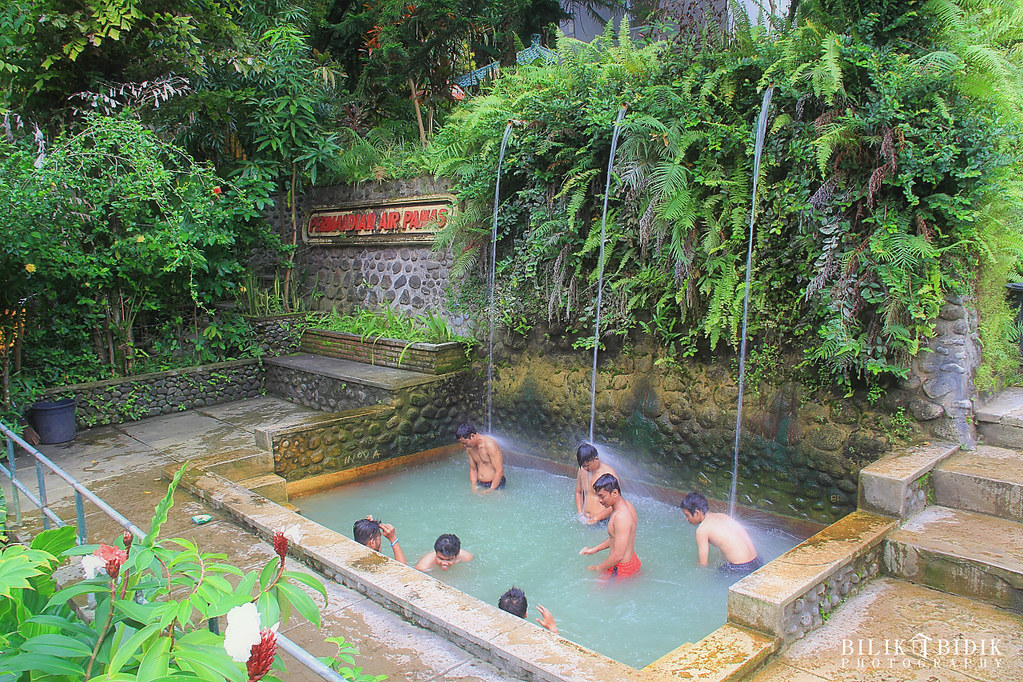


 Goodnight!'