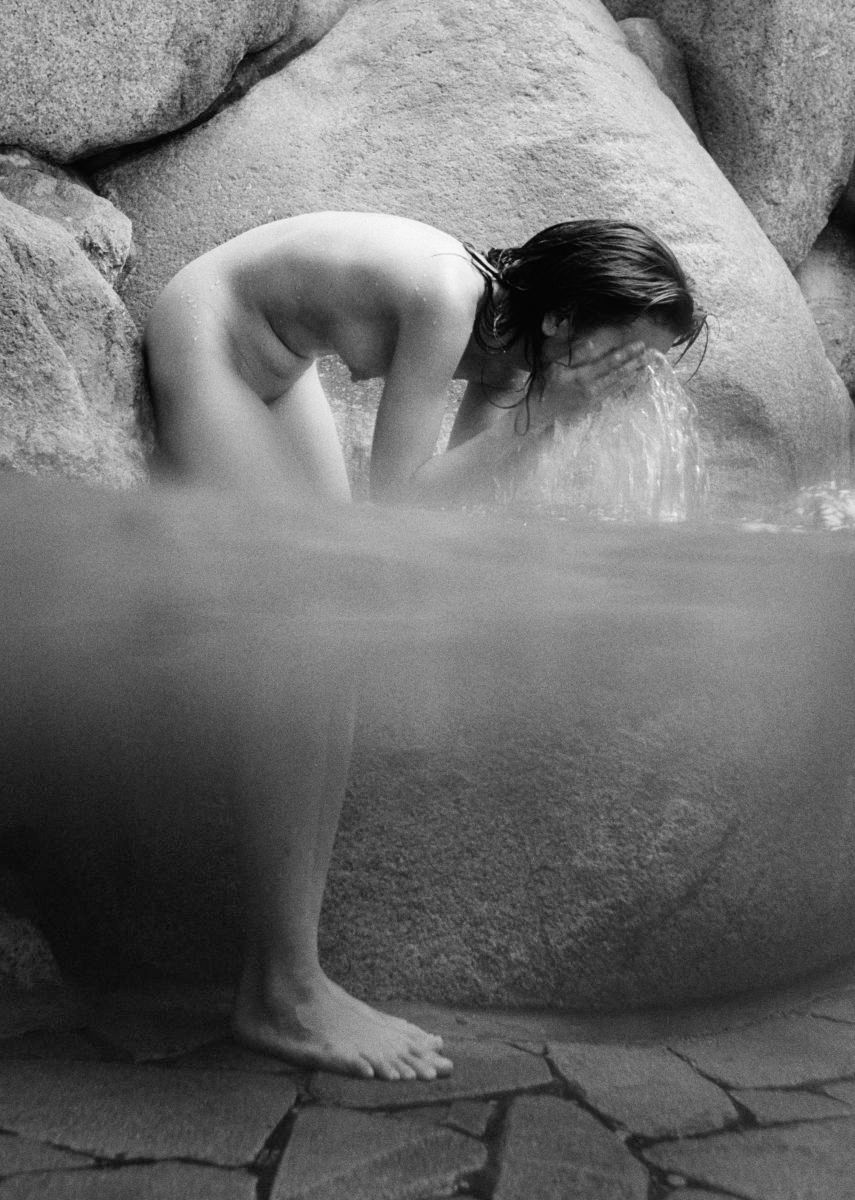
Friday, 22 July 2022

Sorted

war echt ziemlich heiß
#natural #hotsprings #coron #philippines
A long overdue delve into the global soaking culture and in particular that of Southeast Asia. 

Starting off with the latter, nature newschannel Mongabay (Dec. 31, 2021) has an informative in-depth article on an initiative to expand the Mt Apo (Mindanao, Philippines) geothermal power plant:
'In the 1980s, when the Philippines’ Energy Development Corporation, or EDC, began developing plans for a geothermal energy plant near Mount Apo, a dormant volcano on the southern island of Mindanao, it faced fierce resistance.
Decades later, the geothermal plant is frequently cited as an example of a project that has fulfilled its commitments to traditional landholders, and its permit was renewed without major dissent in 2017. But a bloody struggle preceded the agreement, and as the company seeks to expand, it may again find itself facing opposition from Indigenous peoples'.
...
Despite its troubled beginning, the deal is now widely regarded as having been a success.
Under the agreement, Madadma gets 1 centavo per kilowatt-hour from the electricity sold by the geothermal plant, giving the tribe a steady income stream. This royalty goes to the Environmental and Tribal Welfare Trust Fund, administered by an NGO, the Mt. Apo Foundation, Inc. PNOC-EDC also provided housing for 68 families relocated for the project, granted scholarships to students from the affected area, and gave tribal members priority for hiring during the construction phase.
The company running the plant wish to expand, whereby the expansion in capacity will also mean more land will be needed. Hope is that a negotitions with tradional tribes will result once again in a win-win situation for local tribes'.

Remaining with the Philippines. Outoftownblog (Apr. 17) has a local's list of natural hot springs in the Philippines. About 10-ish, most with resort in the name.

Viatravelers (Apr. 26) has an overview of hot springs near Manila:
'Some are located within resorts that have capitalized on their tourist-luring appeal, while others are accessible by the wider public.
Either way, hot springs near Manila offer everything a weary traveler desires: warming waters to revitalize the body and spectacular sceneries to calm the mind'.
Authentic Indonesia has a dozen of Indonesia's best hot springs.
'Traveling has many purposes. One of them is for relaxation. To get your own relaxation can be obtained in many ways, including by visiting natural hot springs. Soaking in a hot spring pool can be one solution to make the body fresh again after tired undergoing holiday activities. If you want to travel to the hot springs, here are our recommendations for 12 best Indonesia natural hot springs'.
Live#24/30
Heiße Quellen in Bandung -Was war bisher dein schönster Reisemoment?
Warum ich die Welt sehen will! 🌎❣️
Heute Thema in meinem Live, um 22:00 Uhr geht es los 😊 ich freu mich auf dich!
#livetogrow #reisen #weltsehen #lebennacheigenemstandard #heissequellen #bandung
ThinkGeoenergy (Mar. 8) has an article in which with the example of Flores they try to propose that geothermal electricity is especially required to assist the tourism sector in developing.

Unlikely, but there's a recent article (Jun. 24) by the Smartlocal concerning Singapore's onsens.
'Good news for those who miss Japan’s hot springs: Singapore, too, has spas with their very own onsens for self-pampering – both the nude and non-nude sort. While we don’t have many natural hot spring sources, the water at these onsen spas in Singapore do come with minerals or at least some sort of health benefits.
...
There’s no better way to bond with your mates than for all of you to jump into a pool together, fully butt-naked. But you don’t have to illegally skinny dip in a reservoir when you can do that at Yunomori Onsen & Spa, which brings the public hot spring experience to Singapore. Yup, the gender-separated pools here are 100% communal, so mentally prepare yourself, and let your inhibitions free!
klook has an updated (May 26) listing of what they consider 8 of Vietnam's best hot springs. Pretty odd, that the article lists the hot springs, but posts of hot springs from the US! 

Wellnessvietnam has another more thoughtful article (Feb. 15) on Vietnam's natural (but developed) soaks:

'There are more than 200 hot springs throughout Vietnam though only a handful have been developed and are safely accessible for public bathing. Our guide to the ‘Best Hot Springs Experience in Vietnam’ features six unique locations that combine wellness, adventure, and cultural immersion'.
Are you looking to soak in mineral hot springs on your next vacation?
On our final stop of "4 Waters" Day​ Tour you'll find an oasis of hot spring resort opportunities...
Values
Over to the global chapter. Which is mostly Japan focussed.

Japan's open onsen soaking culture, quirky for foreigners is slowly being eroded.
Japan Today (Jan. 9):
'Communal bathing has long been a part of traditional Japanese culture. Mixed-gender bathing, though, or konyoku, as it’s called in Japanese, is something that’s been largely phased out at hot springs and sento (public baths), with the vast majority of such facilities now having two separate bathing areas for male and female customers.
An exception is made for young children though, with Japanese society, for the most part, thinking it’s no big deal for a mother to take her young son into the women’s bath with her, or vice-versa for a father and daughter in the men’s bath. The question is what age qualifies as “young,” there’s now a new legal cutoff in Tokyo.
Previously, children as old as nine were allowed into the bath for the opposite sex, provided they were bathing with a parent or guardian, of course. As of January 1, though, the new age limit is six, meaning that once children hit the age of 7, boys are legally allowed only in the men’s bath, and girls the women’s.
...
“If it’s such a problem for parents, then they don’t have to come to the public bath in the first place.”
As alluded to by the last comment, though communal bathing was once more or less an unavoidable necessity of life in Japan, in the modern era it’s pretty much an optional way to get clean. Two or three generations ago, it still wasn’t all that unusual for Japanese homes, especially those of working-class families, to lack bathing facilities, meaning family members had to make regular trips to their neighborhood public bath. Nowadays, though, all but the most spartan of apartments have a bath/shower combo, so going to the sento is more a leisure activity than a cornerstone of anyone’s hygiene routine'.
Guardian (Mar. 12) looks at another aspect, also reflecting the gradual demise of traditional values:
'The absence of women seemed to confirm Japanese media reports that konyoku – mixed bathing – is at risk of becoming a cultural curiosity, especially when it requires participants to go naked.
Many blame the rising menace of wani (crocodiles) – the nickname given to men who spend long periods immersed in the water, their eyes constantly scanning the room for female bathers.
...
Other hot springs have followed suit, with one proprietor who recently introduced a clothing rule on a trial basis suggesting the change would become permanent since it had clearly deterred bathers with “perverse motives”. Another onsen in the south-west of the country saw the number of female bathers rise from 10% to 80% after it made covering up compulsory.
...
Kobayashi [Yasuhiko Kobayashi, a lawyer who has written a guide to the country’s best onsen], who has sampled about 3,000 onsen over the past three decades, attributes the breakdown of bathing manners to a lack of consideration for other people that now afflicts wider Japanese society.
“People think that if something is not actually prohibited, then they can do as they please,” he said. “When foreigners arrived in Japan in the late 1800s, mixed bathing was one of the things that really surprised them. But that was a time of tolerance and respect in Japan. It meant Japanese society was safe and peaceful. The decline of mixed bathing is proof that standards are declining.”
The introduction of partitions and bathing wear requirements diminishes the value of what should be an innocent shared experience, he added. “It means that onsen are losing their individual charm. That’s a real shame.”
Globalhobo (Dec. 13, 2021) looks at the soaking culture from the dive into the unknown aspect:
'No. My clothes we’re staying firmly on, thank you very much.
...
So, with my new friends Abbey and Jada bravely leading the way, I tentatively lost my onsen virginity.
And it was… freeing.
Although I had thought that being in an essentially translucent swimming pool with a group of strangers would be daunting, once I got over the initial shock of seeing boobs every which way I looked, I found the whole experience transformative.
...
You can look at all the glamourised, picture-perfect female bodies you want on Instagram, or in magazines, but at the end of the day, those photos are artwork: the most ‘ideal’ of the ideal body-types who are paid to pose and edited so that the photos are flattering. Normal human bodies are naturally lumpy, lopsided and flawed. But that doesn’t make us any less beautiful or valuable. Bodies, too, are essentially just superficial skin prisons that enclose the real us: it is our feelings, thoughts and actions that make us intrinsically unique.
So frankly, I think we Brits have a lot to learn culturally, and maybe practicing becoming relaxed with taking our clothes off more readily (within the parameters of the law) is a good a place, as any, to start. I believe we could all do with being a bit more naked!

Elsewhere, ThinkGeoenergy (Jul. 13) has a short article on the supposed threat of geopower generation versus soaking:

'On June 21, 2022, the Japan Hot Spring Association held their own in-person general meeting in three years after the restrictions caused by the pandemic. One of the major topics discussed during the meeting was the potential of geothermal power generation in Japan and its possible effect to Japanese hot spring culture.
...
“The hot spring culture is pervasive in Japan, with 130 million people staying at hot springs annually. Geothermal power generation is now used for conventional hot springs.” said Ministry of the Environment Director Yoshiaki Kitahashi. He added that the minimum line for geothermal power generation is that it should not affect the conventional use of hot springs'.
Dicen que el agua cura todos los males.
No sé si los cura, pero te hace sentir mejor.
#aguastermales #thermalbaths #family #coloredhair #nature #relax #greenery #naturalspa #naturalsprings #travel #trip #wanderlust #travelphotography #travelmania #rainbow #naturelover
Away from Japan, MTL blog (Jun. 7) notices that Iceland's hot spring culture is to be exported to ... Canada!
'A giant geothermic pool could be coming to Quebec. With a surface area of 120,000 square feet, the Iceland-style swimming hole would be the largest of its kind in the world, promoters say.
The lagoon would be the centrepiece of an eventual 600-door retreat in Petite-Rivière-Saint-François, a small town on the Saint Lawrence River roughly an hour north of Quebec City. There are also plans for restaurants and a spa.
...
The pool itself would rely on geothermal, biomass and solar energy to maintain a year-round temperature of 38 C'.
It does look though that it's Iceland's soaking culture for foreigners (not the national soaking culture) is to be exported.

Finally, BBC (May 19, 2021) has a video on geothermal energy.

Wednesday, 17 November 2021

Great

Make #Hotsprings Great Again. ✌🏻🐅⛰
#chiangdao #chiangmai #thailand #请道 #清迈 #泰国 #mybodynotyours #photography #naked #nude#photography #温泉 #น้ำพุร้อน #น้ำร้อน

Times of Covid meant that many people haven't had the ability to move outdoors and explore. Nor have the English language tourists been doing their tourist hanging out thing. So that explains the dearth of images and reports of late. 

But let's just see how much there is to share.

New Strait Times (Apr. 21) reports on how Japanese tourism companies are eyeing up US expansion:
'Hoshino Resorts, a 107-year-old company famed for its luxury retreats in beautiful Japanese locales, aims to open its first location on the U.S. mainland in the next three to five years, said chief executive officer Yoshiharu Hoshino, whose family founded the business. The closely-held company has scouted locations and held discussions with real-estate developers and investors, he said. One ideal spot, in his view, could be Saratoga Springs, about a three-hour drive from New York City and Boston.
To build a new facility with a partner, Hoshino would seek out a location in the U.S. with such potential. The culture of visiting hot springs for relaxation and restorative treatments already exists in the U.S., although many of the most sought-after spots still remain wild, with no resort infrastructure around them. Hoshino designs and operates hot spring resorts, typically owned by real-estate developers and investors.
_stephaniemelanie_ visits sento bathhouses:
It was a super nice bathhouse 😞
Take no yu, Itabashi-Ku
竹の湯、板橋区
.
.
.
#dokodemosento #publicbath#bathhouse#ig_tokyo#bath#batroom#sento#脱衣所#浴場#デザイン#アート#建物 #retro #レトロ#japan#art#design#art#construction#archilovers#archidaily#igers#ig_japan
#instagramjapan#コミュニティファースト#igersjp #温泉
#銭湯
Meanwhile, Singaporeans themselves seem to be craving a (Japanese) hot spring experience. Asiaone (Jul. 10) has some notes to share on domestic Japanese style spa's. Expect this:
'This one’s for Westies who’ve had to travel to the east for an onsen fix thus far. Slated to open its doors from end-July, Joya Onsen Cafe is a full-fledged Japanese bathhouse set in Jurong.
For a true-blue communal experience, plunge into their bamboo-roofed public baths ($38++) steeped with a rotating range of minerals and infusions – we hear that green tea and citrus baths are in the lineup. Private onsen rooms are also available from $40++ per pax for a group of five.
A popular post-onsen ritual in Japan is drinking milk, so head over to the rustic in-house cafe for sushi, parfaits, and Hokkaido milkshakes'.

Not quite the same experience I think. Coincidentally Traveller.com (Nov. 16) shares a bath at Kaga onsen, Kanazawa (Japan):

'I do love me an onsen, those bath houses built around geothermal springs in Japan. Ever since discovering the delights of Turkish baths in London in my 20s, I've always jumped at the chance to get hot and sweaty with a bunch of naked men – and onsens are among the most civilised places to do so.
I love the ritual and attention they apply to the pastime: the prescribed washing beforehand; the tiny hand towel which shouldn't ever go into the bath water; the polite injunctions to, essentially, shut up and relax. And in a country as volcanically active as Japan, there are thousands of onsens, indoor and outdoor, private and public. Bliss'.
🌊🌿🐉 «Я Водяной, я водяной....»
Сижу там такая в горячей природной ванной с иловым пузырящимся дном 🙊 😅
И грязи и воды и сероводород, всё что хотите 😆
Спасибо @maru_ayurveda за чудесный мини ретрит в горячие источники. ❤️🙏🏽 Надо будет повторить 😃😘 #life #mylife #bali #balilife #love #balilove #hotsprings
More hot investment news. Vietnam Investment Review (Oct. 16):
'Thanh Hoa Department of Planning and Investment is calling for investors to join the mineral hot spring resort urban project with the total investment capital of VND6.1 trillion ($265.2 million).
...
The investor will be allowed to manage, trade, and exploit townhouses, detached villas, duplex villas, quadrangle villas, apartment buildings, management and administration houses, preschools, inter-schools, Japanese food centre, VIP Onsen area, event area, and theme park, after completion'.
maiphuong91_ at Yoko Onsen (northern Vietnam):
🅞🅝🅢🅔🅝 2️⃣0️⃣2️⃣0️⃣
TravelDailyNewsAsia (Nov. 10) reports on other investment opportunities in Vietnam: the wellness sector.

Situation
Two lesser reports.
The Bangkok Post (Oct. 16) reports on an incident in which a child fell in a very hot spring (Pai) and whose parents wish to sue the company responsible for the inadequate signage.
While Philippines News reports (Jul. 6) on a unclear incident in which a man is reported to have drowned in a hot spring.

HOTPOOL
Spending some time in nature is one of our favourite things... This was an incredible place: a hotpool in the middle of nature. No one was around. And you might think: why going to a hotpool in ‘hot indonesia’? The answer is: traveling in Flores is sometimes cold and rainy. So going to a hotpool was a nice and welcome experience. We enjoyed it and after an hour we were ready to go again.
#malanagehotsprings #bajawa #travelindonesia #ig_indonesia #indonesia #visitindonesia #instatravel #travelgram #travel #travelphoto #travelcouple #neverstopexploring #reisverslaafd #travelling #backpack #placestovisit #travelbuddy #borntotravel #travelwithme #weliketotravel #justthetwoofus #travelwithlove #traveladventure #exploringtheworld #lifeofadventure
#coupletravel #couplelove
#travelgoals #ourtasteforlife #epicwanderers
In other news, a Singapore-based influencer from Taiwan faces internet derision (Asiaone, Apr. 28) for using Singapores Sembawang hot spring waters to cook chicken.
'NParks said in a statement: "The egg cooking station at the Sembawang Hot Spring Park is meant for collecting water and cooking eggs. As the water at the hot spring park is channelled to our public waterways, cooking of other food is not allowed as this may pollute the waterways'.

An interesting article (Nov. 15) from BBC on Taiwan's under-ocean thermal hot acidic springs:

'Nicknamed the Milky Sea, it is both a beauty and a beast. The alluring hue attracts photographers, but under the surface the water is hot and acidic, its pH value one of the lowest naturally occurring in the world's oceans – something not yet fully understood by scientists. Dozens of hydrothermal vents, like small chimneys, called fumaroles, litter the ocean floor, pumping out toxic gases and heavy metals. Turtle Island's vents are like a natural laboratory because not only are they close to shore, they are also shallow, many lying less than 14m below the surface, making them accessible sites for study by marine scientists'.
#hotsprings #taiwan #tarokonationalpark

Saturday, 13 March 2021

Convenience


biancakyburz
Little known fact, Hsipaw's hot springs are conveniently located next to the local motorcycle wash.
Much is to be said about what will happen once the Corona crisis abates. The same also applies to the world of wellness & travel.

Starting off with Global wellness trends for 2021. A bit late, but nonetheless as much of the world is still locked up, pretty much a prediction for what the hordes (read ourselves) will do / go when cut loose.
Little newsworthy trends, basically same same as always just described differently. If anything it will be still very much elitist. 
No. 9 on the list with some relevance:
'The coronavirus pandemic acted as a near complete brake on travel in 2020 and consumers and suppliers looked to rebooting travel for the better. The next trend? Look for all travel to become wellness travel as manic getaways are replaced by slower, closer and more mindful experiences. The over tourism epidemic will be challenged, tentative travel will become a new buzzword, and people will strive to leave a place better off than they found it'.
As said, when we are all set loose again, slow travel will not survive. The pressure we exert on each other for new experiences, for greener pastures will trump the slower travelling and experiencing trends. The time we missed, the eventuality that something so weird may well happen again will mean that we have lesser time to see (and experience) whatever landmark still on one's bucket list.
I suspect home wellness will become more and more important. Why rely on seeking commercial facilities located further away when you have virtually the same experience at home? And you determine your own times and rules!

The Sydney Morning Herald (Jan. 5) has its own list of wellness trends:
'With the coronavirus pandemic shaping our entire world in 2020, it's no surprise that we'll see its influence extend into 2021 lifestyle and wellness trends.
- Comfort crafting
In terms of mental wellness and self-care, Dayna Isom Johnson, Etsy's trend expert, says "little luxuries" and "wellness-focused rituals" are going to be popular. This includes things as simple as reinvigorated fitness routines and long baths. Another trend that Johnson predicts will "really stick out" is comfort crafting.
"It's really a time to craft, to learn a new skill and it can certainly serve as a form of self-care and grounding," she said.
...
- Friluftsliv, which translates to English as "free air life," is an appreciation of being outdoors and incorporating outdoor activities into your life.
...
- Trampolines
...
- Slow travel'.

No news. 

A more regional look. 
The current (Covid-19 induced) crisis is one in which national tourism agencies seem to be trying to reinvent themselves. 
Here, Couchfish (Feb. 26) discusses how Thailand hopes to move ahead, basically by focussing on the high end of clientèle:
'At least within a Southeast Asian context, much of the focus is on “high value” tourism rather than backpackers. By high value, what tourism boards really mean is “high–spending”. This is a mistake—budget travellers are the biggest spenders of all.
...
I’m not arguing that high end tourism should be consigned to the scrap heap—tourism comes in many flavours, and each has pros and cons. Backpackers though punch above their weight and it is folly by tourism boards to (at best) ignore them or (at worst) tell them to stay away'.

It doesn't seem that the local Southeastern Asian governments are grasping reality. 

faisarj1 near Banda Aceh:
Terakhir ke sini tahun 2009. Not bad!

Soothing
Talking about reality, TravelandLeisure (Dec. 12) presents 

'The worlds most instagrammable hot springs'. 
Europe gathers most hashtags (f.i. Blue Lagoon), closerby NZ gets 2 mentions, Oz 1 and Japan 2. None in Southeast Asia. 
It actually refers to an article put together by Parkdean Resorts which has a more extensive top 25 (again nothing from SeA!) and describes the methodology which compiled data on November 2020. 
No doubt the method has its limitations, as it not really incorporating other languages / scripts. But probably the less biased, though it would have been great to compare to a year before. 
Several mentions should have been non-starters: 
- Mammoth hot springs (US) refers to an area with a fair number of hot springs, 
- Aquadome and Termebucuresti are not really natural, 
- Cascate del Mulino made it to 20, but the same place but referred to as Termi di Saturnia made it to no. 6,
- Jigokudani, gets the numbers of Jigokudani monkey park whereas 
- Sawtooth National Forest actually may have a hot spring but the expansive name includes many, many non-soakers.
So a good effort but needs improvements ...

The NZHerald (Jan. 7) has a national list of (only!) 5 geothermal hotspots.

JapanToday (Dec. 23) has a ranking of Japans most popular hot springs:
'Travel company Jalan surveyed 13,342 users and asked them about their favorite onsen areas, the ones they liked so much that they want to go back, and they all seem to offer much more than just soothing hot waters and Japanese ryokan inns.
...
For the 15th year in a row in Jalan’s annual survey, Hakone, just an hour and a half outside of Tokyo by express train, was voted to be the best onsen resort area in the country. There are a lot of reasons why Hakone is a popular tourist destination, not least among them the startlingly beautiful proximity to Mt Fuji. And with plenty of things to do there–ferry boat rides, a cable car over a volcanic mountain, a scenic railway, shrines temples, and museums, just to name a few, there’re lots of reasons to love Hakone enough to keep coming back over and over again.
That Hakone made the top spot once again isn’t entirely surprising, though it is interesting that the top 10 remains largely unchanged since last year, except for Kurokawa Onsen, which jumped up two spots. Perhaps that’s because travel was limited due to the coronavirus, or perhaps that’s because these places are just too good to pass up. Either way, if you’re looking for an authentic, fun, and memorable onsen resort experience, look no further than one of these top places'.

Locally, 8 best hot springs near Manila (by viatravelers (Dec. 19)), though the definition of 'near' may need some explanation.

Traverse-blog (Mar. 1) on how to experience your first time at a Japanese onsen. Nothing surprising though.

Desperate times? The Mainichi reports (Oct. 30) on the slowing business of onsen hosting:
'NISHIWAGA, Iwate -- The local government of this northeastern Japan town, known for its hot spring resorts, put seven of its 10 municipal spa facilities on sale following falls in visitor numbers, but as of Oct. 29 -- the day before the deadline to register interest -- it had yet to receive a single application.
...
Conditions also apply: for at least five years the buyer must operate the hot spring facility and cannot resell the property in the period.
Nishiwaga's local government started to build municipal hot spring facilities in the mountain town from the 1980s, and it has aimed to develop the town as a spa resort location. But the town has been hit by serious depopulation in recent years, and the number of visitors has continued to decrease'.
NZHerald again (Jan. 25), hopes yet another article on the (n)on-goings at Waiwera Thermal Resort (not so long ago one of NZ's bigger waterparks):
'The iconic Waiwera hot pool complex closed its doors for a $3 million renovation in February 2018 and has never reopened.
Instead, the past two years has seen court battles over rent and trademarks, liquidations, cancelled leases, and a realisation that the damage to the infrastructure of the 50-year-old water park (and its more recent bottling plant) is so bad almost nothing is salvageable.
...
But there's a potentially happy ending to the tale: the present owners in September 2020 made preliminary decisions on a $250m masterplan.
....
They say the whole project could take as long as 10 years'.
Blessed
alx_alex_forever
Friday. Pool day 🐟🐟
Ready for water game 🐰🐰
#alxforever #holiday #holidays #2020 #travelblogger #travelphotography #asia #laos
A new Laotian soaking opportunity (photo above)? A new swish resort in Xieng Khouang. There's not much to find, it's managed /owned by Asa Power company and only has a Facebook page. There's also very few reviews as of now.

FindingHotsprings notes (Jan. 16) Wareerak (Krabi) as its best soaking spot in Siam:
'... you’ll be able to soak in five hot spring fed pools found on the property, of varying temperatures. To determine the healing properties of their springs, Wareerak had the waters tested by the Institute Fresenius in Germany in 2017, and it was found that the waters met the German standard for “Natural Medicinal Water”. Additionally, the waters do not contain any strong sulphur smell. With a PH of 7, the waters are very good for the skin and may be used for drinking as well. A signature of the property is its hot springs waterfall, a true natural wonder'.
A complete guide (Feb. 14) to Sai Ngam hot spring, Pai (Mae Hong Son province - Thailand) by Jonny Melon. Though excessive, by no means complete. And why whine about national park entrance fee?

where_is_jon
This was such a happy day for me. It was one of the last days of swimming for me in Thailand because I was getting my feet tattooed the next day. By the time they healed, I would have left the country. So we decided to drive about an hour or so past all of these small villages and into the heart of the mountains. Protruding from the ground was this huge bubbly rock that was spewing boiling hot water from the Earth. The local people built a system to let some of it travel through to two pools for soaking, while the rest just merged with a nearby cold river. It was surrounded by mountains and beautiful nature. We spent hours here, soaking up every last minute. I truly remember being so happy about this decision. Sometimes you have to go out of the way to see some new things that speak to your heart. Was blessed to swim at these hot springs.
The same Jonny also has a recent (Jan. 16) posting on Ardent (Camiguin, Philippines):
'As I mentioned earlier, these hot springs sit at the foot of Mt. Hibok Hibok volcano which is where the thermal water is derived from. The water temperature is around 40°C that is slightly cooled on the way down to the lower pools.
Ardent Hot Springs are man-made pools surrounded by lush rainforest and the water is transparent with a tinge of blue. For a man-made structure, they’ve done well to make this place a tranquil experience for visitors.
The water cascades from the top of the valley and divided into four separate pools. The two larger pools at the bottom are the most inviting and there is an arched footbridge between them'.
GettingStamped (Feb. 20) introduces everything you need to know concerning Maquinit hot spring.
'Looking for the perfect place to end a fun-filled day in Coron? Consider a visit to the tranquil Maquinit Hot Springs. As the only saltwater spring in the Philippines, Maquinit Hot Springs is fueled by an active, underwater volcano.
However, you don’t have to worry about any dangerous eruption. The hot springs are entirely safe. Not to mention, soaking your aching muscles in the warm waters is the perfect way to unwind after a long day of island hopping and outdoor adventure'.
NikkeiAsia (Jan. 9) on a slice of Japan in north Vietnam:
'Yoko Onsen resort lies nestled deep in lush mountain forests in Vietnam's Quang Ninh Province. It has all the trappings a traditional upscale Japanese resort needs, from luxurious ryokan-style buildings to baths bubbling with mineral-rich hot-spring water.
Since it opened in June, the new leisure complex has become a hot topic among trend-conscious Vietnamese. It may help spread the Japanese onsen culture of bathing nude for relaxation and wellness in the country, where the closest thing to an onsen is a hot-spring pool to take a dip in while wearing a bathing suit.
Yoko Onsen, the first Japanese-style hot spring resort in Vietnam, is a three-hour drive from Hanoi, the capital. It is located off the beaten track and in a beautiful tranquil setting overlooking forests and hills in the karst landscape stretching from Ha Long Bay, a UNESCO World Heritage site.
...
All baths are outdoors. The complex is divided into three zones: separate areas for men and women, and one for both men and women to bathe together in swimsuits.
Besides 25 bathtubs, the complex also has bedrock bathing facilities and saunas. The water is rich in sodium and chloride ions, and the temperature of the spring's source is 42 degrees Celsius. The spring water is diluted with no other water.
Unlike Japanese, Vietnamese do not bathe or soak with strangers completely naked. When this reporter visited Yoko Onsen, young guests were making a lot of noise in the mixed bathing area. A manager at the resort said it will try to help Vietnamese learn how to enjoy onsens in the Japanese style'.
thylaan 
at Yoko onsen:
Sun in my eyes, navy blue skies
These are the reasons I can survive ☺️
#sunset #13degrees
Not often, but a scientific article (pdf, Oct. 9, 2020) on one of the regions hot springs, which for a change does not look at geothermal potential (read how to make money easily), but looks at how the environs of Annah Rais hot spring (Sarawak, Malaysia) can be monetized. !!!
'The Hot Springs has potential to become a tourism destination that can contribute to Malaysian Economy'.
And non-Malaysians were prepared nearly three times as much as locals, suggesting the need for more local education. ?

Friday, 6 November 2020

Obsession

Taking a cue from my own blogging, I decided to order in the first edition of Hamam magazine; as suggested in the previous post.

Recap: it's a new initiative, it's print only and it seeks the curious minds:

'A quarterly magazine that features essays, artist projects, photography, and interviews from contributors from all over the world. We think of bathing as a practice of letting go. We will explore many practices, but there’s no denying: we’re bathing obsessed'.

It's slogan: 
'The Magazine of letting go'

It's a hefty magazine (heavy quality paper 100+ pages) and outside the US not available everywhere. Thankfully, a book store in my crazy capital was also in the mail order business and forwarded my order in.

First impressions were that it's certainly neat; very high quality all round. Flicking through though it brought me back to the pre-internet days when a magazine was king. Maybe in the US it's still such, but over here internet is so ubiquitos, magazines are going out of business.

Contentwise there are articles on Victorian Turkish baths in the UK, Mongolian sky burials (stretching the definition of bathing a bit),  there are a couple of takes from the onsen photo reportage by Mark Edward Harris (below; The way of the Japanese bathing) and and there's a long article on the Saunatarian (SWEATERS OF THE WORLD, UNITE!). Other theme's dropped: US banya, Korean bath experience, Totto-na-tta (Japanese tuning), rewilding, James Mortimer, Palau Swimming Association, David Mason poetry and Urban bathing.


But what did I think, other than the presentation? 
Refreshing. 
Overall, I am very interested in what they are seeking to convey. Maybe not too keen on the photographic presentations, but there were a couple of surprises included. The article on sky burial stood out, I knew it still takes place sporadically in Tibet, but the description of actually witnessing the process in Mongolia was beautiful. 

The article by Jack Tsonis (aka the Saunatarian) was quite thought provoking. Jack (from the sauna barren Australia) takes a liking to sauna, such that his travails are noted with 1 city / 1 sauna motto. Not always possible of course, but what he describes as the moral of his story:
'... not to convince everybody to travel my way, or that every Saunatarian needs such zeal. Instead the point of my telling is to inspire others to their own kinds of creative travel, and to record for history what happened when one man said that he was going to sauna every place he visited'.
In fact I've been doing as such already. Being outside, being active, but also encouraging my body to rejuvenate through water immersion has brought me to soaking. And lately sauna-ing.

What also struck me as he describes his visits to 2 Berlin sauna complexes as how these are not in tone with what he associates as taking a sauna:
'The only downside to this whole situation was my deep and abiding unease about the opulence of these facilities,
...
which are completely inaccessible to the majority of the population in financial terms. This observation extends, by and large, to the entire global wellness sector, which preaches a message of well-being but is generally priced at the luxury end of the market. Put another way, wellness is like money: it doesn't trickle down. The dissonance here -between the message of the wellness sector and the practical realities of access- is deafening, and in need of significant critical theorization in coming years. The aim of such theorization would be to expand access to facilities of regeneration in all areas of human habitation'.
I would wholeheartedly agree. 
In western Europe (where I live) the smaller, often inner city commercial saunas are disappearing quickly, as on the one hand larger complexes in attractive settings are offering a full day of sauna fun, a mini holiday as opposed to a weekly routine of a couple of sweats. It means you need a car to visit these places, as too often than not, they're not reachable by other transport methods. Entrance is hefty, so you presume to make it worth by staying the whole day, but then enjoying a meal is making the pricing of your visit even higher. It's also a question of big money versus small-scale family run businesses, the ability of either to invest.

So the first issue was interesting enough, let's see if the can keep up the same qualities, especially content wise.

Thursday, 8 October 2020

Innerpeace

1egendaryl at Red Rock, Philippines:
🍀🍁🍂☘️ 
__
#hotsprings #spring #green #nature #sulfur #mountains #hike #trek #live #love #travel #philippines #stayandwander #rain #landscape #fujifilm #xt20 #bikini #innerpeace #peace
Away from the region, let's see if there are any developments worth reporting.

An issue becoming more prominent this year: shall well explain where this secret hot spring is located? 
It's increasingly more hush-hush, as keeping the secret is seen as a way in ensuring that the ultimate (and inevitable?) destruction of our places of pleasure and peace by the hordes and vandals will be kept at bay.
Anyway, Travel and Leisure with slightly older article (Mar. 22, 2019) concerning geotagging photo's, a practice sharing your location with the wider world on social media:
'Undoubtedly, the advent of social media changed the way we travel. Take one look through your Instagram or Facebook feed and you’ll likely come across at least a post or two that gives you just a touch of jealousy or inspires your wanderlust.
While all that posting certainly has its perks — like getting more people to get out and see the globe — it can also bring unexpected downsides that are becoming more and more critical to understand. Especially the issues brought on by geotagging.
...
“Poachers are now using unsuspecting tourists to hunt their prey,” Sherwin Banda, president of Africa Travel Inc., shared with Travel + Leisure. “While on safari, tourists post photos of animals to social media sites, not realizing that embedded within the post or the photo is a geo-tag containing the GPS location of the photo. This allows poachers to track animals of value.”
Of course, it’s not just animals who are harmed by geotags. Landscapes and natural areas are suffering thanks to too many people trampling the land just to get the same shot as a social media influencer.
The New York Times reported in 2018 that Delta Lake, a remote area in the Grand Tetons, became one such place after influencers discovered its beauty.
“Influencers started posting from the top of the lake. Then it started racing through social media,” Brian Modena, a tourism-board member from Jackson Hole, told The Times. Modena noted that just a few years ago perhaps just one or two hikers would make the nine-mile journey to Delta Lake each day. Now, however, he said as many as 145 people hike it just to get the same exact photo. Because of this, smaller trails are now heavily trafficked, leading to erosion of precious land'.

It's a brave call, but will it heed? Like I said, it's becoming more fashionable, but there's nothing better than social organisation of protection. That's one reason we have governments, though governments often have differing agenda's.

On a more positive note, Think GeoEnergy (Jun. 22) takes time to celebrate. Celebrate World Bathing Day:

'What better thing to do than sitting in a hot pot somewhere in nature or one of the many hot geothermal water fuelled spas around the world? So let's celebrate World Bathing Day.

kitkatchocs at Mainit hot spring:
Ate Joy 🌼 #hotsprings #travel #philippines #mindanao

I belatedly looked up the wellness trends for this year (Global Wellness Institute). Climate Change, Spirituality? No it's:
'Trend 1: Developing the Understanding, Emphasis and Use of the Term ‘Regenerative Economy'.

Trend 2 concerns benefits: 

'... pursuing higher levels of benefit at an individual, corporate, social and environmental level, to be a catalyst of change for “the better”.
Wonder if the trends have changed during the past year? Corporate survival? Inner-health? Positivity?

Heading into the wider region.
The Asian Times looks (Jul. 24) at the situation of Japan's soaks:
'Hot springs, justifiably, are a major tourism resource for Japan. The 27,000 hot springs dotted around the country generated US$11.8 billion in revenue in 2013, representing more than one-fifth of the $50 billion global hot-springs market.
Japanese hot springs were set for a further boom as analyses noted that the rapid growth in global “wellness tourism” would provide the industry with an additional boost in the coming years.
Certainly, as the number of foreign tourist arrivals in Japan jumped from 3.3 million in 1995 to 31.9 million in 2019, the country’s hot springs have also seen a proportional rise in the number of foreign visitors.
That was, of course, before Covid-19 struck. To say that the Japanese tourism market has been derailed is an understatement.
...
Hot springs are expected to face a disproportionate decline as Covid-19 lays waste to the Japanese tourism industry.
Not only are the signature communal baths that define hot-spring resorts completely inadequate in the age of “social distancing,” but cautious tourists are also keen to avoid the process of getting to remote hot-spring towns, densely built up with inns and hotels amidst narrow streets, often reachable only through normally packed trains and buses.
In an era when tourists prefer to avoid crowds, the essentially crowded nature of hot-spring resorts almost seems anachronistic.
However, even beyond the ongoing crisis caused by Covid-19, hot springs face a long-term threat as tourists shift to other destinations. Media analyses have noted that especially among the Japanese youth, travel has become more about taking in new experiences rather than particular sights, consistent with the global trend toward experiential travel.
The focus on new experience places hot springs at a disadvantage, as the communal baths they offer cannot be considered novel for millions of Japanese who habitually soak up in hot tubs at home and communal baths (sento) in their local neighborhoods.
Some hot springs have faced particular difficulties in adjusting to such shifting tastes in travel. Successful hot springs have either adapted to the need to be Instagram-friendly, like Ginzan, or diversified into other tourist-friendly activities, like Hakone. But those unable to add further value for tourists beyond hot springs, like Kinugawa and Higashiyama, have seen formerly popular resorts shuttered, further driving away visitors as their rotting structures become eyesores.
...
With more than 40 resorts filing for bankruptcy due to Covid-19, the epidemic presents unprecedented pressure and opportunity for the hot-spring industry as a whole to reform how it does business and weed out resorts that are unable to change'.

The situation seems a bit similar to Europe's sauna set up.

Not hindered by geographical needs (i.e. no source required) nor communal locked ins, sauna's are increasingly a bit player to other attractions or are an attraction in their own right. 
Possibly in Japan, tying in the onsen with its surroundings and/or enhancing the (natural) surroundings might help. Or establishing niches. Japan is very much a one size fits all social setting, so stepping outside the main fit might be guaranteed success.

It's odd that the soaking culture in Japan fails to empress younger generations. In Taiwan I observe the opposite. Still wild hot springs to be discovered, these attract a much younger internet savvy crowd.

hgw_9 [insta account n.a. anymore ...) at Taigang (泰崗野溪溫泉) hot springs:
#野溪 #溫泉 #臺灣 #Creek #hotsprings #Taiwan
Klook.com (Jul. 5) on a side note invites its readers to head off into nature: 

'It's a well-known fact that Taiwan is full of hot springs! In addition to popular hot spring areas, there are also scenic outdoor spots across the island where you can have a relaxing dip while enjoying some outdoor activities.
From the north to the south of Taiwan, here are 14 hot spring spots where you can enjoy the best of nature while enjoying both hot and cold springs!'

A good and varied overview. 

Back to Japan. Newscision (Jun. 2) also reports on the apparent downward trajectory of onsen business nowadays:

Among the oldest businesses in the world, Japan’s onsens are national treasures where guests come to enjoy the spa facilities centered around natural hot springs. There are more than 3,000 onsen inns in Japan, some of which date back more than a thousand years and have been in the same families for generations. Yet many are now being forced to close their doors.
Decades of economic recession have forced many onsen owners into bankruptcy. Last year one inn closed after having operated continuously since 704, and this year the sudden decline of Chinese tourists due to the COVID-19 has caused still others to shutter. But what if the onsens could stay open by capitalizing on their hot water resources in another way?
More than just an onsen
On June 1, 2020, Baseload Power Japan commissioned its second power plant in Japan, at an onsen in Gifu. “We first got the idea when we were driving around Japan and started noticing signs for closed onsens,” says Baseload Capital COO Pernilla Wihlborg. “we started asking onsen owners if they might be interested in making money by creating power from their hot water and in parallel, we established our local subsidiary. Eventually we came into contact with onsen owner Ms. Midori Mizunami.”
Midori’s spa has been in operation for 14 years, but the ups and downs of the tourism business can be challenging. “For business owners, it is a relief to have income from two different sources,” says Midori. “Now, when the tourist business is down, I will still have money coming in from the power being generated from the Climeon heat power plant.”
At many onsens the water coming out of the spring is so hot that it must be cooled before guests can bathe in it. “That’s one extra benefit we can offer onsen owners,” says Masahiro Ito, Representative Director of Baseload Power Japan K.K. “The power plant can lower their costs by cooling the water at the same time that it creates electricity.”

So another opportunity to be had. And if the scale of operation is such, it need not affect the onsen business; it could even enhance it. 

Other issues from the wider region. Matt Sykes on instagram teams up (Sep. 9) with the Australian venture Great Vic Bathing trail: 
The Australian Wellness Tourism Summit is cultivating seeds of regeneration today through a virtual gathering titled 'Wellness Travel Opportunities in a Changing World'.
♨️
It was a pleasure to join one of the panels with other industry leaders and share the vision for the 900km @greatvicbathingtrail which will link up hot springs, bathing and wellness experience right across our southern coastline. Regeneration is about communities, nature, culture, trade and transformational stories. Success can't be measured through money alone.
🌱
Excited by the opportunities for collaboration that lay ahead. Thank you and well done to @katherinedroga
and the team @wellnesstourismsummit'.
Another interesting venture to report on, Hamam magazine:
'HAMAM in a new quarterly bathing magazine launching in summer 2020. It will feature essays, artist projects, photography, and interviews from contributors from all over the world. We think of bathing as a practice of letting go. We will explore many practices, but there’s no denying: we’re bathing obsessed. We’re launching HAMAM because there isn’t a magazine already out there that cares this much about a good soak. 
Creeps
Heading over to the region proper, starting off with Vietnam.
Nashaplaneta (Feb. 10) heads for one of the hot springs near Sapa (Ban Ho) and reports on the practicalities:
'The fact that this is not the sources of healing hot water from the earth, but just a pool in the private house of one of the locals, who for a nominal fee let anyone wanting to swim here. The owner of the house says the water comes from a natural deep well, and has healing properties, but in fact is no way to test, and given that it is a bit warm, doubt creeps in. Of course, no facilities there.
That is why we do not recommend a special trip here from the city, they are not worth it, but to swim in them in the evening after a long walk before bedtime in Ban Ho you can. Besides, nearby is a river where you can swim in cold water, and then plunge into the warm water'.
kimthu92 at Alba Wellness near Hue, central Vietnam:
Onsen 🧖🏻‍♀️♨️
#vacay #vacayvibes #onsen #hotsprings #japanesestyle
Yoko Onsen Quang Hanh is the name given to a new hot spring resort near Halong Bay. Timtravel (Jun. 10) is just one of those reporting on this happening:
'Located just 10 kilometers from Ha Long and 15 kilometers from Cam Pha’s downtown area, Yoko Onsen is the first Japan-standard onsen resort in Viet Nam so far.
Surrounded by the green of the mountains, Yoko Onsen looks like a small Japanese village, peaceful and quiet. The wooden villas featuring traditional Japanese architecture, Japanese gardens with rare pine core bonsais, stone lanterns, bridges and ornaments… have brought about the feeling of tranquility and serenity. Entering this space is absolutely an escape from the hustle and bustle outside.
The resort has 27 mineral bathtubs, equipped with the continuous filtration system to remove impurities that are harmful to the skin and ensure water quality even when many customers used at the same time, together with the sauna area and the food court.
Research by French experts since the French colonial period showed that Quang Hanh hot spring was one of the most valuable sources of minerals. Quang Hanh mineral water samples were also sent to Tokyo, Japan for analysis and the finding showed that the spring was rich in healthy minerals, with the content of Ion Na+ and Cl-, boric acid and bromine (up to 40ml per litre). These minerals are effective in eliminating toxins, relieving pain, promoting blood circulation, enhancing immunity and supporting the treatment of skin diseases as well as reducing stress.
Quang Hanh High-class Mineral Hot Spring Resort has been invested by SunGroup with a total investment of 3.5 trillion VND. It covers an area of 43.6 ha in Quang Hanh Ward, Cam Pha City. The project is aiming to expand with a luxury hot-spring resort adjacent to Ha Long Bay of 536,4ha and a nature reservation of 150ha'.
It's actually located further along from Halong City, heading northwards. 
There are a lot of recent reviews on google, a bit iffy possibly? It seems a lot has been done in creating the place, but most visitors (and reviewers) are nationals, who have an unrealistic expectation that one would have been transponded to Japan!
Though there are private facilities, the Japanese naked bathing hasn't been an aspect copied. Didn't see any complaints about this.

thanhtungbn1988 at Quang Hahn / Yoko onsen:
Cảm giác tắm suối nước nóng giữa núi rừng..phê phết.
[Translation: The feeling of hot spring bath in the middle of the mountains]
#yokoonsenquanghanh #yokoonsen #quanghanh #quangninh #vietnam #vietnamdeplam
The Broadlife (Sep. 19, 2019) reports on Nha Trang's 4 (yes 4) mud baths.

Lush
A primer by Thailand Magazine (Jun. 29) for Pai's (Mae Hong Son) premier pool; that of Sai Ngam:
'With a water temperature between 30 and 40 degrees, the Sai Ngam Hot Spring is really lovely to stay in. When we were there it started raining very hard, which made the difference between temperature above and underwater even bigger. A crazy experience! The area is lush and feels more like a forest than a jungle. You can relax here and enjoy the ambient sounds like birds, cicadas and other insects'.
From the Vientiane Times (Jun. 4):
'A Singaporean firm joint-venturing with a Lao partner has agreed with the Lao government to conduct a feasibility study on the development of a clean thermal power plant in the southern province of Xekong.
...
Under the MOU, EPIC and KMX will be permitted to conduct a feasibility study on the economic, social, and environmental viability of a 1,000MW clean thermal technology power plant project in Dakcheung district, Xekong province.
The project is estimated to cost US$1.7 billion and expected to be commissioned by 2027, producing reliable year-round electricity for export to neighbouring Thailand, Vietnam, and Cambodia. Domestic distribution is also likely'.
It seems rather odd, Sekong isn't really well-known for its geothermalality, so how is it possible that such a scale of project can take off?

chuckoyvicuna (I'm thinking Negros (?)):
cinnamon buns with hot tea... at the Moringa Farm Hot Springs 🙈 MAAYONG BUNTAG! 
#moringafarm #hotsprings #localboy #natibo #exotic #brown #cinnamon 
#chocolate #native #local #exportquality #highgrade 
#internationalquality #worldclass #filipino #pinoy #philippines
Malaysia then. Freemalaysiatoday (Sep. 29) heads over to Selayang:
'But some people might find it off-putting to think that a few of the bathers might be suffering from skin diseases and other complaints, some of which might be infectious.
Yes, the water is hot, but is it hot enough to kill all the bugs? Is it possible to return from the hot springs with an itch that was not there before?
...
Judging by the crowd, most people do not share these concerns and many come here to enjoy the relaxing natural hot spa treatment at zero cost. There are four pools at temperatures ranging from hot to very hot'.
Worldofbuzz (Dec. 17, 2019) has an overview of 11 Malaysian soaks. Nothing new. Nor any very natural (other than the waters).

Havehalalwilltravel (?) shares a post (Sep. 18) on 
'5 relaxing hot springs in Malaysia". 
Felda, Poring, Banjaran, Sunway and eRYAbySURIA. Note that Felda, Poring and Sunway are not entitled to let you relax (=quite busy).

Natural Hot spring
North Bali
#bali #hotsprings #banjarhotspring #balinature #balidaily
Bargains
Travelvids4you has an entry (May 20) on Pangururan (north Sumatra), a place not yet changed in the last decade or so:
'After a freezing cold shower at the Efrata Waterfall and nowhere to swim I attempted to save my day by driving to Aek Rangat, an area of the Samosir region that is famous for its hot springs. It’s easy to find as you can see from a distance the white-grey rocks that stand out from the lush green landscape.
My mission was hot water and a swim. I got that and since I had a pool to myself, I got to experience it in the nude. Always a special experience.
Use of the hot springs is free as long as you buy something to eat or drink at one of the restaurants. So for a couple of bucks you can enjoy a meal and a soak in the volcanic heated water. A true bargain in my opinion'.
coconuts (Jun. 12) on Bali and Covid-19 closures / openings:
A popular hot spring water park in Bangli regency’s Kintamani district announced plans to reopen next Monday, despite officials saying that tourist attractions across Bali are still prohibited from doing so amid the COVID-19 pandemic. 
...
Under the tagline “New Normal, New Happening,” the resort emphasized how they will be prioritizing cleanliness, health, and safety for visitors by applying a standard health protocol. One promotional video shows the resort staff wearing masks and gloves, and highlights how visitors will be subject to temperature checks, social distancing, and hand-washing within the premises. 
Officials from Bangli regency earlier today said they had been trying to coordinate with Toya Devasya to stop them from reopening the resort, which has been temporarily closed along with other tourist attractions across Bali since late March to curb the spread of the coronavirus.
Their website mentions no closing (or any other additional concern concerning Covid-19).
Understandably there are very few reviews nowadays, though this from Tripadvisor with reference July 2020:
'I was there one hour and probably half the time an announcement about wearing masks placed in Indonesian, followed by a couple sentences in English with such a think indo accent I couldn’t understand completely. There was also a water feature that filled up with water and splashed down like a water slide load slash every minute. Not peaceful.
No signage was in English while this was marketed as a tourist destination. There were 3 Indonesian couples, and that was it. I felt very out of place as a solo traveler
This is extremely grossly over priced'.
More Taiwan, alas the final photo of this posting:

nanum_tattoo at / on Orchid island: 
A special spot that I can skinny dip. Love being in my birthday suit in nature.
Related Posts with Thumbnails
Copyright 2009 © Soaking in Southeast Asia. All rights reserved.
No reproduction or republication without written permission.