Showing posts with label Iceland. Show all posts

Friday, 22 July 2022

Sorted

war echt ziemlich heiß
#natural #hotsprings #coron #philippines
A long overdue delve into the global soaking culture and in particular that of Southeast Asia. 

Starting off with the latter, nature newschannel Mongabay (Dec. 31, 2021) has an informative in-depth article on an initiative to expand the Mt Apo (Mindanao, Philippines) geothermal power plant:
'In the 1980s, when the Philippines’ Energy Development Corporation, or EDC, began developing plans for a geothermal energy plant near Mount Apo, a dormant volcano on the southern island of Mindanao, it faced fierce resistance.
Decades later, the geothermal plant is frequently cited as an example of a project that has fulfilled its commitments to traditional landholders, and its permit was renewed without major dissent in 2017. But a bloody struggle preceded the agreement, and as the company seeks to expand, it may again find itself facing opposition from Indigenous peoples'.
...
Despite its troubled beginning, the deal is now widely regarded as having been a success.
Under the agreement, Madadma gets 1 centavo per kilowatt-hour from the electricity sold by the geothermal plant, giving the tribe a steady income stream. This royalty goes to the Environmental and Tribal Welfare Trust Fund, administered by an NGO, the Mt. Apo Foundation, Inc. PNOC-EDC also provided housing for 68 families relocated for the project, granted scholarships to students from the affected area, and gave tribal members priority for hiring during the construction phase.
The company running the plant wish to expand, whereby the expansion in capacity will also mean more land will be needed. Hope is that a negotitions with tradional tribes will result once again in a win-win situation for local tribes'.

Remaining with the Philippines. Outoftownblog (Apr. 17) has a local's list of natural hot springs in the Philippines. About 10-ish, most with resort in the name.

Viatravelers (Apr. 26) has an overview of hot springs near Manila:
'Some are located within resorts that have capitalized on their tourist-luring appeal, while others are accessible by the wider public.
Either way, hot springs near Manila offer everything a weary traveler desires: warming waters to revitalize the body and spectacular sceneries to calm the mind'.
Authentic Indonesia has a dozen of Indonesia's best hot springs.
'Traveling has many purposes. One of them is for relaxation. To get your own relaxation can be obtained in many ways, including by visiting natural hot springs. Soaking in a hot spring pool can be one solution to make the body fresh again after tired undergoing holiday activities. If you want to travel to the hot springs, here are our recommendations for 12 best Indonesia natural hot springs'.
Live#24/30
Heiße Quellen in Bandung -Was war bisher dein schönster Reisemoment?
Warum ich die Welt sehen will! 🌎❣️
Heute Thema in meinem Live, um 22:00 Uhr geht es los 😊 ich freu mich auf dich!
#livetogrow #reisen #weltsehen #lebennacheigenemstandard #heissequellen #bandung
ThinkGeoenergy (Mar. 8) has an article in which with the example of Flores they try to propose that geothermal electricity is especially required to assist the tourism sector in developing.

Unlikely, but there's a recent article (Jun. 24) by the Smartlocal concerning Singapore's onsens.
'Good news for those who miss Japan’s hot springs: Singapore, too, has spas with their very own onsens for self-pampering – both the nude and non-nude sort. While we don’t have many natural hot spring sources, the water at these onsen spas in Singapore do come with minerals or at least some sort of health benefits.
...
There’s no better way to bond with your mates than for all of you to jump into a pool together, fully butt-naked. But you don’t have to illegally skinny dip in a reservoir when you can do that at Yunomori Onsen & Spa, which brings the public hot spring experience to Singapore. Yup, the gender-separated pools here are 100% communal, so mentally prepare yourself, and let your inhibitions free!
klook has an updated (May 26) listing of what they consider 8 of Vietnam's best hot springs. Pretty odd, that the article lists the hot springs, but posts of hot springs from the US! 

Wellnessvietnam has another more thoughtful article (Feb. 15) on Vietnam's natural (but developed) soaks:

'There are more than 200 hot springs throughout Vietnam though only a handful have been developed and are safely accessible for public bathing. Our guide to the ‘Best Hot Springs Experience in Vietnam’ features six unique locations that combine wellness, adventure, and cultural immersion'.
Are you looking to soak in mineral hot springs on your next vacation?
On our final stop of "4 Waters" Day​ Tour you'll find an oasis of hot spring resort opportunities...
Values
Over to the global chapter. Which is mostly Japan focussed.

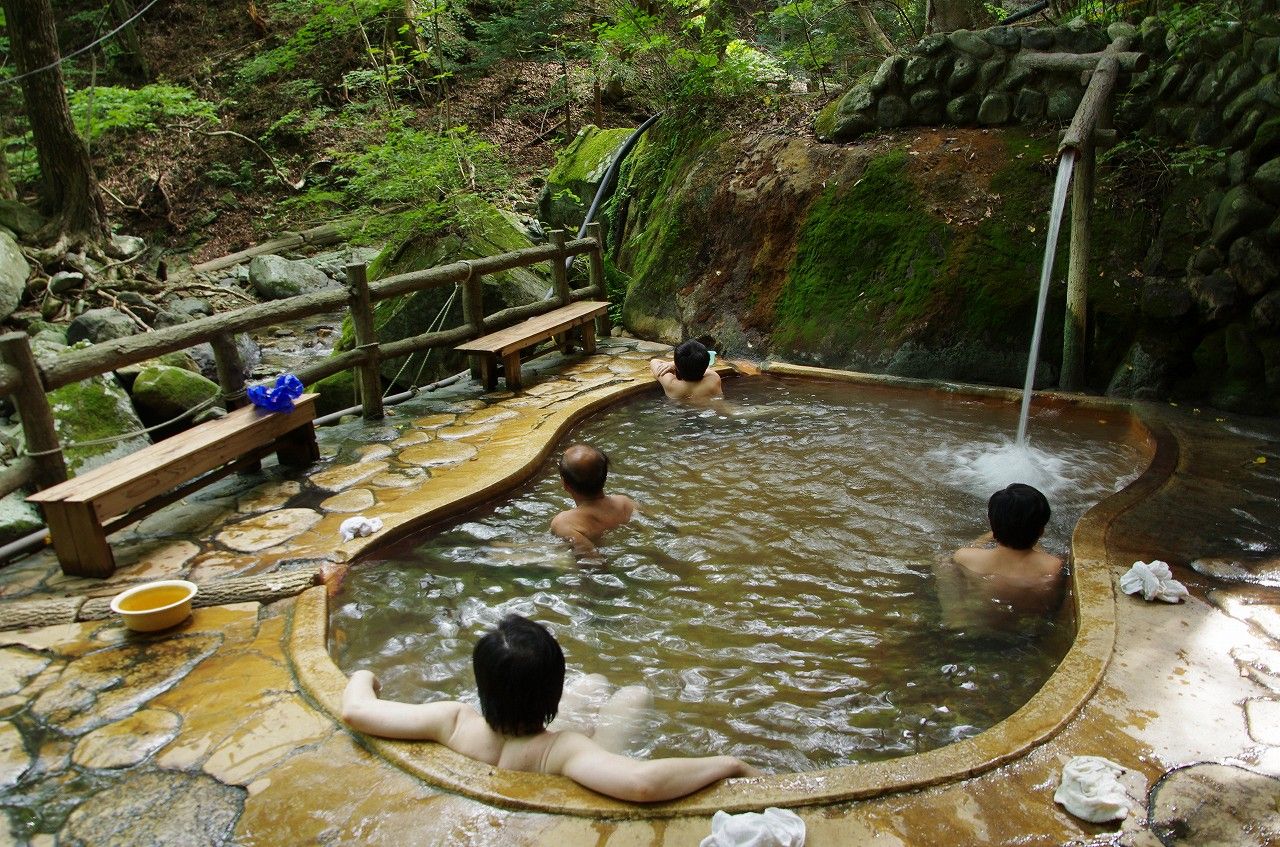
Japan's open onsen soaking culture, quirky for foreigners is slowly being eroded.
Japan Today (Jan. 9):
'Communal bathing has long been a part of traditional Japanese culture. Mixed-gender bathing, though, or konyoku, as it’s called in Japanese, is something that’s been largely phased out at hot springs and sento (public baths), with the vast majority of such facilities now having two separate bathing areas for male and female customers.
An exception is made for young children though, with Japanese society, for the most part, thinking it’s no big deal for a mother to take her young son into the women’s bath with her, or vice-versa for a father and daughter in the men’s bath. The question is what age qualifies as “young,” there’s now a new legal cutoff in Tokyo.
Previously, children as old as nine were allowed into the bath for the opposite sex, provided they were bathing with a parent or guardian, of course. As of January 1, though, the new age limit is six, meaning that once children hit the age of 7, boys are legally allowed only in the men’s bath, and girls the women’s.
...
“If it’s such a problem for parents, then they don’t have to come to the public bath in the first place.”
As alluded to by the last comment, though communal bathing was once more or less an unavoidable necessity of life in Japan, in the modern era it’s pretty much an optional way to get clean. Two or three generations ago, it still wasn’t all that unusual for Japanese homes, especially those of working-class families, to lack bathing facilities, meaning family members had to make regular trips to their neighborhood public bath. Nowadays, though, all but the most spartan of apartments have a bath/shower combo, so going to the sento is more a leisure activity than a cornerstone of anyone’s hygiene routine'.
Guardian (Mar. 12) looks at another aspect, also reflecting the gradual demise of traditional values:
'The absence of women seemed to confirm Japanese media reports that konyoku – mixed bathing – is at risk of becoming a cultural curiosity, especially when it requires participants to go naked.
Many blame the rising menace of wani (crocodiles) – the nickname given to men who spend long periods immersed in the water, their eyes constantly scanning the room for female bathers.
...
Other hot springs have followed suit, with one proprietor who recently introduced a clothing rule on a trial basis suggesting the change would become permanent since it had clearly deterred bathers with “perverse motives”. Another onsen in the south-west of the country saw the number of female bathers rise from 10% to 80% after it made covering up compulsory.
...
Kobayashi [Yasuhiko Kobayashi, a lawyer who has written a guide to the country’s best onsen], who has sampled about 3,000 onsen over the past three decades, attributes the breakdown of bathing manners to a lack of consideration for other people that now afflicts wider Japanese society.
“People think that if something is not actually prohibited, then they can do as they please,” he said. “When foreigners arrived in Japan in the late 1800s, mixed bathing was one of the things that really surprised them. But that was a time of tolerance and respect in Japan. It meant Japanese society was safe and peaceful. The decline of mixed bathing is proof that standards are declining.”
The introduction of partitions and bathing wear requirements diminishes the value of what should be an innocent shared experience, he added. “It means that onsen are losing their individual charm. That’s a real shame.”
Globalhobo (Dec. 13, 2021) looks at the soaking culture from the dive into the unknown aspect:
'No. My clothes we’re staying firmly on, thank you very much.
...
So, with my new friends Abbey and Jada bravely leading the way, I tentatively lost my onsen virginity.
And it was… freeing.
Although I had thought that being in an essentially translucent swimming pool with a group of strangers would be daunting, once I got over the initial shock of seeing boobs every which way I looked, I found the whole experience transformative.
...
You can look at all the glamourised, picture-perfect female bodies you want on Instagram, or in magazines, but at the end of the day, those photos are artwork: the most ‘ideal’ of the ideal body-types who are paid to pose and edited so that the photos are flattering. Normal human bodies are naturally lumpy, lopsided and flawed. But that doesn’t make us any less beautiful or valuable. Bodies, too, are essentially just superficial skin prisons that enclose the real us: it is our feelings, thoughts and actions that make us intrinsically unique.
So frankly, I think we Brits have a lot to learn culturally, and maybe practicing becoming relaxed with taking our clothes off more readily (within the parameters of the law) is a good a place, as any, to start. I believe we could all do with being a bit more naked!

Elsewhere, ThinkGeoenergy (Jul. 13) has a short article on the supposed threat of geopower generation versus soaking:

'On June 21, 2022, the Japan Hot Spring Association held their own in-person general meeting in three years after the restrictions caused by the pandemic. One of the major topics discussed during the meeting was the potential of geothermal power generation in Japan and its possible effect to Japanese hot spring culture.
...
“The hot spring culture is pervasive in Japan, with 130 million people staying at hot springs annually. Geothermal power generation is now used for conventional hot springs.” said Ministry of the Environment Director Yoshiaki Kitahashi. He added that the minimum line for geothermal power generation is that it should not affect the conventional use of hot springs'.
Dicen que el agua cura todos los males.
No sé si los cura, pero te hace sentir mejor.
#aguastermales #thermalbaths #family #coloredhair #nature #relax #greenery #naturalspa #naturalsprings #travel #trip #wanderlust #travelphotography #travelmania #rainbow #naturelover
Away from Japan, MTL blog (Jun. 7) notices that Iceland's hot spring culture is to be exported to ... Canada!
'A giant geothermic pool could be coming to Quebec. With a surface area of 120,000 square feet, the Iceland-style swimming hole would be the largest of its kind in the world, promoters say.
The lagoon would be the centrepiece of an eventual 600-door retreat in Petite-Rivière-Saint-François, a small town on the Saint Lawrence River roughly an hour north of Quebec City. There are also plans for restaurants and a spa.
...
The pool itself would rely on geothermal, biomass and solar energy to maintain a year-round temperature of 38 C'.
It does look though that it's Iceland's soaking culture for foreigners (not the national soaking culture) is to be exported.

Finally, BBC (May 19, 2021) has a video on geothermal energy.

Sunday, 26 July 2015

Reclaim

Yes, I'll admit. 

This website as well as others I maintain are directly stimulating soaking in our earth's natural and naturally heated waters: there's little on earth that beats having an impromptu warm bath in natural water in the midst of nature.

But times being as they are, the few yet to be remodeled and commercialised hot springs are increasingly being threatened by the ever increasing swaths of tourists, who are seeking their fair share of bliss. 
At the same time we see that managing what's left of the planet's bounty is becoming more and more of a challenge, one we might be losing. 
Sadly, with more use, comes more abuse: contamination of the pure waters, filth surrounding the baths, erosion of the natural environment, non-social soaking behaviour, etc., etc.

So it comes as no surprise that in the past few months, in various countries around the globe, an assortment of users / governing organsations, owners and managers have seen fit to seek to change the way we might be able to enjoy soaking.

Fight
Exhibit A is the hot spring named Skinnydipper located in the state of Idaho, U.S.A. 

The abuse of the site has the managing organisation (Bureau of Land Management) putting forward  a proposal so as to eliminate soaking for once and always. KVTB (May 5):
'... dealing with litter, feces, drug use and break-ins in the area'.
Luckily at the last hour, users have organised themselves and hope to reach agreement enabling future use. Hopefully.
Idahostatesman (May 12):
'Nothing’s official yet. Tate Fischer, who manages the BLM office for most of southern Idaho, said he’s meeting with the agency’s upper-level management this week to discuss a compromise between users of the popular hot springs and the federal government'.

Read more here: http://www.idahostatesman.com/2015/05/12/3798444_aficionados-of-skinny-dipper-hot.html?rh=1#storylink=cpy
More info on the user cause here, a facebook site currently notching up nearly 9000 likes. Their latest message:
'To give everyone an update on where we are at right now:
The Department of Interior denied our petition for stay. What this means is that the closure order is in place and going forward. The BLM will need to follow their process for closure and we hope that before they take any action, our appeal will be granted.
So right now, cross your fingers and toes. We are still in this fight!'
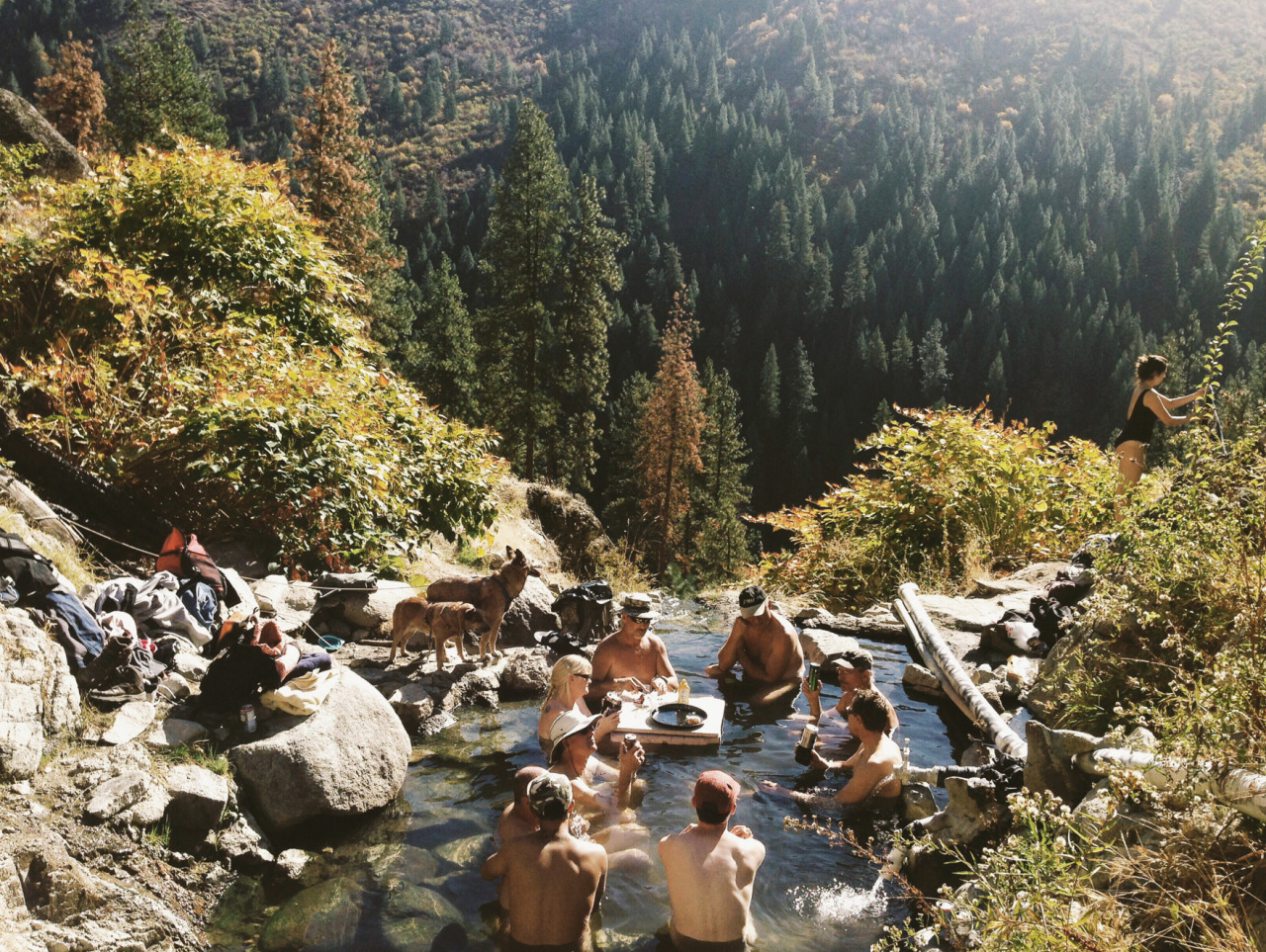
we hiked to a hot spring along the side of a mountain. the folk who maintain this hot spring just so happened to be having a sunday bbq. naked. so. that happened. when in idaho?
(Source: caseykaui)

Beauty
In a recent European Natural Soaking Society blog post there's more on the problems of Hrunalaug hot spring, one of Iceland's most iconic hot springs. 
The limited soaking site is unable to cope with the influx of the Iceland tourism boom and the owner has headaches enough without these.

The Grapevine.is (Jul.  5):
'The Hrunalaug hot spring has undergone so much damage from the sheer numbers of visitors it has received that the owners have considered bulldozing it over.
Helena Ei­ríks­dótt­ir, the daughter of the owner of the famed Hrunalaug hot spring, told MBL that her family simply cannot keep up with the number of visitors the spring receives. The spring is not just experiencing regular wear and tear, either; vandalism has also started to be a problem. People have also started camping on the site, despite numerous signs asking them not to'.
The Hrunalaug pool lies in the outskirts of the village Flúðir (Fludir), just over an hour's drive from Reykjavík. The pool combines beautiful nature with an ancient structure. The pool is located in a beautiful green gully, where the natural geothermal water collects into the pool.  The pool is actually split into two pools and the water streams out from the first pool in a little trickle of a river through an old turf-hut. There it collects again into another deeper but smaller pool at the front end of the hut. The hut is old and weary but can be used as changing facilities for guests who visit the pool. The hut has concrete walls and concrete floors, but the roof is made from corrugated iron and turf. Inside the cottage you will find a bench were you can put your clothes. The facility is primitive and raw but very interesting.
source tripcreator

As users are mostly tourists there's little scope for a user group being established to assist in management. With tourists outnumbering locals by far, I can't see locals taking the initiative and for tourist companies to practically assist there's too much scope for free riding from non-participation.
Thus the future use for soakers lies in the hands of the owners and their willingness to put up with antics and numbers. 
Icelandic law decrees unfettered access to nature and natural resources, destruction of the source is the only way owners can restrict access. 
Dilemma.
 
Elsewhere from the same blog we saw both an interview as well as a soaking review of terme Il Bullicame near the  town of Viterbo, Lazio (Italy). 

Here users are facing a doubled edged sword. 

On the one hand how to manage use, while at the same time lamenting the commercial exploitation of the source itself as waters are syphoned off to a neighbouring establishment. 

It's a much wider problem as legislation and governance seem to contradict itself resulting in a free-for-all; thus meaning commercial strength is the winner.

The fight itself is already protracted and it's yet to see what, if anything can emerge. Other than a Pyhrric victory ... 

A call to reclaim the hot spring at a recent protest
Tuscia Times (Jul. 25, 2015)

Cover up
Then closer to Southeast Asia, we were told the story of the Fudo no Yu onsen (Japan) where due to remoteness (and thus lax governance) abuse of the hot spring could take place. Here plays social change a large part as well. 
Tokioreporter (Jun. 2):
'Following a number of complaints regarding illicit behavior, the Shiobara Hot Springs Tourism Association announced on Monday on its Web site that one resort in Nasushiobara City has shut its doors
...
With an entry fee of 200 yen that was paid on an honor system, Fudo no Yu generally operated without managerial supervision.
Other reports concerned theft. 
Very Asian, the closing of the onsen was meant to avoid bad publicity ...

Safe to say the onsen has since reopened (see excerpt below) however with increased management it also saw the need to force a change in age old bathing habits; is this the future face of soaking in Japan?
Tokioreporter (Jul. 6):
'On August 1, the mixed-bathing Fudo no Yu onsen, located in Nasushiobara City, will begin accepting bathers during the day on weekends and holidays.
...
came to an agreement under two stipulations: A manager will be on hand to monitor the bathers, who will be required to cover their bodies with towels'.
Sacrilege? It beats me how forcing bathers to cover up will lead to positive changes. Certainly only the posting of a manager would be sufficient ...

Fudo no yu onsen, source

Vocal
What's required is a need to know how managing naturally natural resources can be successful. Without caving into commercial interests. And with public interest at heart.

Are there any examples of such? 

It can't be overstated that public interests require public (read government) commitment. 
However, nowadays public entities worldwide are chronically underfunded to such an extent that they are increasingly getting caught in upholding the interests of the establishment. 
And if the public's interest require funding, the public's interest will stand little chance.

So it's up to us to bring about change. 
Each soak requires tailor made solutions, there are no blueprints. 
But what we share is a common, is an interest to safeguard the few unique publicly accessible natural soaking sites. 

At the very least our voices need to be heard!

Saturday, 10 May 2014

Expansion

Onsen soaking
Miho Tabuchi is a well-known name within the the global soaking culture. At home (Japan) she is known for a Japanese language onsen review site as well as a publicist of articles on onsen. The English language part of the world will be familiar with her onsensoaker blog.

Laying claim to being a global expert, at the time of this publication, Miho has visited 215 hot springs in 28 countries excluding Japan (and counting China and Taiwan separately). If including Japan, the number of soaking sites visited rises to 1,500 hot springs in 29 countries, a very impressive count indeed.

Miho at Jinata Onsen, Shikinejima (Shikine Island), Tokyo 

Gifted
Miho, what would be your favourite hot springs and why? 
"Let me answer my favourites this way:
My favourite hot springs area is Beppu, Oita prefecture, Japan. Beppu is a rather big area and actually consists of eight hot springs: Beppu, Kannawa, Myoban, Shibaseki, Kankaiji, Kamegawa, Horita and Hamawaki. There are various soaking spots in Beppu, especially many public baths. 
Outside of Japan I liked the hot springs of Iceland, Indonesia and Taiwan. Iceland and Indonesia are geothermally active. Taiwan is geothermally not so active, but this mountainous country has many unspoiled wild hot springs and Japanese style public baths. 
I prefer though the wild hot springs and public baths as I can feel hot springs are gift of mother natures while soaking in wild ones".
Mugen-no-sato, Horita Onsen, Beppu Onsenkyo, Beppu City

Trendy
In your blogs we see you are concerned with onsen closing. 
Do you have figures to illustrate this?
"The latest statistics from Japan's Ministry of the Environment (March 2013)  show that the number of the day-visit onsen (commercially run onsen without accommodation) was 7,771 which had increased by 54 from a year before. However the number of ryokan (onsen with accomodation) were 13,521: a decrease of 200.
Additionally, according to the first issue of the Onsen Hihyo, the number of konyoku decreased from more than 1,200 in 1993 to less than 700 in 2013".
Can you describe the reasons behind these trends? 
"I think the main reasons for the number of ryokans to decrease are a lack of successors and changes in our lifestyle. When the Japanese economy was booming, visiting big onsen hotels as part of a tour group was popular. Many larger hotels counted on these groups. But after our so-called economic bubble burst, the number of these tour groups decreased sharply. However, many hotels had invested in expanding their capacity and couldn’t avoid bankruptcy.
Small-scale ryokans and hotels also suffer from the economic down turn and the lack of successors. Very often ryokan owners’ children tend to prefer working in larger cities such as Tokyo or Osaka, rather than taking over the family business.
More recently, new building standards have been introduced to prevent damage by earthquakes. Since, some ryokans and hotels have had to close their business as they couldn’t afford to renovate their buildings in accordance with the new standards.
Revitalization / regeneration business is booming. Specialized companies acquire bankrupt hotels and ryokans, and turn them into economical hotels and ryokans. They omit service as much as possible to offer cheap accommodation prices. For example, they serve buffet dinner and breakfast. If you stay in traditional Japanese style ryokans, they will serve your meals dish by dish in your room".
As we have noticed, you have been to many hot springs outside of Japan. 
What are your ideas about the development of wild and / or rural hot springs into resorts?
"For Japanese, onsen means bath / soaking place. Outside of Japan, hot springs are for swimming / for leisure / for drinking / to cure disease / forcooking and so on. I always enjoy finding these different kinds of use. However, I don’t like resort type hot springs myself.
Resort hot springs are rapidly increasing in China and Southeast Asia. They are though nice places to visit and watch other visitors".
Resources I have the impression that taking an onsen bath in Japan is very important aspect of life. 
To what degree are the surroundings (natural / non-natural / enhancements), price, catering and the ability to stay overnight important aspects in selecting where to take an onsen?
"It’s very important to me personally, but generally speaking, I think we Japanese love taking bath. It’s usually humid in Japan and I take a bath every day. And if it’s an onsen bath, the better. I prefer natural onsen bath, but if impossible, circulated onsen water bath is fine to me. Sometimes after visiting a wild onsen, I have to drop in to another onsen to wash off mud and other dirt. 

I don’t limit myself as to how much I spend when visiting an onsen, if a reliable friend had made recommendations, then I will visit there. But my favourites are small, old, family-run ryokans and usually they offer rooms with meals costing 15,000-20,000 yen (150-200 $US) or less per person. Once I stayed at a ryokan costing just 3500 yen (35$) with dinner and breakfast! 

Gorgeous places are usually rather new ones. However it’s difficult to find naturally gushing hot springs at these places. Many of these are obtain their hot springs from deep bored wells. Of course there are always some exceptions".
 
A look inside the latest issue of Onsen Hihyo magazine. 
And the article on Singa Tatopani, Baglung district, Nepal written by Miho.
   
You recently authored an article in the Japanese publication Onsen Hihyo (Hot Spring Critique). 
How important are these sorts of publications in Japan?
"Though it might seem in book stores in Japan that there are many onsen publications, they are mostly not of much significance. Many of these publications carry articles on onsen which have been sponsored. They look like an usual article, but onsen owners pay for favourable reviews. I know the writers and editors of these publications get their information from websites, blogs and social media, but magazines and guidebooks are resourceful for those who recently got interested in onsen, I guess.
The Onsen Hihyo is an exception to the above, as it has no sponsored articles or advertorials.

Otherwise, good information is available through internet rather than magazines and / or guidebooks".
Li-song Hot Spring , southeastern Taiwan

Enthused
Is there an aspect of hot springs bathing which you would like to highlight?
"My most memorable hot spring experience is a recent visit to Li-song hot springs in Taiwan. Maybe because I came back just a few weeks ago and my memory is still vivid. The hot spring itself was amazing and support from the Taiwanese was impressive. 
Let me explain about Li-song hot spring a bit more. When I first saw a photo of Li-song in an in-flight magazine 8 years ago, it caught my breath: I couldn't imagine that such a beautiful hot spring was there in a neighbouring country. 
But I can't understand Chinese and without any friends there to help me, visiting Li-song was just a distant dream. Since then, I have visited Taiwan 7 times, learnt how to travel and one by one made some friends.
When I visited An-tong Hot Springs in October 2013, the general manager there told me, if I wanted to visit Li-song so much, he could come with me next time. He kept his promise, even asked the #1 specialist of wild hot springs in Taiwan to come with us and the specialist came out of kindness.
The trail was so steep, I had to cling to a rope, and crossed the river twice, with short swims in cold water, but it was rewarding. I'd never been to such a beautiful wild hot springs before. I'm so happy and looking for next main target".
 
"What I like to do is to make people of other countries get interested in onsen and want to come to Japan. 
I've been to more than 70 countries in the world. People are generally nice to me wherever I go. So I want to welcome people to Japan in turn. And I believe onsen is worth visiting while travelling in Japan, I want to provide useful information.

I also want to make Japanese people more interested in hot springs in other countries. 
It might sound strange, but Japanese onsen enthusiasts tend to look down on hot springs in other countries even though they don't know any. They say "Hey, they take hot spring bath in swim suites, right? That's a swimming pool, not a hot spring at all". I want to change this by explaining to them there are so many attractive hot springs in the world. 

Finally I would like to build a network of hot springs enthusiasts like myself.
To visit hot springs in the world, I need up-to-date information from other hot spring enthusiasts.
I think I'm doing well, gradually expanding my network".
Thank you Miho for your effort in giving an insight into how you experience wild soaks from the Japanese perspective. 
It's also very interesting reading about the trends affecting hot spring soaking in Japan. 
Good luck in your future endeavours to highlight global soaking!

Notes
All photo's are used courtesy of Miho Tabuchi.

For more info on Jinata onsen, see the onsensoaker report. 
Concerning Mugen-no-sato, onsenaddict has a blog entry.
Singa Tatopani has it's own Facebook pag.
Li-song hot springs is featured at Lonely Planet ("most beautiful natural hot spring in Taiwan").

Japanese soaking vernacular:
Konyoku (混浴): Mixed baths 
Onsen (温泉): Japanese for hot spring 
Ryokan (旅館) : Traditional Japanese style inn


Saturday, 21 April 2012

Concerning developments (mostly)


The Soaking family of blogs is expanding once more. Achievable or not, a blog focusing in Euro-soakers / soaking possibilities will need to take off, but the first step has been taken: European Natural Soaking Society. Herzlich wilkommen!

Trade-offs
More of the seemingly never ending discussion of geothermal energy generation versus soaking. Thinkgeoenergy.com (8 April) gives it's views of this Japanese debate: 
'It is no news to anyone having been to Japan, that there is a thriving bathing culture in the country and this paired with strong traditions. Bathing in those “onsen”, or hot springs, is very popular.
So it may not be surprising that onsen owners have a strong voice when it comes to concerns about geothermal development. A recent article in The Economist [April 7, original article] touches upon this subject. The reason for concern is simple, onsen owners fear that geothermal development for power generation could dry out the hot aquifers that fuel the hot springs.
But with the tremendous energy demand of the country, following last year’s tsunami and nuclear disaster at Fukushima and the move away from nuclear power, geothermal as a sensible energy choice is now harder to argue'. 
To sway the onsen conservatives the ambassador of Iceland to Japan is drafted in. 
'... he [Icelandic ambassador] points out the example of the “Blue Lagoon” in Iceland, as likely being the biggest onsen in the world. The geothermal field there not only fuels the spa but also a geothermal power and heat plant. .. maybe as a side note one can say that the plant existed first, while the initial “pond” or pool was an environmental accident. Today the Blue Lagoon is Iceland’s largest tourist attraction attracting nearly double the Icelandic population in visitors'. 
This is of course a true point and well worth considering. 

However at the base of the case are small scale hot springs which could loose their waters, while the generation side requires more concerted larger scale efforts. And if then the result is an extensive hot pool pond, will this then suffice local habits? Will for instance traditional naked bathing cultures be thrown overboard in favour of mass marketeering capitalist seeking short term strategies? 
At the heart of the debate should be Japanese naked communication versus modern day perosnalised (and selfish) culture. 

More on this debate, again thinkgeoenergy notes that Bloomberg predicts that 50% of the global finance for geothermal investment will flow to Asia. Let's hope they won't ruin too much ....

'The hot spring at Chae Son National Park'. 

19th December 2011 By Scorchamac

Regional
A short uploaded video of a newish hot spring near Berastagi, North Sumatra, Indonesia. 

An extensive blog on Selayang hot spring, Malaysia. Conclusion: 
'From my point of view, it is worth paying the entry fee [less than a $US] and get to use the natural hot spring for unlimited time and volume of water (as long as you are happy)! So, do visit there and have fun!'
Vietnam News reports (13 april 2012) that medical tourism needs enhanced promotion. Their readers respond.  Le Van Nhat, Vietnamese from Hanoi: 
'Last year I had a trip to the mountainous province of Son La. I was exhausted after a quite long journey from Ha Noi. Local people recommended that I should go to a natural hot spring at the nearby village to rest and restore my energy.
I decided to go there, dreaming of a relaxing time wallowing in hot water.
But I was totally disappointed.
The water was not hot as I expected and the bathroom was dirty with cobwebs. It seemed that the bathroom had not been cleaned for years. And there was no other tourist except for me.
I do not expect significant development of medical tourism in Viet Nam if things remain unchanged'. 
The dilemma of soaking in Southeast Asia: it's seldom that wild and natural is combined with sanitary. And the expectations of locals of a soaking Disney World. Then again if vexed by cobwebs then maybe one should stay at home.

More bad experiences, this from the Philippines: 
'Today I went to Dauin Hot Spring and Beach Resort, around 2 hours away from our place in Valencia. ... When I arrived, the pool with the hotspring water wasn't filled so they had to fill it up and it took them like the whole day. .... 
The water was ground water .... 
I spent something close to P500 ($12 US) for the afternoon stay, with the "hot spring" only 2-feet deep!'The upside: 'Still, it was a luxury for me as I was able to spend time with myself'. 
!

A mud bath in Nanjing, China, brings some strange customs to the fore. Laura the explorer
'I don’t have many pictures because they had a strict rule about photos.  It’s curious – the Chinese are fairly modest in public, but in private it’s completely different.  The only person wearing a bikini at this place was one of the teachers, and everyone walked around wrapped in a towel.  They don’t want pictures of people in bathing suits.  However, in the change room, people let it all hang out.  I don’t know about the men’s change room, but by now I think I’ve seen more naked Chinese women than naked Canadian women'.
Shanghaiist reports (Mnarch 21) on hot spring developments in Shanghai. No protecting natural soaking sites. No less than around 75$ million will be invested to create 
'... the city's first open-air hot spring resort hotel with a 12,000-square-meter man-made hot spring pool zone'. 
Hmmm, a good development? 

Hot soaks of the Himalaya has highlighted the plight of Gasa Tsachu, Bhutan. The newest development, a road may well be on the cards. 

The outlandish?
New fashions not yet to reach the shores of Southeast Asia: singing. Saunascape reports (13 April): 
'What do a Japanese pop group and a specialized bus in Finland have in common? They’re both all for singing in the sauna!
Rocket News from Japan tells us about OFR48, a new, all-female pop group made up entirely of workers at Ofuros, or urban Japanese bath houses. The OFR in their name even stands for ofuro.
The performances started as a way to make customers feel more willing to approach the staff of the bath houses: An awkward experience because the bath customers are naked. The clothed female workers serve both the men’s and women’s sides of the spa.
The performances began in the bath houses around Tokyo. They were so well received that the group has gone on to perform at larger venues. They plan to release their first single “Our Customers are Naked” in May. Their music video for this performance follows'.
 

After singing, another sort of weird event from Japan. Artist Mariko Sakaguchi manages to take photo's of herself bathing, in her own mobile tub in very unconventional locations, such as in peoples lounge area with the family watching TV, in a meeting room (with employees having a meeting).
Mariko explains
'I am making art works by using photography.
I am trying to cross the sense of private and public, and also now and past by taking bath in old style Japanese bathtub and stepping into photography by myself. You can see I take bath anywhere, It means the place you are seeing my works and also the place you are at now are not off-site.
The place where you are has possibilities to be the scene of my works.
You are not spectator, but party of my work, art.
I want to be a part of art with you all'.
The amusing part is that in every picture you see Mariko bathing you actually end up asking yourself, what are the others in the picture doing?

Final note, another video, this time from Greenland:

Wednesday, 28 April 2010

World Geothermal Congress: soaked?

Prominent in the news is the World Geothermal Congress (WGC) currently being held in Bali, Indonesia. Though we would expect that soaking and tourism would function in this, it seems to be all about generating power (literally and figuratively?). No less than Indonesia's president has vowed to make the country the world's geothermal power leader by 2025. That's if other countries don't pre-empt him.

But what about making Indonesia the world's number 1 destination for soaking? Currently it are countries as diverse as Japan, Costa Rica, Hungary, New Zealand and Iceland (the Blue Lagoon, Iceland's no. 1 tourist destination?) who make soaking a priority in their intentions to draw foreign tourists. Not so in Southeast Asia.

And by the looks of the WGC programme not much seems to change. Tourism is just a small side session and even the day-programmes on offer for the participants fail to include at least 1 visit to a Balinese hot spring. Maybe the majority of the participants are only interested in wallowing in wealth in the prospect of the $$$ which will arrive once the geo is harnessed.

What is on offer are a number of presentations, three of the ten on Iceland. There is a paper on the Indian Himal by the Arya's:
'Need of the hour is to come up with simple but effective solutions to renovate these geothermal resources and judiciously use it in our day to day life'.
If you have following the Hot springs of the Himalaya blog it seems that management is lacking, especially in the face of a tourism onslaught in the better accessible area's of the Indian Himal.

Chow Weng Sum presents an overview of the hot springs in the Malaya Peninsula (Malaysia) which hardly delves into any soaking aspects. Interesting he and his co-authors mention after sampling mineral water:
'Only two of these hot springs [of a possible 60?] meet all the requirements for drinking and mineral water'.
Furthermore the call to harness the sites for power generation.

In the poster session a poster by Charles Davidson, an Australian with a passion for soaking. The poster focuses on himself and how taking a leaf from the Japanese soaking tradition has tried (and succeeded) to undertake the same on the Mornington Peninsula of the Australian state of Victoria, the undertaking aptly called Peninsula Hot Springs. In this Google Doc an extensive overview of how Charles became Australia's premier soaker (?).

Finally there is a presentation by Patricia Erfurt-Cooper who is becoming the soak guru in the scientific world. With co-authoring 2 books on geothermal tourism in the last 2 years she is certainly the person to lift tapping-the-thermal-waters to a more prominent position, the question is whether her message would intrigue participants. The abstract certainly intrigued and the order to Amazon is underway for 2009's
'Health and Wellness Tourism: Spas and hot springs'.
And then there is this years
'Volcano and Geothermal Tourism'
edited by Ms. Erfurt-Cooper, which draws on world wide experiences, though not exclusively focusing on soaking. Might have to save up some money before ordering this ...

Related Posts with Thumbnails
Copyright 2009 © Soaking in Southeast Asia. All rights reserved.
No reproduction or republication without written permission.