Saturday, 10 September 2011

An update ...

Quite significant news is that I have moved away from Southeast Asia, so sometime in the future, first hand reports will dry up .... In the meantime though, I still have a couple of reports upcoming, of a journey I made through the northern part of south Thailand. 

Think Green? Not Soak? 
This years earthquake and tsunami exposed Japan's over reliance on atomic energy.Within Japan this has lead to a more sustained push for geothermal energy. What makes Japan stand out from other countries is the ingrained appreciation of soaking. Any possible project in Japan which would affect soaking possibilities stands less of a chance of becoming a reality. The Mainichi Daily News (Sep. 3) reports on an onsen hotel (Kuju Kanko) with electricity generation. Unfortunately the price returned by the government prohibited the electricity generation from being profitable (great policy) but this hotel did get a much more positive image from generating it's own electricity, enabling the owner to hark back some of the losses. Monocolumn adds in another article the fear that the push for more geothermal energy will have adverse effects for soakers especially as the overall scope that geothermal energy will have a sufficient contribution to Jaspan's overall energy needs:
'.. many hoteliers and innkeepers are dead-set against having geothermal prospectors drilling in their backyards. They worry that a power plant nearby would harm the environment; worse, it might deplete the heat that keeps the local springs warm, they say'.
Kenji Hall, the reporter of this article, adds a positive example of how the two could exist, similar to the above experience and concludes:
'The technology will need more success stories like that to avoid being branded as the villain. Geothermal energy won’t likely to win the sympathy vote if the public has to choose between a niche technology and a leisure activity that has been around for centuries'.
With oil prices refusing to drop substantially, the lesser endowed geothermal countries in the region are revving up their investment plans. Both Chiang Mai and Chiang Rai (Thailand) will be part of research and find for a 2-10 MW installation. Malaysia are thinking bigger, 36 MW (Phase 1).
'Speaking after negotiation meeting between the stakeholders for the Geothermal Power Plant project at Kg Tass Balai Raya here, Wednesday, he [Project Director Andrew Amaladoss from Tawau Green Energy Sdn Bhd] also assured the kampung people in the nearby area that the project has no threats to them.He said that among the advantages of using geothermal power was it is clean, required not a big area, cost saving and is not harmful to the people and environment'.
Added was that the geothermal project is not harmful to the people or the environment ... Actually the Think GeoEnergy website is a good source for geothermal energy news. From the past months there are reports on projects in Lampung (Indonesia), Lahendong (Indonesia) Sarulla (Indonesia), Naga (Philippines), the Philippines and West Sumatra. And more ... 
  
Crossing the divide, culturally 
Hot springs in China are becoming a target for Japanese hot spring companies. relax.com.sg reports that:
'According to a recent report by the UK's Financial Times, Gokurakuyu aims to open its first spa in China by March 2011 with its partners, an affiliate of China's Citic Group and Japanese investment company MBK. The company has also announced an aggressive expansion plan to run 100 variously-sized spa houses in China within five years, more than it operates in Japan'.
Coming from Japan, they are well aware of the different soaking culture in China, f.i. solely targeting businessmen rather than being a family outing (btw what about businesswomen?). Another example:
'In parts of China where people feel uncomfortable bathing communally, Gokurakuyu expects to include an area for customers who want to wear swimming costumes'.
Seeing how in the past, Chinese authorities have lambasted non-costume swimming as 'western decadence' it probably means that Japanese 'bathing' will not be the next big thing ... Meanwhile back on the theme of China and Japan, a recent internet report pointed to the fact that many Chinese wish to visit Japan to enjoy their hot springs as opposed to westerners ... Than what does Japan think about this? Weird culture (sideline):
'A NATURE park in China’s Hunan province is offering free admission and prizes to virgin females aged 22 or older, according to the state-run Global Times'.
Sex discrimination? Culture? A Japanese hot spring TV show has caused controversy as it employs 'an adult video model' to crank up the ratings.
'The “Let’s go to the spa and more!” broadcast by Japanese Fuji TV Station is actually an “adaption” of the old one “Go to the Spa!” which was first introduced to audiences of all ages in 2000, and mainly features the hidden hot springs (secret hot springs or secret tang) throughout Japan. In 2008, the show took a daring change by featuring the female host wearing only a towel and its name was changed to Let’s Go to the New Spa! The rating increased slightly after that. In the latest revamped programme, the host strips her clothing one by one before entering the hot springs naked'.
As soaking au naturel is a cornerstone of Japanese culture and many villages manage to attract significant numbers of tourists wishing to enjoy a soak dare we say naked, tv programs denying this seem a bit unreal. Anyway in reality it's all very tame ...However, already back in February Japansugoi reported on the increasing popularity of the show (DVD's also available). It notes:
'While nudity is not a big issue on Japanese TV, this onsen show by its very nature has the charms of the onsen demonstrated by way of a female reporter’s nude bathing'.
Just one of a series of photo's by Paula Bronstein. Text with the series:
'Japanese earthquake victims enjoy a communal bath set up in tents by the Japanese Self Defense Force March 26, 2011 in Rikuzentakata, Iwate, Japan. With hundreds of thousands made homeless by the quake the baths are essential since the makeshift evacuation centers have little running water'.
The regional news
Soaking festivals are the in-thing. The Philippine Information Agency reports (Sept. 9) from Los Baños:
'The Special Science and Nature City of the Philippines will celebrate Bañamos—a unique healing waters festival—beginning September 14 that will highlight the town’s colorful history capped by various fun-filled events. ... The Dia Aguas Santas (Day of the Holy Waters) is set on September 17 where a symbolic public bathing will be held in a hot spring pool blessed with holy water near the Immaculate Conception Parish Church'.
And ziplining and soaking? Head for Bamungao Pangasinan, Philippines:
'Zipline ride offers you a view of villages, extinct Mt. Balungao, and flowing hot and cold spring'.
Annah Rais hot spring, Sarawak (Malaysia) continues to gather favourable reviews. For instance Dawn Poh. And JG. That has been noted by local politicians who will now move their constituency up to the 'modern' world. Borneo Post report (September 5):
'Speaking of one famous spot, the Anah Rais hot spring, he [Deputy Tourism Minister Datuk Dr James Dawos Mamit] proposed that a study on the carrying capacity of the spring be conducted to improve the facilities there'.
Oh no, study the carrying capacity!
Pai, Mae Hong Son (Thailand) keeps on moving up. And so does it's hot springs. New kid on the block: Pai HotSpring Spa Resort (lot of effort in finding a name). Though probably just a rename (from Thapaispa) their own guest review page gives a positive shine on the rename. However continue on tripadvisor and you will be shocked by for instance this entrance from August 2010:
'This hotel is filthy and just rely on the hotspring appeal to rip travelers off'.
I wasn't impressed either but that was 5 years ago ... A Russian language, extensive site on Siam's soaks. Wrapping up, more cross cultural exchange. The US is doing it's part ... to help China's science get a grip of it's hot springs. Montana State University is leading a research project in Tengchong, Yunnan. Part of the surprise is that in Tengchong visitors boil eggs in the springs, which in Montana would be an offense and get you a nice fine ...

Thursday, 8 September 2011

Thermophiles challenged


Directing development
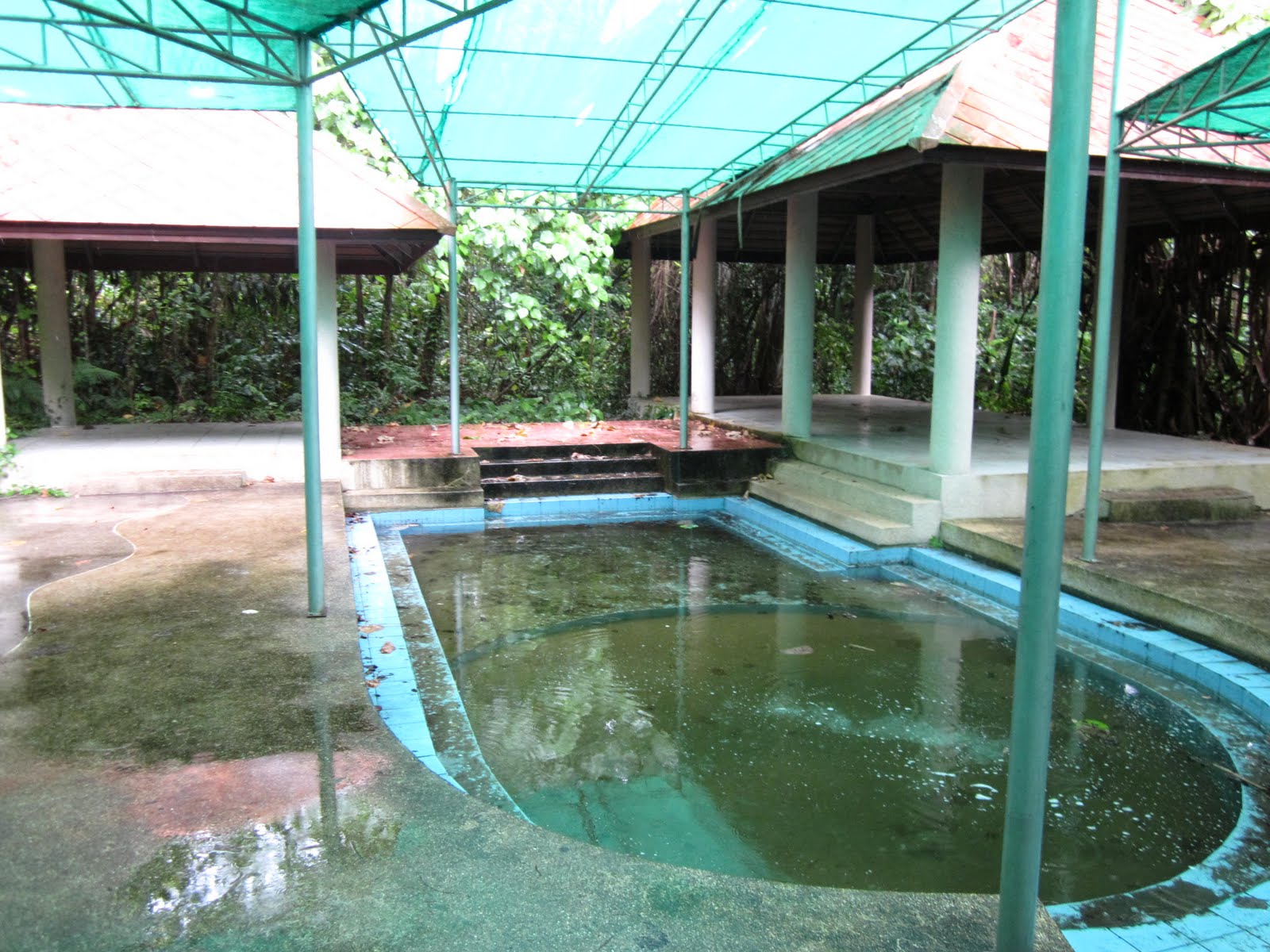
Directing funds to tourist adventures sometimes leads to strange situations. Raksarawin hot spring of Ranong, Thailand, is an example of incessant funding, in this case leading it to be a tourism highlight. However, just down the road, Phu Lum Phi hot spring is left forlorn and undeveloped.

Untouched it's not ....

See Soaking in Siam for more

Monday, 8 August 2011

Soaking in the shade


On the edge
Chumphon is a touristically underrated province in Thailand. Too far away from Bangkok to warrant a weekend trip, too close to make flying there practical. Back (and flash) packers are all on their way to Ko Tao, a veritable divers paradise slowly edging to high end boutique-ness.

See Soaking in Siam for more ...

Sunday, 10 July 2011

Wellcome


Wow
In all honesty there's not much to distinguish visit's to some of Thailand's hot springs from each other. Sometimes well signposted, sometimes not at all. They are all are designated to 'wow' the visitors, attract more tourists and line the pockets of local entrepreneurs and governments.

See Soaking in Siam for more ....


Monday, 13 June 2011

Another update, mid-June 2011

Soaking in Southeast Asia has slowly been gaining more popularity, the blog receives more than 40 visits per day and more than 4,500 page views per month, which is increasing month by month. The Himal blog is also seeing more traffic (despite no new entries; I'll be reworking and updating the original ones), but surprisingly Soaking in Siam is lagging behind. That despite for instance two new original blog entries from Phetchabun province, Phu Toei and Nam Rong.

Most popular entry on this site is the entry on art and hot springs though the more recent entry on mud is catching up; in the last 30 days this entry clocked up three times as many entries as the art entry, which itself just had more pageviews than other older blog entries. Considering the amount of time I put into the mud entry I am not at all disappointed.

Upcoming is less great news as I will be leaving the region in the foreseeable future, though more Thai soaks will be added before. As well as an overview of Thailands top soaks.

Fishy business once more
  • Apparently a never ending story. Travelfish Siem Reap blog has an entry on the fishy foot massage business. Though they also note the concern, they repeat how pleasurable it is:
    'Admittedly, it’s not completely unpleasant having your feet nibbled, though many would doubtless prefer the Princess Fergie school of toe-nibbling to having actual schools of fish perform the dirty deed. The sensitive among us clearly find the experience so earth-shatteringly, ooh, ticklish, that screams, shrieks and loud whoops are in order, causing numerous people to drop their beers with fright. Actually I made the last bit up, but to the screamers, do you have to? Really?'.
    The rash of fish massages is now spreading to the other haven of tourists, free of legalities, Phnom Penh.
  • Last month the Guardian had a feature on fish pedicures as it debates their increasing popularity and health issues:
    'Following the decision by more than a dozen states in the US to ban the pedicures over fears they could spread infections and disease, scientists from the Health Protection Agency have begun an investigation into potential risks. A spokesperson for the agency said that, while it did not expect to be enforcing a ban in the UK and believed the risk of catching an infection from a fish foot spa to be "very small", it was looking at publishing guidelines for the public'.
    The article continues and as always the case in Britain, protecting the fish may well be the single most important issue if a ban is imposed!
Beautiful blogs
  • Well, I pride myself on my ability to seek out obscure hot springs in what many would consider a wild goose chase. However a blog entry by Ben seems to encapsulate an even more determined spirit. On a hunch he seeks a zoak in Zhongdian, Yunnan, China. He was advised to find out a hardly known hot spring with magical properties. On his bike it took him no less than 5 days to find the place, each day filled with taking in the surroundings and having mini-adventures (and doubling back to Zhongdian). He eventually finds it, a small enclosure packed with mud and just a trickle of boiling hot water.
    'Concerning Nom’s therapeutic, secret mountaintop, cave-side hot spring bathing pool, there wasn’t, not even for a moment, a sense of being let down. Rather, it was a fitting cosmic reminder that beyond any doubt the search for this mud was the real reward, and never, no matter how nice the pool would have been, it wouldn’t have been anything more than me swimming in some hot water. It’s also I think perfectly fitting that both times I followed Nom’s advice to go seek out some amazing water, there wasn’t any water to behold. I mean, really, that’s something. Yet, in one manner I think he was right. I can only assume through some extreme-condensation that the water in this formerly brimming pool must have had some residual super-magic in it. While the extended exercise in the crisp mountain air I think has done my body good, and while this is just anecdotal, my new ability to read minds I think is worth noting, and cannot be solely attributed to cycling in the Himalaya. Though, to risk sounding less than humble, being a mind reader now isn’t really all that much of a change, as it seems China only has one thought on its mind: “You can’t use chopsticks.”'.
    As always the journey is worthier than the destination. Too often in modern days we are only concerned with the destination, overlooking the more valuable journey. If I would be in the habit of awarding annual prizes for Best Story on Soaking, Ben would have bagged this years prize easily ...

Geothermal energy, a hot item?
  • China is aggressively seeking to increase the importance of geothermal energy in meeting the countries seemingly insatiable demand for power. Could be worse.
  • No less then Pippa Middleton will help in promoting geothermal energy in the UK according to Think Geoenergy, though not known in which capacity ...
  • In Japan, a turn has taken place to geothermal power. An investment advice notes that despite Japan's volatile geothermality, power has not been developed as in other countries. Why not invest?
    'However, by and large its thermal regions have been transformed into onsen – hot spring resorts - which are a hugely significant phenomenon of Japanese culture. Many of the best resources are in national parks and in popular tourist spots. Indeed, reverence for hot springs is such that one geothermal energy expert declared that they are regarded as almost holy by the Japanese'.
The cultured
  • AsiaSpa has a feature article on onsens in Niseko, Japan. This Singapore edited, East Asia marketed magazine apparently acknowledges that spa in essence (and naturality) is a hot spring but as it focuses on the higher income generating minority of the regions public, it can't suggest a local soak. However Japanese soaks come with instructions, all matter of fact:
    'The most common mistake first-time visitors make is to enter the baths in swim suits, which are not allowed'.
    Well, as anyone visiting a Southeast Asian soak will contest (with exception of Vietnam), one would believe that swim suits are not allowed as well; everybody just soaks in their daily clothes! Other pointers: don't stare, don't be noisy, don't bring your own drinks. In other words if visiting a regional soak here, expect them to be noisy with visitors staring and drinking. And consider yourself lucky because it could be a lot worse ...
  • Tourists from China are spoiling weekend aways in Taiwan:
    'No work, no computers, just relaxing in the hot springs, taking a drive around, and eating. But the Chinese tourists staying at the resort almost spoiled it'.
    What a horror!
Hot trend?
  • Anyway, the region is trying it's best. Newcomer to cater to more demanding visitors is Alba Health Thermal Resort, next to Thanh Tan hot spring near Hue, Vietnam. Pictures are on Picasa. They claim to the first balneotherapy resort in Vietnam, balneotherapy referring to medicinal use as opposed to recreational use. Now why this distinction? If soaking recreationally, surely the medical benefits would also be included. Or is it simply an expensive term to discern itself from the hordes? Anyway, looks like a nice place to stay and I hope that they become a guiding light to others. As long as they don't move any more upmarket ...
  • Burilasai Hot Spring Resort and Spa, Mae-On, Thailand is another newcomer, at least in name. Not much info ... It mentions 'hot mineral', hopefully it means hot mineral water, because the pictures seem not to emphasize it's soaking qualities ... 269 friends on Facebook. One respondent on Agoda mentions the
    'spa is great'.
Tops
  • Webecoist start off with 13 natural swimming pools from around the world. Some hot, some not. Yangbajain (Tibet) and Blue Lagoon (Iceland) are the hottest, but neither is natural! Representing Southeast Asia are Tat Kuang Si waterfall in Lao and Mabinay spring in the Philippines.
  • Top diving equipment has it's Top 10 Unique Natural Springs of the Philippines. 1-10: Salinas Salt spring (not hot), Tangub HS, Malumpati (not), Hidden Valley HS, Timoga Cold Spring, Ardent HS, Tukuhan HS, Sto. Niño Cold Spring, Asin HS and Tiwi HS at no. 10. All
    'really worth visiting'.
  • Staying with the Philippines, there are also
    '6 Ways to Soak in Ardent Spring in Camiguin'.
    With crossed legs, folded knees, one leg folded, lying flat (legs inward or outward), floating in frog position! Ha! By tagabukid8705.
Finally, there's the new hot spring of Taal volcano, the Philippines (source). It's lake is increasing in heat and would qualify as a hot spring.
Related Posts with Thumbnails
Copyright 2009 © Soaking in Southeast Asia. All rights reserved.
No reproduction or republication without written permission.